New York Mayor Mamdani Moves to Recast Hate-Crime Strategy With $29 Million Plan
The mayor’s proposal sharply expands city funding for antisemitism prevention, synagogue security and Jewish cultural institutions.
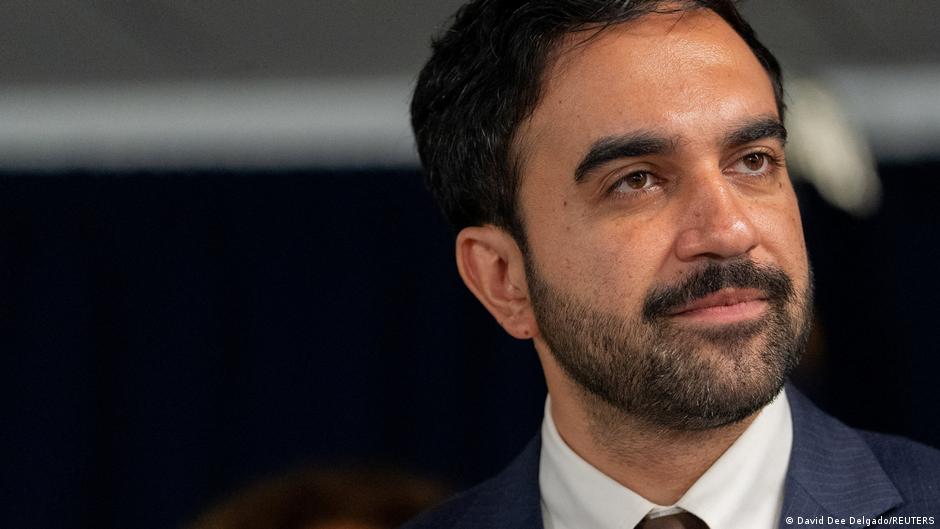
New York Mayor Zohhran Mamdani on Tuesday, September 29, unveiled a broad municipal strategy aimed at countering antisemitism and hate crimes targeting Jews, a move that carries both public-safety and political significance for City Hall. The plan would raise the city’s annual budget for combating hate crimes from $3 million to $29 million, a nearly tenfold increase that places the issue near the center of the administration’s governing agenda.
For Mamdani, who is known for his criticism of Israel and his pro-Palestinian stance, the announcement represents a notable executive decision at a moment when his relationship with parts of New York’s Jewish community remains politically sensitive. The mayor is the first Muslim to hold the office in New York, and his views on Israel have drawn opposition from some Jewish residents, even as he also has supporters among Jewish New Yorkers.
The proposal combines security funding, public education and cultural investment. City officials plan to allocate additional money for the protection of synagogues and to restore a task force focused on the security of Jewish houses of worship. The strategy also calls for citywide information campaigns against antisemitism and expanded education programs to teach about the Holocaust.
A Larger Budget and a Wider Mandate
The financial scale of the plan is central to its political and administrative meaning. Increasing the hate-crime budget from $3 million to $29 million would give City Hall a larger operating base to coordinate across law enforcement, community organizations, schools and cultural institutions. In business terms, the mayor is shifting the city’s response from a narrower enforcement category into a broader portfolio of risk management, community relations and civic investment.
Millions of dollars are expected to support Jewish cultural centers and nonprofit organizations. Among the projects identified in the plan are a Holocaust victims’ memorial being created in Queens and a new Jewish culture center in Brooklyn. Those investments suggest that the administration is not limiting its response to policing or security infrastructure, but is also seeking to fund institutions that shape public memory and community life.
Mamdani framed the issue in stark statistical terms, pointing to police data that shows antisemitic crimes account for more than half of all recorded hate crimes in the city, despite Jews making up 12% of New York’s population.
“Although our Jewish neighbors make up only 12% of New York’s population, police statistics show that antisemitic crimes account for more than half of all registered hate crimes. This is not only unacceptable, it is something we are obligated to change, and city authorities will take the lead,” Mamdani said in a video address posted on X.
The message was clearly designed to show executive ownership of the problem. By saying city authorities will take the lead, Mamdani placed responsibility directly with his administration, rather than treating antisemitism as a concern delegated solely to police precincts, schools or private security efforts by religious institutions.
Boardroom Implications for City Hall
For New York’s political and civic leadership, the plan has implications beyond the immediate allocation of public funds. Large municipal strategies often function like corporate repositioning efforts: they signal priorities to stakeholders, direct internal departments toward common goals and attempt to manage reputational risk. In this case, the stakeholders include Jewish institutions, interfaith leaders, nonprofit executives, public-safety officials and voters who have questioned whether Mamdani can separate his criticism of Israel from the city’s obligation to protect Jewish residents.
The decision to restore a task force for the security of Jewish houses of worship is particularly significant. Such bodies can create a formal channel between municipal officials and community institutions, allowing concerns about threats, facility vulnerabilities and emergency preparedness to move through a structured process. For synagogues and Jewish community centers, that kind of access can matter as much as funding, because it determines whether security planning is reactive or continuous.
The administration’s emphasis on educational programming also reflects a longer-term strategy. Expanding Holocaust education and launching information campaigns may not produce immediate reductions in police statistics, but those measures can help City Hall argue that it is addressing underlying bias as well as visible incidents. That balance between near-term protection and long-term prevention is likely to be scrutinized as the program moves from announcement to implementation.
Mamdani’s challenge is compounded by his existing political profile. His pro-Palestinian position and criticism of Israel have made him a controversial figure among parts of the city’s Jewish community. At the same time, the source of that tension may make the new plan more consequential: it gives the mayor an opportunity to demonstrate that his foreign-policy views do not weaken his commitment to the safety of Jewish New Yorkers.
The political backdrop became sharper when Israeli Prime Minister Benjamin Netanyahu, speaking at the United Nations General Assembly in New York, called the city’s mayor an antisemite. During the 2026 election campaign, Mamdani said that if Netanyahu visited New York, he would seek his arrest based on a warrant issued by the International Criminal Court in 2024. After taking office as mayor, however, he acknowledged that he did not have the authority to do so.
That sequence has left Mamdani operating under intense scrutiny. The new antisemitism strategy therefore serves several purposes at once: it responds to documented hate-crime data, commits new public funds to Jewish institutions, and attempts to define the mayor’s domestic governance record separately from his views on Israel and the war of narratives surrounding it.
For City Hall, the next test will be execution. A $29 million commitment can set a strategic direction, but its impact will depend on how quickly funds reach synagogues, nonprofits, cultural centers and educational programs, and whether the restored security task force becomes an active decision-making body rather than a symbolic forum. The mayor has now made antisemitism prevention a measurable part of his administration’s agenda, creating expectations that the city’s response will be judged not only by rhetoric, but by spending, coordination and outcomes.