Zelensky Says North Korea Plans to Send 10,000 More Troops to Russia
Ukraine’s president said new intelligence shows Pyongyang preparing another deployment as Moscow expands its search for foreign manpower.
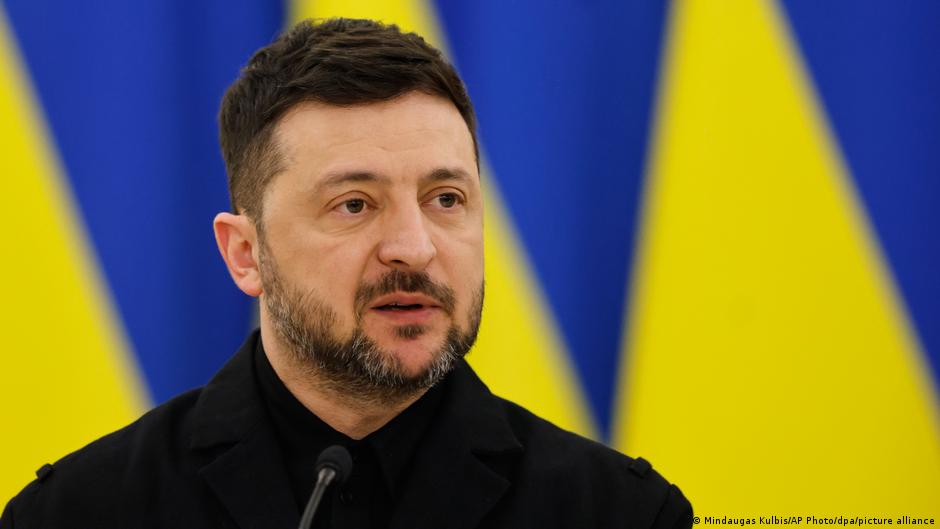
Ukrainian President Volodymyr Zelensky said North Korea is preparing to transfer roughly 10,000 additional service members to Russia, citing new intelligence from Ukraine’s military spy agency in a statement that sharpened the strategic implications of Moscow’s widening reliance on foreign manpower.
In his evening address on Monday, September 28, Zelensky said more than 8,000 North Korean soldiers are already on Russian territory. He framed the development not only as a military issue, but as a matter requiring diplomatic pressure on governments whose citizens or armed forces may be drawn into Russia’s war against Ukraine.
“It is important that the governments of countries from which Russia is drawing people into its army counteract this. We will inform every government,” Zelensky said.
According to Zelensky, the personnel now under discussion are being “selected for training and subsequent transfer to Russia.” He said Russian authorities “plan to increase” the recruitment of foreigners for participation in the war against Ukraine.
A widening manpower strategy
The claim points to a broader operational and political challenge for Russia: sustaining a long war while managing domestic constraints around mobilization, casualties and public tolerance. For Moscow’s military leadership, foreign manpower can offer a way to reinforce units, support rotations or fill gaps without immediately increasing pressure on Russia’s own population.
For Pyongyang, the arrangement appears to carry its own strategic logic. South Korean intelligence has estimated that North Korea has already sent about 15,000 service members to support Russia in the war. In return, Pyongyang is believed to receive money, military technology and security guarantees from Moscow.
Those incentives matter beyond the battlefield. Military technology transfers could affect North Korea’s long-term capabilities, while security assurances from Russia would carry implications for the balance of power in Northeast Asia. The reported deployment therefore sits at the intersection of European security, Korean Peninsula deterrence and the wartime economics of strategic partnership.
Zelensky has previously raised larger figures. In August, he said North Korea intended to place between 30,000 and 50,000 fighters on Russian territory. The latest statement, focused on another roughly 10,000 personnel, suggests Kyiv is tracking the issue as an evolving pipeline rather than a one-time deployment.
Boardroom implications for global risk
For American business leaders, the development is less a direct commercial event than a signal about geopolitical risk hardening across multiple regions at once. A deeper Russia-North Korea military arrangement could complicate sanctions enforcement, defense procurement planning, supply-chain risk assessments and investment decisions tied to Europe and East Asia.
Companies with exposure to defense, aerospace, shipping, energy, insurance and advanced technology already operate in an environment shaped by export controls and sanctions screening. Any further evidence that Russia is receiving manpower, technology-related support or security cooperation from North Korea could intensify scrutiny from governments and regulators.
Boards with global operations may also see the issue as part of a larger pattern: adversarial states converting wartime need into strategic exchange. In that environment, compliance departments are asked not only to track restricted entities, but to understand how military alliances, dual-use technology flows and security guarantees can alter risk across markets that appear geographically separate.
The commercial stakes are especially clear for companies connected to sensitive technologies. If Pyongyang is receiving military technology from Moscow, as South Korean intelligence believes, the pressure on allied governments to tighten controls and monitor indirect transfer routes could rise. That may affect suppliers, logistics providers and multinational manufacturers whose products can move through complex chains of intermediaries.
Diplomatic friction with Seoul
Zelensky’s statement came against the backdrop of a dispute between Kyiv and Seoul that had erupted only days earlier. South Korean President Lee Jae Myung sharply criticized Ukrainian authorities after Zelensky publicly disclosed the transfer to Seoul of two North Korean soldiers captured during fighting involving Ukrainian forces in Russia’s Kursk region.
Lee said Zelensky had violated an agreement on confidentiality. Zelensky’s office responded that no nondisclosure agreement existed between the two countries regarding that information. Officials in Seoul called that claim false.
On September 28, South Korea’s foreign ministry summoned Ukraine’s acting ambassador. According to Yonhap, a deputy foreign minister conveyed Seoul’s “firm position” to the Ukrainian diplomat.
The disagreement is significant because Ukraine and South Korea share overlapping concerns about North Korean involvement in Russia’s war, but they also face different domestic, diplomatic and security calculations. Kyiv has an interest in publicly demonstrating the scale of foreign support for Moscow. Seoul, by contrast, must manage intelligence sensitivities, inter-Korean security risks and its own channels for handling captured North Korean personnel.
For Washington and allied capitals, the episode underscores the complexity of coordinating policy among partners facing different fronts of the same strategic problem. Ukraine is fighting Russia directly. South Korea is weighing the consequences of North Korean battlefield experience, possible Russian transfers to Pyongyang and the diplomatic handling of North Korean soldiers captured far from the Korean Peninsula.
Zelensky’s latest comments place pressure on governments to respond before any additional deployment becomes a settled fact. Whether the reported transfer proceeds at the scale described by Kyiv, the claim adds to a growing body of intelligence assessments suggesting that Russia’s war effort is increasingly tied to partnerships that extend well beyond Europe.