Lower Saxony Runoffs Deal AfD Setback as Greens Hold Key Urban Posts
Municipal results in one of Germany’s major industrial regions underscored voter resistance to the far right and preserved continuity in several city halls.
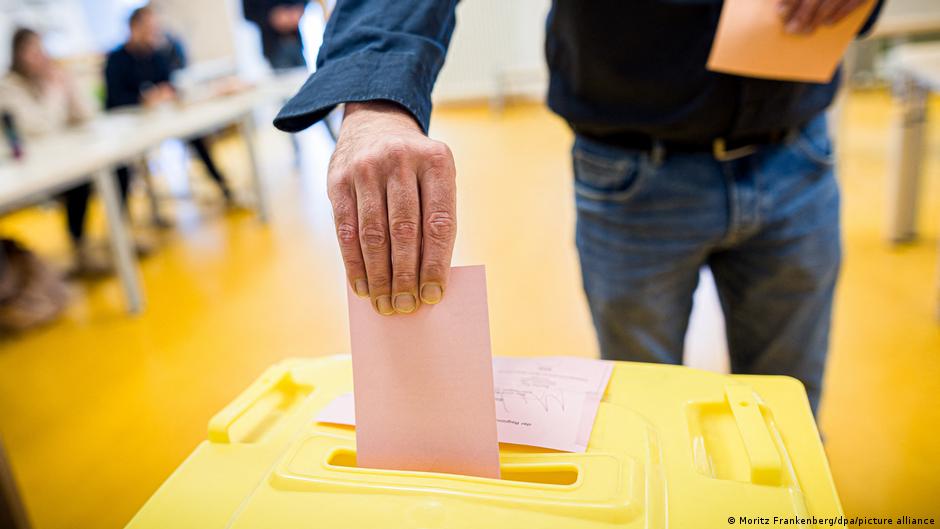
The far-right Alternative for Germany suffered a clear defeat in runoff municipal elections in Lower Saxony, failing to win any of the three mayoral or local executive posts it contested in the second round. The results, delivered across 123 municipalities on Sunday, September 27, carry implications beyond local administration in a state that matters to Germany’s industrial base, logistics networks, and regional investment planning.
For corporate leaders and investors watching Germany’s political fragmentation, the votes offered a more nuanced signal than the first round of municipal balloting. The Christian Democratic Union finished first statewide in the initial stage of voting, while the AfD placed third. But when voters faced direct runoff choices for executive offices, AfD candidates were decisively beaten in all three contests where the party remained in contention.
In Salzgitter, a city of about 100,000 residents, CDU incumbent Frank Klingebiel won 74.72 percent of the vote. Klingebiel, who has served as lord mayor since 2006, defeated AfD candidate Patricia Mair, who received 25.3 percent. In Munster, independent candidate Anna Adamczak won with 80.5 percent against AfD representative Christoph Weynand, who took 19.5 percent. In Bockenem, another independent, Jens Lüer, won 69.6 percent, while AfD candidate Felix Mull received 30.4 percent.
The runoff results showed that the AfD could convert first-round visibility into ballot access, but not into executive control in the municipalities it contested.
Urban Continuity and Strategic Stability
The most closely watched urban result came in Hanover, the administrative capital and largest city in Lower Saxony. Belit Onay of Alliance 90/The Greens retained the mayoralty, defeating Social Democratic Party candidate Axel von der Ohe in the second round. Onay has held the post since 2019, and his reelection preserves continuity in the leadership of a city that anchors regional administration, trade fairs, services, and transport connections.
From a business perspective, that continuity matters. Municipal leaders shape permitting, urban development, mobility policy, housing supply, climate adaptation, and public procurement. In Germany’s federal system, city halls are not merely symbolic offices; they are operating centers for decisions that affect corporate expansion, infrastructure coordination, and the public-private interface. Hanover’s decision to keep a Green mayor suggests that local voters were prepared to continue with an agenda associated with urban environmental policy and administrative steadiness rather than change course after one term.
Other major cities also opted largely for continuity. In Braunschweig, the second-largest city in the state, SPD incumbent Thorsten Kornblum retained the lord mayor’s office after defeating CDU candidate Maximilian Pohler. Kornblum has led the city since November 2021. In Osnabrück, Lower Saxony’s fourth-largest city, CDU incumbent Katharina Pötter kept her post, defeating Volker Bajus of the Greens. Pötter, like Kornblum, has served since November 2021.
Those outcomes reinforce a pattern of voters maintaining experienced executives in several important urban centers. For boards and management teams with operations in the region, the practical takeaway is less about party branding than about predictability. Incumbent administrations are better understood quantities for companies negotiating zoning questions, local workforce programs, transport projects, and sustainability requirements.
Greens Gain New Ground
The Greens also achieved notable victories beyond Hanover. In Oldenburg, the third-largest city in Lower Saxony, Green candidate Jascha Rohr was elected as the new head of the city, defeating Ulf Prange of the SPD. Prange had run for the Social Democrats in place of Jürgen Krogmann, who had served as lord mayor since November 2014. The result represents a leadership change in a major city and gives the Greens another prominent local executive role.
In Göttingen, the fifth-largest city in Lower Saxony, Green candidate Onyeka Oshionwu won the runoff against CDU candidate Ehsan Kangarani. Taken together with Onay’s victory in Hanover, the Green results point to continuing strength in university-linked, service-oriented, and urban constituencies. For companies, that may translate into sustained emphasis on climate policy, mobility planning, and public-sector modernization at the municipal level.
The broader first-round results, held on September 13, still showed the CDU as the strongest force statewide. According to figures available on September 14, the party led by German Chancellor Friedrich Merz received 27.2 percent of the vote. The SPD followed with 24.6 percent, while the AfD took 15.9 percent. The Greens received 14.1 percent, and The Left took 6 percent.
Turnout, according to the election commission’s September 14 data, stood at 64.6 percent. That was 7.6 percentage points higher than in the 2021 state elections. Higher participation may be especially relevant for interpreting the runoff defeats of the AfD: a larger electorate can reduce the leverage of highly motivated protest blocs when mainstream or independent candidates are able to consolidate support in the second round.
Boardroom Implications
For American business readers, the Lower Saxony results are a reminder that German political risk increasingly has to be read at the local level. National polling and federal party positioning are important, but municipal executives decide many issues that affect the operating environment day to day. The state is home to significant industrial and urban assets, and companies assessing Germany’s regional climate will be watching whether local governments can maintain administrative capacity amid political fragmentation.
The AfD’s inability to win executive posts in Salzgitter, Munster, and Bockenem limits its direct control over local government machinery in those municipalities. At the same time, its 15.9 percent statewide showing in the first round indicates that the party remains a meaningful electoral force. That combination creates a familiar strategic challenge for Germany’s mainstream parties: containing the far right in executive contests while responding to the voter concerns that have expanded its base.
The election also unfolded against institutional scrutiny of the AfD in Lower Saxony. Four AfD candidates were denied admission to the elections because of doubts about their commitment to Germany’s constitutional order. The party’s state organization is under observation by the domestic intelligence agency as a right-wing extremist grouping, a decision the party is challenging in court.
For corporate decision-makers, that legal and political backdrop matters because it affects reputational risk, civic stability, and the tone of public administration. Businesses operating in Germany often depend on close cooperation with municipal authorities, chambers of commerce, universities, and regional agencies. Leadership outcomes that preserve broadly conventional governance in major cities may reduce uncertainty, even as the wider party landscape remains unsettled.
The final message from Lower Saxony is therefore mixed but concrete: the AfD remains visible and electorally significant, yet it failed to capture the local executive offices it sought in the runoff. The Greens emerged with important urban wins, including Hanover, Oldenburg, and Göttingen, while CDU and SPD incumbents held key posts elsewhere. For a business community focused on execution rather than symbolism, the result points to continuity in several city halls and a continued contest over Germany’s political direction at the municipal level.