Russian Attacks Hit Kyiv Warehouses, Odessa Business Center and Ukraine Power Grid
The Sept. 30 strikes damaged commercial and residential sites while forcing Ukraine’s grid operator to impose power limits on industry and households.
Russian forces continued a new wave of attacks on several Ukrainian regions on the evening of Wednesday, Sept. 30, striking urban infrastructure, residential areas and business-related facilities while adding fresh pressure to Ukraine’s already strained power system.
According to local authorities, Ukraine’s State Emergency Service and media reports, the attacks caused damage in three districts of Kyiv, hit a business center in Odessa and wounded at least six people in Sumy after strikes with guided aerial bombs. The pattern of damage points to a broad operational and economic burden for Ukrainian authorities: emergency response, repairs to private and commercial property, interruptions to transport and local services, and renewed limits on electricity consumption for households, industry and businesses.
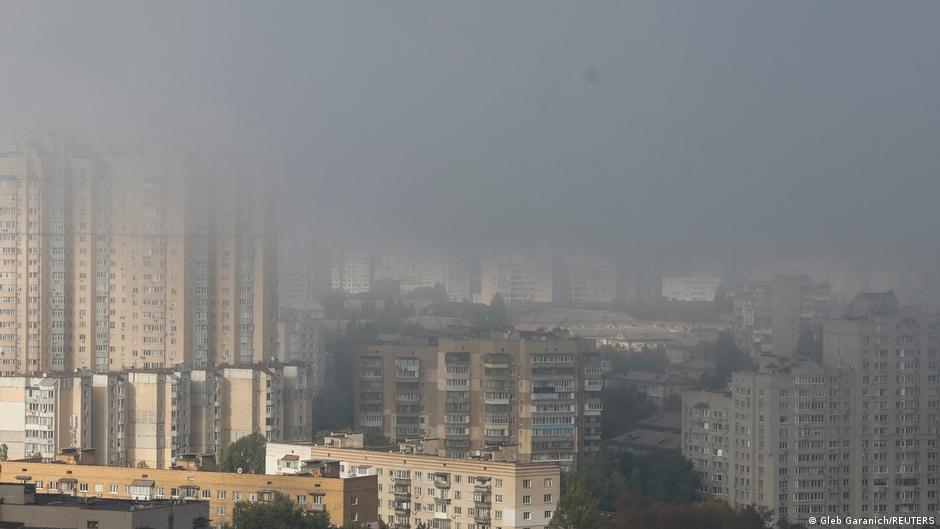
In Kyiv, Mayor Vitali Klitschko reported on his Telegram channel that a drone struck warehouse premises in the Obolonskyi district. In the Holosiivskyi district, debris from an unmanned aerial vehicle fell in an open area near a road, setting trees on fire. Separately, the UNIAN news agency reported that in Kyiv’s Solomianskyi district, a Russian drone hit a multi-story residential building. The main damage was caused to a cafe on the first floor, while the blast wave and debris also damaged a number of other establishments, apartment windows and cars parked nearby.
In Odessa, a drone struck a business center, according to the reports cited in the source material. The hit underlines the risk to civilian commercial property at a time when Ukrainian companies are already operating under wartime constraints, including workforce disruption, security costs and recurring energy instability.
Commercial Damage Meets Grid Pressure
For executives, investors and boards tracking Ukraine’s wartime operating environment, the latest attacks highlight a persistent management problem: damage is not limited to military or government targets, and the costs of recovery often move quickly into the private sector. Warehouses, cafes, business centers, residential properties and vehicles all sit within the same urban economic ecosystem. When one part is hit, the implications extend to insurance exposure, supply-chain continuity, employee safety, lease obligations and local consumer activity.
The evening attacks also caused damage in five districts of the Kyiv region, according to Tymur Tkachenko, head of the Kyiv Regional Military Administration, who reported the information on Telegram. He said a woman was injured in the Boryspil district as a result of the enemy attack. Several residential buildings and cars were also damaged in the Bucha, Obukhiv, Fastiv and Bila Tserkva districts. In Bila Tserkva, the building of an educational institution was also damaged, he said.
“In connection with the difficult situation in the energy system, tomorrow, Oct. 1, in certain regions of Ukraine, measures to limit consumption will be forced to apply,” Ukrenergo said.
The operational impact widened beyond the immediate strike sites when Ukraine’s national energy company, Ukrenergo, said in an evening Facebook statement that measures to limit electricity consumption would be introduced because of Russian attacks on energy facilities. The company said that, due to the difficult situation in the energy system, consumption restrictions would be applied in certain regions of Ukraine on Oct. 1.
For industry and business, power limitation schedules will apply from 8:00 a.m. to 9:00 p.m., according to Ukrenergo. Hourly outage schedules for all categories of consumers will apply from 8:00 a.m. to 11:00 a.m. and from 4:00 p.m. to 9:00 p.m. In Kyiv and three other Ukrainian regions, local authorities had already applied emergency power outage schedules on Sept. 30.
Boardroom Implications for Wartime Operations
The latest restrictions are significant because they affect the predictability of business activity. A company may be physically untouched by a strike yet still face production delays, reduced office operations, cold-chain risks, interrupted digital services or higher costs for backup generation. For boards and management teams with exposure to Ukraine, the message is increasingly familiar: infrastructure risk must be treated as a core operating assumption, not an episodic disruption.
That is particularly true for industrial companies and logistics-dependent businesses. A warehouse strike in Kyiv’s Obolonskyi district is not merely a real estate loss; it can disrupt inventory management, distribution timing and customer commitments. Damage to cafes and other establishments in a residential building in Solomianskyi district affects small businesses that often operate with thin margins and limited redundancy. A drone hit on a business center in Odessa raises questions for tenants, landlords and service providers about continuity planning and physical security at commercial sites.
In Sumy, Russian forces struck the city with guided aerial bombs, according to the Main Directorate of Ukraine’s State Emergency Service in the Sumy region, which reported the attack on Facebook. Preliminary data indicated that six people were injured. Private and multi-apartment residential buildings were damaged in the city, and the roof of one building caught fire.
For local administrations, the attacks require immediate crisis management: treating the wounded, extinguishing fires, clearing debris, restoring utilities and documenting damage. For the private sector, the second-order consequences can last longer. Businesses must assess whether staff can travel safely, whether premises remain usable, whether customers will return and whether electricity restrictions make normal operating hours feasible.
The events of Sept. 30 therefore carry implications beyond the direct military dimension. They show how attacks across multiple regions can combine physical damage with energy-system stress, forcing Ukraine’s public authorities and private enterprises into simultaneous response mode. The result is a recurring boardroom challenge: how to keep organizations functioning when infrastructure, property and power availability can all be disrupted in the same evening.
No single reported strike defines the broader business risk. Instead, the cumulative effect matters. Warehouses in Kyiv, a business center in Odessa, residential and educational buildings in the Kyiv region, damaged housing in Sumy and scheduled power limits all point to the same strategic reality for companies operating in Ukraine: continuity planning, energy resilience and employee safety remain central to corporate decision-making as the war continues.