Putin’s Nuclear Warning Puts War Risk Back on Europe’s Corporate Agenda
The Russian president used the Valdai forum to blame the West for the war in Ukraine while signaling fresh strategic risks for business leaders.
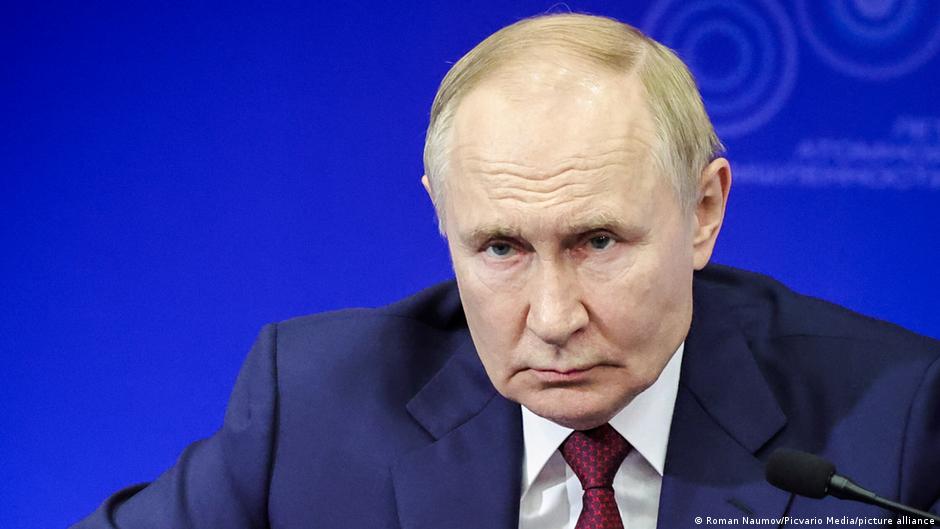
Russian President Vladimir Putin used a high-profile foreign policy forum on Thursday evening, October 1, to deliver a stark warning about the trajectory of the war in Ukraine and the broader confrontation with the West, reviving nuclear rhetoric that carries direct implications for European security planning, corporate risk models, and boardroom assumptions about geopolitical escalation.
Speaking at the plenary session of the Valdai Discussion Club, which this year was moved from Sochi to the Moscow region because of security concerns, Putin described the situation in Europe and the world as “very dangerous.” He again accused Western countries of aggression against Moscow and said the world could face a scenario with “fatal consequences.”
The Russian leader reminded the audience that several countries possess weapons “capable of destroying all living things.” Asking himself whether he was confident such weapons would not be used, he answered in the negative. Putin compared nuclear arms to a gun hanging on a theater stage, saying that under the rules of the genre it must eventually fire. At the same time, he said the task was to ensure that “this gun” does not go off.
“If we want to live — and everyone wants to live — let us live in friendship,” Putin said, while warning that further escalation could leave “no school textbooks and no one to study from them.”
For multinational companies, insurers, lenders and investors exposed to Europe, the speech underscored how the war has moved beyond a conventional battlefield risk. Putin’s remarks added pressure to corporate scenario planning already shaped by sanctions, energy disruption, supply-chain rerouting, cyber threats, defense procurement, and the physical security of assets in countries near Russia and Ukraine.
Escalation Risk Returns to the Boardroom
Although Putin framed his remarks as a warning against escalation, he also reiterated Moscow’s position that Russia could be forced to take extreme measures. That posture matters for executives because nuclear signaling, even when rhetorical, can affect capital allocation, insurance pricing, political-risk coverage, compliance decisions, and operational continuity planning across Europe.
Companies with manufacturing, logistics, energy, technology or financial exposure in the region have already had to adjust to the effects of Russia’s full-scale war in Ukraine. Putin’s comments indicate that the Kremlin continues to present the conflict not as a limited regional war, but as part of a larger confrontation with NATO and the West. That framing raises the perceived risk of broader military, cyber, and economic retaliation.
Discussing the war, now in its fifth year, Putin again claimed that Russia “did not start the war” and that Moscow’s invasion of Ukrainian territory was a response to actions by NATO and Ukraine. “The truth is that it was not we who wanted and started fighting, but they started fighting against us,” he asserted. According to Putin’s version of events, the West had for years encouraged “aggressive nationalism and Russophobia” in Ukraine in order to turn the country into a “tool” against Russia. He also claimed that “radicals in Kyiv” were pushed toward a “coup” and that NATO allegedly planned to place bases on what he called Russia’s “historical territories.”
Those claims remain central to the Kremlin’s public justification for the invasion, but they also serve a strategic function for Moscow’s external messaging. By portraying the West as the aggressor, Putin is signaling that Western corporate and government support for Ukraine may be treated by Russia as part of the conflict environment rather than as separate commercial or diplomatic activity.
Territory, Technology and Military-Industrial Targets
Putin also addressed the battlefield situation in Ukraine. He claimed that Russian forces had seized 3.5 times more territory over the past month than in the previous one and asserted that Russia now controls 89% of Donetsk region. The Institute for the Study of War, however, says Russia currently controls 81% of Donbas.
Kyiv had said several days earlier that Ukrainian forces retook 176 square kilometers of Ukrainian territory during three seasons of the “Vivaldi” counteroffensive operation. Putin nevertheless expressed confidence at Valdai that Russia would seize all of those territories and said Ukraine had no reason to hold onto them.
The speech also touched on the growing role of artificial intelligence in warfare. Putin called for a new convention governing the conduct of hostilities, citing the rapid development of AI technologies. As an example, he referred to Soviet officer Stanislav Petrov, who in 1983 did not give an order to launch a nuclear strike despite being required by protocol to do so. Putin argued that artificial intelligence would have acted differently.
That point may resonate in corporate strategy circles well beyond the defense sector. AI-enabled targeting, autonomous systems, battlefield analytics, and cybersecurity tools are increasingly relevant to military procurement and export-control regimes. A new arms-control framework, if ever pursued, could affect technology companies, defense contractors, semiconductor firms, cloud providers and dual-use suppliers operating in or selling to allied markets.
Asked about the possibility of strikes against military enterprises in Europe, Putin said Russia would “not necessarily” do so but would “track threats.” He added that Moscow considers the involvement of Western countries in strikes on Russian territory to be a direct threat.
The location of the Valdai meeting itself highlighted the changing security environment. This year’s session was reportedly moved from Sochi to the Moscow region, where Russia has concentrated more air-defense systems. The British newspaper Financial Times, citing four sources, reported that the change was made because of security concerns amid intensified Ukrainian attacks. Two of the sources said the relocation took place at the insistence of Putin’s security service.
For business leaders, the operational lesson is clear: the war’s risk perimeter is no longer confined to Ukraine’s front lines. It now extends across infrastructure, technology, military supply chains, political decision-making and the assumptions underpinning Europe’s investment climate.