North Korean Missile Launch Raises Strategic Risk for U.S.-Asia Boardrooms
South Korea said Pyongyang fired at least one ballistic missile toward the Sea of Japan after a disputed border blast injured three soldiers.
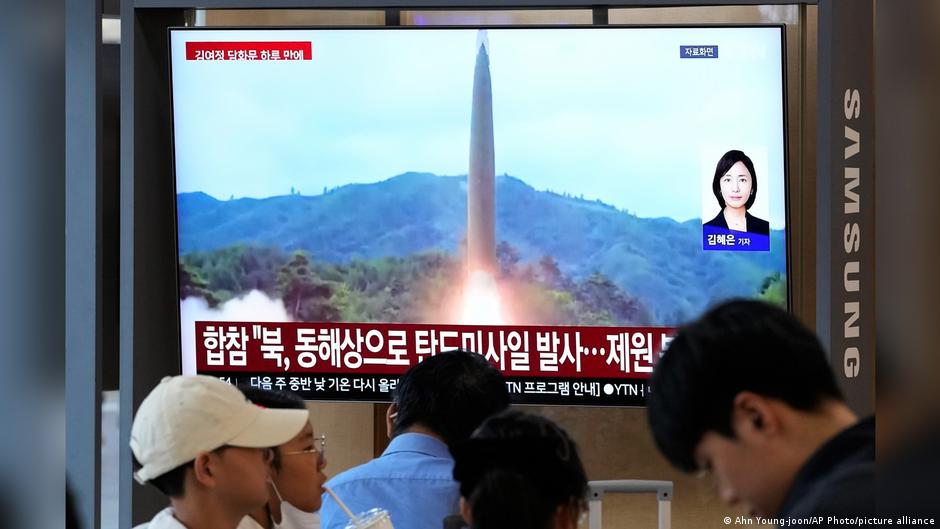
North Korea fired at least one ballistic missile toward the Sea of Japan, South Korea’s military said Saturday, October 3, adding a fresh security shock to a region central to U.S. corporate supply chains, defense planning and investor risk models.
The launch was reported by South Korea’s Joint Chiefs of Staff, which said Seoul, Washington and Tokyo were maintaining a high level of readiness while closely sharing information on North Korean ballistic missiles. The statement underscored the degree to which a military event on the Korean Peninsula quickly becomes a trilateral strategic-management issue for the United States and two of its most important Asian partners.
“South Korea, the United States and Japan are maintaining a high level of combat readiness, while closely exchanging information on North Korean ballistic missiles,” Seoul said.
For American business leaders, the immediate significance is not only the missile itself, but the broader pattern of escalation around one of Asia’s most industrially important fault lines. South Korea is home to globally significant semiconductor, automotive, battery, shipbuilding and electronics companies, many of which sit inside supply chains used by U.S. manufacturers, technology platforms and defense contractors. Japan is similarly central to precision equipment, materials, finance and logistics. Any increase in military risk around the peninsula therefore carries boardroom implications far beyond Northeast Asia.
The missile report followed a September 21 explosion in the border area between North and South Korea that injured three South Korean service members. Seoul believes the incident resulted from the detonation of North Korean anti-personnel mines, AFP reported, citing South Korean military sources. The accusation intensified an already tense environment along the Demilitarized Zone, where military signaling often carries diplomatic and economic consequences.
Escalation After a Border Blast
South Korean Defense Minister Kang Shin-chul accused Pyongyang of violating the armistice and announced an intention to take responsive measures. South Korea’s Joint Chiefs of Staff also demanded an apology from North Korea. That language matters for executives and investors because it suggests Seoul is framing the incident not as an isolated accident, but as a breach of the framework that has governed the peninsula since the end of active hostilities in the Korean War.
North Korea rejected the accusation. Kim Yo Jong, the sister of North Korean leader Kim Jong Un, called the South Korean claim “extremely low and dirty,” according to the North’s state news agency KCNA. Her statement kept the confrontation in the realm of political messaging, but the subsequent missile launch placed military readiness back at the center of the crisis.
In corporate strategy terms, the sequence creates a familiar but serious dilemma: companies operating in or dependent on Northeast Asia must distinguish between routine North Korean brinkmanship and a shift that changes contingency planning. Firms with exposure to South Korea and Japan are accustomed to episodic missile tests and sharp rhetoric from Pyongyang. Yet the combination of a border incident, injuries to South Korean personnel, accusations of an armistice violation and a missile launch raises the level of scrutiny for boards responsible for operational resilience.
The most immediate boardroom questions are likely to focus on continuity plans rather than wholesale relocation. Executives may revisit emergency communication protocols, supplier redundancy, shipping alternatives, insurance coverage and the location of key inventories. Multinationals with employees in South Korea may also reassess travel guidance, crisis-response chains and coordination with local authorities. Financial institutions and funds with regional exposure may weigh whether the latest episode warrants changes to risk assumptions, particularly in sectors tied to defense, chips, logistics and foreign exchange volatility.
Why the Peninsula Still Drives Corporate Risk
The two Koreas technically remain at war. The Korean War ended in 1953 with an armistice agreement, not a formal peace treaty. The countries are separated by the Demilitarized Zone, with a demarcation line running through the middle of the mined strip. It remains one of the most fortified and heavily mined borders in the world.
That unresolved legal and military status is more than historical background. It is a standing geopolitical risk factor built into the cost of capital, security planning and supply-chain design across the region. Every new launch or border confrontation tests the mechanisms that have kept a fragile balance in place: military coordination among South Korea, the United States and Japan; deterrence messaging; and the ability of governments to prevent localized incidents from becoming broader confrontations.
The U.S. dimension is especially important for American companies. Washington’s security partnership with Seoul and Tokyo means that missile activity by North Korea is not treated as a purely regional event. The South Korean statement’s emphasis on information-sharing among the three countries shows how rapidly defense coordination becomes part of the response. For U.S. executives, that creates a practical need to monitor not just Pyongyang’s actions, but also the policy reactions in Seoul, Washington and Tokyo.
There is no indication in the South Korean statement that commercial operations have been directly disrupted by the launch. The source report also does not specify the missile type, range, flight duration or landing area. Those missing details matter: the market impact of a missile launch often depends on whether it crosses Japanese territory, threatens shipping or aviation corridors, or suggests a new technical capability. In this case, the confirmed facts are narrower but still consequential: at least one ballistic missile was fired toward the Sea of Japan, and the launch came after a border blast that Seoul has tied to North Korean mines.
For boards, the prudent response is likely to be disciplined monitoring rather than alarm. The event reinforces why companies with Northeast Asia exposure need standing contingency frameworks, not improvised reactions. The strategic environment around the Korean Peninsula remains structurally unstable, and the latest launch is a reminder that military signaling can quickly become a business-risk event for companies whose operations depend on stability in South Korea, Japan and the wider Pacific economy.