Kallas Presses EU Envoys to Extend Russia Sanctions Amid Oligarch Dispute
The European Union faces a deadline decision on sanctions continuity as member states debate whether to delist Alisher Usmanov and Mikhail Fridman.
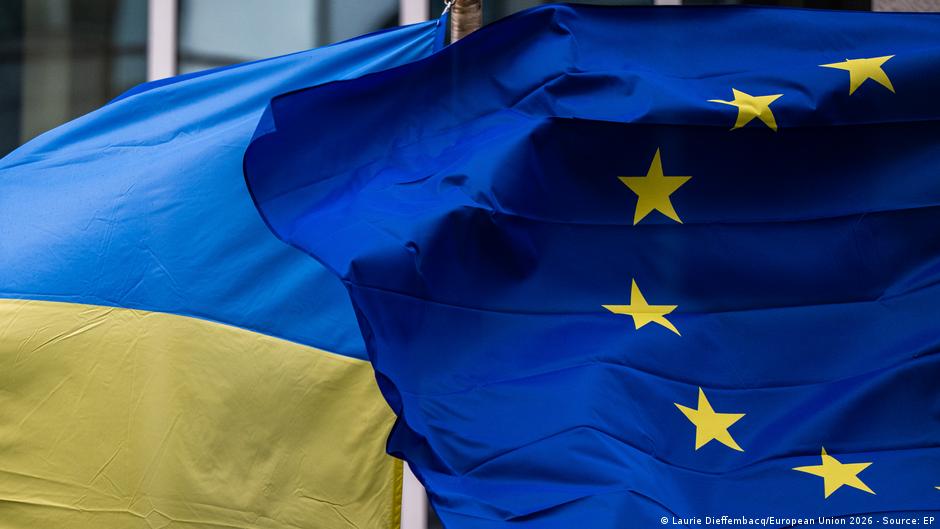
European Union foreign policy chief Kaja Kallas urged the bloc’s permanent representatives to extend sanctions against Russia, framing the decision as a central element of the EU’s response to the war in Ukraine and a test of its ability to maintain pressure on Moscow despite internal disagreements.
Speaking to journalists in New York on Monday, September 21, ahead of a new meeting of EU member states’ ambassadors, Kallas said the sanctions regime remained essential to depriving Moscow of financing connected to the war. Her comments came after EU ambassadors failed earlier to agree on another six-month extension of restrictive measures linked to Russia’s violation of Ukraine’s territorial integrity.
“Sanctions are a key element of our response to the war launched by Russia,” Kallas said, describing them as a tool intended to deny Moscow funding.
According to AFP, Kallas said EU representatives were seeking to conclude negotiations on extending the punitive measures against Russia soon and to ensure that they take effect quickly. She also stressed that the EU’s position had not changed and that Brussels was already working on a new sanctions package.
Deadline Pressure and Boardroom Stakes
The next meeting of the permanent representatives of EU countries was scheduled for the morning of September 22, according to a DW correspondent in Brussels citing an EU diplomat. The discussion was expected to focus on whether sanctions should be lifted from Russian billionaires Alisher Usmanov and Mikhail Fridman while maintaining restrictive measures against thousands of other individuals and organizations.
For business leaders and corporate boards, the dispute illustrates the continued complexity of operating across European markets while sanctions policy remains both politically sensitive and procedurally dependent on member-state consensus. Even when the broader strategic objective is stable, individual listings can become the focus of intense diplomatic maneuvering, creating uncertainty for financial institutions, compliance departments, counterparties and companies with historic exposure to sanctioned Russian individuals or entities.
On September 14, EU ambassadors were unable to reach agreement on the latest six-month extension of sanctions against Russia over the violation of Ukraine’s territorial integrity. Instead, they decided to extend the existing regime temporarily while consultations continued, setting the expiry point at midnight on September 22.
Sources speaking to DW on condition of anonymity said the disagreements were connected to Slovakia’s push to remove Usmanov and Fridman from the sanctions list. France, in turn, blocked the extension of the sanctions regime while seeking Usmanov’s removal. Luxembourg also supported lifting punitive measures against Fridman, Reuters reported on September 21, citing diplomatic sources.
The mechanics of the dispute matter because EU sanctions require political cohesion at moments when national capitals may have different legal, economic or diplomatic priorities. A temporary extension preserves continuity, but it also signals that the bloc’s sanctions infrastructure can face friction when high-profile individuals are involved. For executives, that means sanctions exposure remains not only a legal and compliance question, but also a live boardroom risk shaped by diplomacy, litigation pressure and evolving political calculations.
Ukraine Pushes Back
Ukraine reacted critically to the possibility that sanctions could be lifted from both Russian billionaires. Ukrainian Foreign Minister Andrii Sybiha said Usmanov and Fridman had been placed under sanctions because of their belonging to the “Russian aggressive regime, which is waging a war of conquest against Ukraine.” Since then, he said, nothing had changed.
Kyiv’s position underscores the reputational and strategic dimensions of any EU decision. Removing specific individuals from the sanctions list while preserving the broader regime could be read by Ukraine and its supporters as a weakening of political resolve, even if EU officials argue that the overall policy remains intact. Conversely, maintaining the listings could reinforce the EU’s message that wealthy and influential figures associated with Russia’s power structure remain within the reach of European restrictions.
Kallas’s intervention sought to keep the focus on the larger strategic purpose of sanctions: limiting Russia’s capacity to finance the war in Ukraine. But the immediate question before EU ambassadors was more granular and potentially consequential: whether the bloc can reconcile disputes over individual billionaires while avoiding a rupture in the sanctions framework that covers thousands of people and entities.
The outcome of the September 22 meeting was therefore set to carry implications beyond the specific cases of Usmanov and Fridman. For policymakers, it would demonstrate whether the EU can sustain a unified sanctions line as the war continues. For multinational companies, banks and investors, it would offer another signal about the durability of Europe’s Russia-related compliance environment and the likelihood that sanctions policy will remain an active constraint on cross-border business decisions.
Brussels is already preparing a new package of sanctions, according to Kallas, indicating that the EU’s policy architecture is not merely being maintained but potentially expanded. Yet the dispute over the current extension shows that each renewal can become a negotiation over both principle and names. The boardroom implication is clear: companies cannot treat the Russia sanctions regime as static, even when the EU’s stated position remains unchanged.