Berlin Left Party Win Puts Housing Policy and Coalition Discipline to Test
The Left Party’s first-place finish in Berlin’s parliamentary election creates a complex governing challenge for rivals and investors.
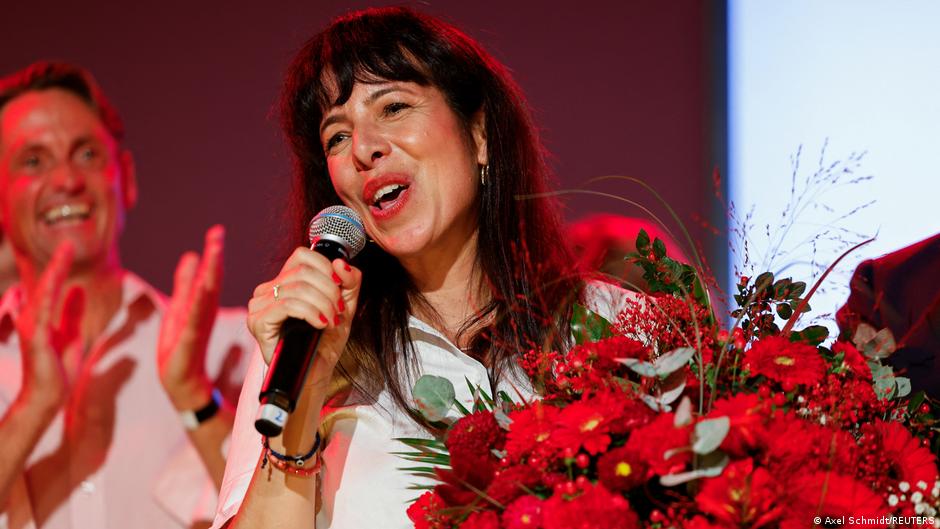
The Left Party has won first place in elections to Berlin’s House of Representatives, according to official preliminary results released overnight into Monday, September 21, marking a sharp shift in the political balance of Germany’s capital and setting up difficult coalition talks with direct implications for housing companies, municipal governance and national party strategy.
The party received 25.7% of the vote in the September 20 election, an increase of 13.5 percentage points compared with the 2023 election. The conservative Christian Democratic Union, the party of German Chancellor Friedrich Merz, finished second with 18.8%. The far-right Alternative for Germany placed third with 16.3%, followed by the Greens at 14.3% and the Social Democratic Party at 12.1%.
Two parties failed to clear Berlin’s 5% threshold for parliamentary representation. The left-populist Sahra Wagenknecht Alliance received 4.7%, while the liberal Free Democratic Party took 2.5%. Turnout was 74.2%.
The result gives the Left Party 47 seats in the new House of Representatives. The CDU will hold 35 seats, Alternative for Germany 29, the Greens 26 and the Social Democrats 22. For Berlin’s political leadership, the arithmetic points toward a possible left-leaning governing arrangement, but also toward negotiations likely to test the policy discipline and risk tolerance of every prospective partner.
Mandate Meets Management Challenge
Elif Eralp, the Left Party’s Berlin leader, said she expects to take the role of governing mayor of the German capital. Her statement after the vote framed the result as a leadership mandate rather than merely a protest vote or tactical swing among urban voters.
“The people of Berlin have given us a clear mandate to lead the city,” Eralp said.
For a business audience, the central question is not only who can assemble a majority, but what kind of operating environment a new Berlin government would create. Berlin is both a political capital and a major urban economy, where housing, infrastructure, public finance and migration policy intersect with corporate planning. A Left-led administration would immediately focus attention on the real estate sector, the city’s relationship with large landlords and the extent to which symbolic electoral commitments become executable policy.
The most likely coalition partners for the Left are viewed as the Greens and the Social Democrats. Yet talks among the three are expected to be difficult because of disagreements across several policy areas. The clearest conflict concerns housing, where the Left Party and the Greens want to implement the outcome of a 2021 city referendum calling for the expropriation of more than 200,000 apartments from large housing companies. The Social Democrats oppose that plan.
That divide matters well beyond campaign messaging. Expropriation, if pursued by a governing coalition, would raise questions about compensation, legal process, investor confidence and the long-term role of private capital in Berlin’s residential market. Even before any concrete measure is adopted, the issue could influence boardroom assessments among property owners, lenders and developers exposed to the city.
Coalition Tests Extend Beyond Housing
The potential coalition also faces a politically sensitive debate over antisemitism. Eralp has repeatedly emphasized that she wants to support and develop Jewish life in Berlin. Even so, the Left Party continues to face criticism from potential coalition partners. Felix Banaszak, co-chair of the Greens, has said a coalition with the Left Party is possible, but only if the party demonstrates a “clear position against antisemitism.”
Such conditions suggest that coalition talks will not be confined to budget lines and cabinet posts. They will also involve questions of political credibility, public trust and reputational risk. For the Greens and Social Democrats, joining a government led by the Left would require assurances that contentious issues can be managed without undermining their own national brands. For the Left, the challenge is to convert an electoral breakthrough into executive authority while satisfying partners who are already signaling red lines.
An additional controversy emerged on election night. Issa Remmo, described by German media as the head of the well-known Remmo clan of Arab origin, was seen at the Left Party’s event in Berlin’s Neukölln district after voting ended.
The Left Party moved to distance itself from Remmo. Party representatives said the event was open and that anyone could attend. Speaking on ZDF, Eralp said, “We have nothing to do with organized crime.”
Other parties have nevertheless criticized the Left. Nina Stahr, head of the Greens’ Neukölln branch, demanded explanations from the party’s potential partners and linked the matter to negotiations over forming Berlin’s next government.
The episode adds a governance and reputational dimension to an already complex negotiating environment. In a city where local politics often carries national resonance, coalition partners may now seek not only policy concessions but also assurances about vetting, public events and crisis handling. Those concerns could shape the early posture of talks as much as the distribution of seats.
The CDU’s second-place finish also complicates the broader picture for Chancellor Merz’s party. With 18.8%, the conservatives remain a major force in the capital but trail the Left by a significant margin. Alternative for Germany’s 16.3% result confirms the far right’s presence in the legislature, while the Greens and Social Democrats retain enough seats to become indispensable to a Left-led governing majority.
For Berlin’s businesses, investors and civic institutions, the immediate period ahead will be defined by coalition risk. The election has produced a clear first-place party, but not a frictionless governing formula. The next phase will determine whether the Left Party can turn its 47 seats into a stable administration, whether prospective partners can reconcile their differences over housing and antisemitism, and whether Berlin’s policy direction shifts from electoral promise to executive action.