U.S. Strike on Caribbean Vessel Raises Strategic and Legal Risks for Washington
The latest operation underscores how a yearlong military campaign against alleged drug traffickers is becoming a broader test of U.S. executive power.
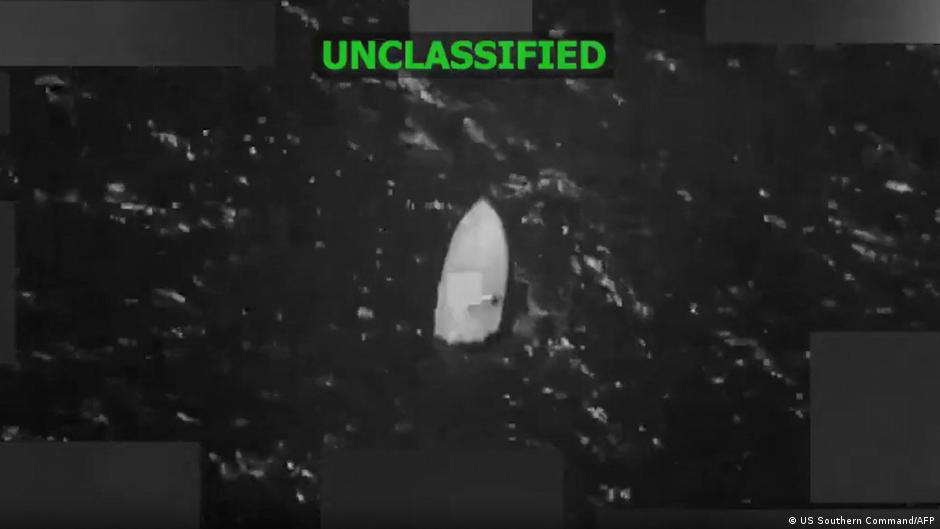
American military officials said they carried out a lethal strike on a speedboat in the Caribbean Sea that they said was carrying drugs, killing four people in an operation that adds to a widening campaign against alleged narcotics traffickers in the region.
U.S. Southern Command reported on Saturday, September 19, that American forces had struck a vessel moving along routes used for illegal drug transportation in the Caribbean. The command described the action as a “lethal strike” and said the boat had been linked to drug trafficking through intelligence.
“Credible intelligence confirmed this vessel’s involvement in drug trafficking. During the operation, four narcoterrorists were eliminated,” the military said.
The statement places the latest strike squarely inside a campaign that has increasingly blurred the line between counternarcotics enforcement and direct military action. For Washington, the operational message is straightforward: suspected maritime smuggling routes in the Caribbean are being treated not only as criminal channels, but as targets for lethal force. For corporate leaders, investors and policy advisers watching the region, the implications extend beyond the immediate security narrative.
The Caribbean is a strategic corridor for trade, energy transit, tourism and financial services. A sustained U.S. military campaign there can influence insurance pricing, shipping risk assessments, regional diplomacy and the compliance posture of companies operating across the Americas. Even where business exposure is indirect, executives must now account for a security environment in which Washington is willing to use force repeatedly against vessels it says are tied to narcotics networks.
A Campaign With Boardroom Consequences
The military released video on X showing a moving vessel before it disappears in a bright flash. The United States did not present evidence proving the boat’s involvement in drug trafficking. That absence of publicly disclosed proof is likely to matter in policy circles and corporate risk committees alike, because the credibility of intelligence-based targeting can affect diplomatic confidence and the operating climate for firms in nearby markets.
According to the Associated Press, including this latest incident, the number of people killed in U.S. military strikes on vessels of alleged drug traffickers in the Caribbean has reached at least 231. The agency calculated that 69 similar strikes have been conducted as part of a campaign that has been under way for more than a year.
Those figures point to an operation of scale rather than a narrow tactical exception. In business terms, that changes the category of risk. A single strike may be treated as an isolated security event. A yearlong pattern of dozens of strikes becomes a factor in regional forecasting, government relations planning and legal review. Companies with exposure to maritime logistics, port operations, aviation, hospitality or cross-border finance may have to assess whether the campaign could trigger retaliatory risks, port disruptions, tighter enforcement scrutiny or diplomatic friction.
The strategic framing also matters. On October 23, 2025, at a White House press conference, U.S. President Donald Trump said American forces would “kill people” who bring drugs into the country from Venezuela. That statement gave the campaign an unmistakably executive character: a presidential directive, expressed in blunt terms, that places lethal force at the center of a counternarcotics strategy connected to Venezuela.
For boards and senior management teams, the question is not only whether the policy is effective. It is whether it is durable, lawful and likely to escalate. A campaign justified by intelligence that is not publicly disclosed can create uncertainty for counterparties and regional governments. It can also raise reputational questions for firms whose operations intersect with U.S. security priorities, especially in sectors that depend on stable relations with both Washington and Caribbean or Latin American authorities.
Legal Scrutiny Adds Another Layer of Risk
The campaign has already drawn criticism from international human rights authorities. On October 31, 2025, Volker Türk, the United Nations High Commissioner for Human Rights, said U.S. attacks on vessels “allegedly linked to drug trafficking” violate international law. Türk called for immediate, independent and transparent investigations into the strikes.
That intervention adds a legal and governance dimension to what the U.S. government presents as a security operation. If international bodies continue to challenge the legality of the strikes, the matter could become a source of diplomatic pressure and domestic political debate. Such disputes can affect sanctions policy, defense partnerships, regional basing arrangements and the degree of cooperation offered by Caribbean governments.
From a corporate strategy perspective, the core issue is predictability. Businesses operating in sensitive regions often adapt to heightened enforcement, but they depend on clear rules and credible procedures. A campaign involving lethal strikes, undisclosed evidence and international-law criticism introduces uncertainty into the decision-making environment. That uncertainty can ripple through due diligence, insurance underwriting, vendor screening and geopolitical risk models.
The latest strike therefore carries significance beyond the deaths of four people aboard one vessel. It reinforces a policy posture in which the U.S. military is being used as an instrument of counternarcotics strategy in the Caribbean, with the executive branch signaling a willingness to sustain lethal operations. Whether that approach deters trafficking, intensifies legal challenges or strains regional relationships remains central to its long-term consequences.
For American business leaders, the development is a reminder that security policy can quickly become a corporate planning issue. The boardroom implications lie in the campaign’s scale, its proximity to commercial routes, its connection to Venezuela and the unresolved legal questions now surrounding the use of force. As the United States continues to define drug trafficking as a target for military action, companies with regional exposure will need to monitor not only enforcement trends, but also the political and legal durability of the strategy behind them.