Moscow Drone Attack Tests Corporate Resilience and Infrastructure Risk Planning
Russian officials reported two deaths, airport disruptions and fires after a large Ukrainian drone attack across Moscow and its region.
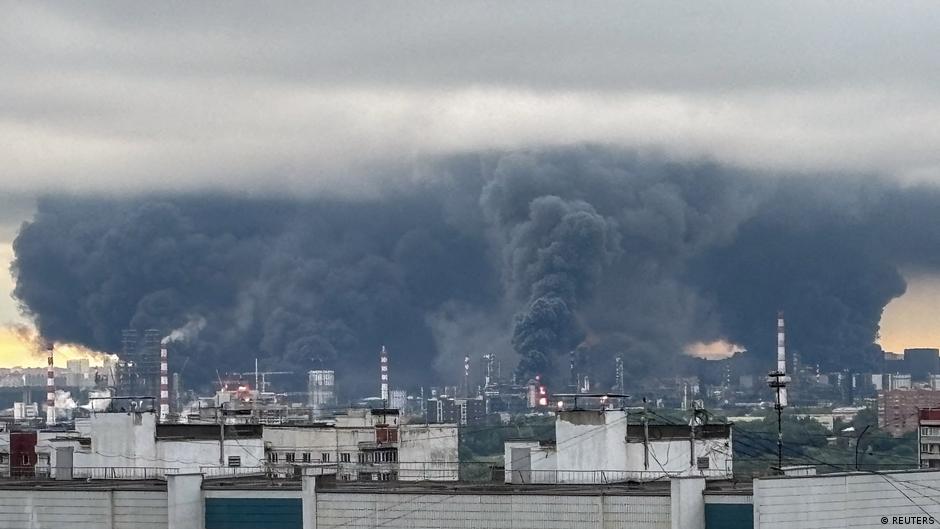
A large-scale Ukrainian drone attack on Moscow and the surrounding region on Sunday has added a new layer of operational risk for companies exposed to Russia’s capital region, as officials reported deaths, injuries, fires and temporary airport shutdowns across one of the country’s most important economic corridors.
Andrei Vorobyov, the governor of the Moscow region, wrote on Telegram on the morning of Sunday, September 20, that two people were killed and at least six were injured in what he described as a massive drone attack. He said 249 Ukrainian unmanned aerial vehicles had been shot down over the region.
The incident was not only a security event. For executives, logistics managers, insurers and infrastructure operators, the reported pattern of damage points to a widening business continuity challenge around Moscow: residential buildings were hit, a warehouse complex caught fire, airport operations were suspended, and an oil refinery site inside Moscow was reported damaged.
“Two people were killed and at least six were injured,” Vorobyov wrote, according to the Russian-language account of the attack.
The scale of the reported drone interceptions, if confirmed, underscores the growing strain on air defense, emergency response and corporate contingency systems in a region where transport, refining, warehousing and administrative functions are closely intertwined. Even when direct physical damage is limited, the knock-on effects of airport closures, emergency cordons and uncertainty over critical sites can force companies to revisit assumptions about staffing, inventory, routing and site security.
Industrial and logistics exposure comes into focus
Vorobyov said that in Sofyino, a warehouse complex caught fire after the attack. The anonymous Telegram channel VChK-OGPU claimed that a logistics complex of about 850,000 square meters was completely engulfed in flames. That claim has significant commercial implications if accurate, because a facility of that size would represent a major logistics asset, with potential consequences for storage capacity, distribution schedules, tenant operations and insurance claims.
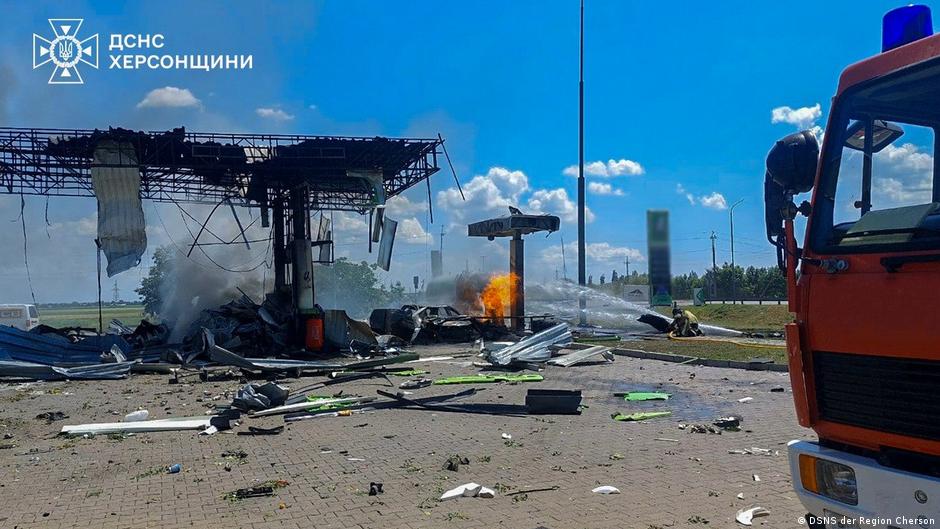
The governor also said drones struck and caused fires in three apartment buildings and one private home. Such damage expands the incident beyond industrial facilities and into residential risk, raising questions for local authorities and property managers over evacuation planning, emergency repairs and civil defense protocols in dense urban and suburban districts.
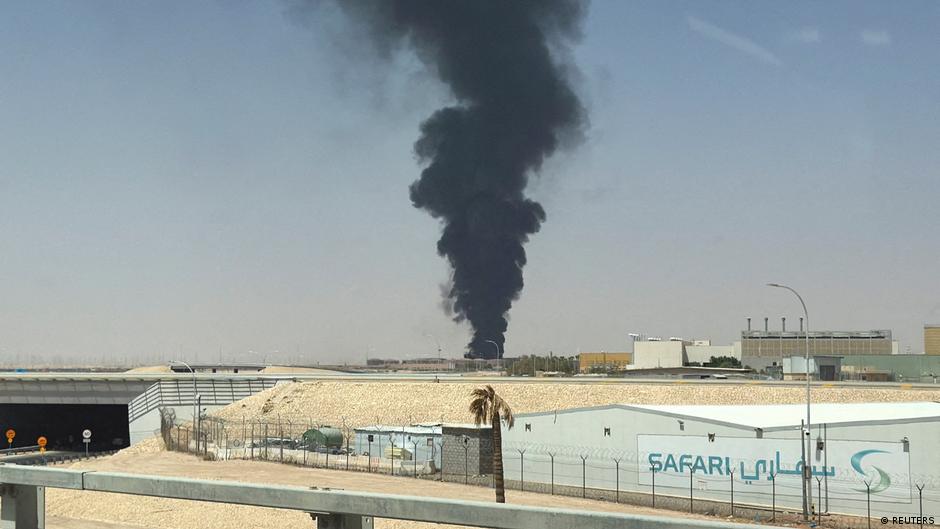
Moscow Mayor Sergei Sobyanin reported that 186 drones were shot down on approach to Moscow. He added that a site on the grounds of the Moscow oil refinery had been damaged and said there were no casualties there. According to VChK-OGPU, the oil refinery in Moscow’s Kapotnya district was on fire. The same refinery had already been attacked in June, according to the source article.
For boardrooms tracking exposure to Russia-related assets, the reported refinery damage is especially relevant. Refineries are highly sensitive nodes in energy supply chains, and repeated attacks on the same facility can change the risk profile for operators, suppliers, contractors and counterparties. Even when production impacts are not disclosed, the recurrence of incidents may prompt tougher internal reviews of asset hardening, spare parts availability, worker safety procedures and political-risk coverage.
Airport suspensions add pressure to contingency planning
The source article said Moscow-area airports Vnukovo, Domodedovo and Zhukovsky suspended operations. For companies, the temporary halt at three airports is a reminder that drone warfare can disrupt not only military or industrial sites but also business travel, cargo movements and time-sensitive supply chains.
Airport suspensions can quickly affect executive travel, courier services, perishable shipments and high-value components that depend on predictable air links. They may also force rerouting through other hubs, increasing cost and uncertainty. In a capital region where national agencies, corporate headquarters, financial institutions and logistics providers are concentrated, even short interruptions can have an outsized planning impact.
Other reported damage showed the geographic spread of the event. VChK-OGPU claimed that drones attacked a thermal power plant in Lyubertsy and that a drone hit a residential building in Kotelniki. The Telegram channel Ostorozhno, Novosti, citing local residents, reported a fire in a residential complex in Kotelniki. In Istra, debris from a drone damaged an apartment in a residential building, according to Tatiana Vitusheva, the head of the municipal district.
The combination of alleged strikes or debris impacts across logistics, refining, power infrastructure, airports and housing creates a complex risk map for corporate decision-makers. It also complicates crisis communications: companies operating nearby must determine what can be verified, what needs to be disclosed internally, and how to communicate with employees without amplifying unconfirmed claims.
From an American business reporting perspective, the boardroom question is less about any single strike than about the cumulative pressure on operating assumptions. Firms with direct or indirect exposure to Moscow-region infrastructure may face renewed scrutiny from directors, lenders and insurers over continuity plans. That includes whether alternate logistics sites are available, whether suppliers can shift delivery routes, and whether local management has authority to pause operations if employee safety is at risk.
The reported deaths and injuries also place a human dimension at the center of what might otherwise be framed as an infrastructure story. For employers, duty-of-care obligations become more immediate when attacks reach residential areas and commuter zones. Human resources teams may need to verify employee locations, offer remote-work flexibility where possible, and coordinate with building managers or local authorities after drone debris or fires affect housing.
There are also implications for energy and transport risk modeling. A damaged refinery site, a reported attack on a thermal power plant and suspended airport operations all point to vulnerabilities that can ripple through procurement, pricing and delivery schedules. Companies that previously treated Moscow as a relatively stable administrative and commercial base may now need to reassess concentration risk in and around the capital.
Many details in the reports remain dependent on official statements and Telegram-channel accounts cited in the source article. Still, the business significance is clear: the attack described by regional and city officials represents a substantial stress test for Moscow’s infrastructure ecosystem. For corporate leaders, the immediate operational lesson is that wartime security risk can reach warehouses, airports, energy assets and residential districts at the same time, demanding a more integrated approach to resilience than isolated site-by-site planning.