United Russia Heads for Duma Win With Constitutional Majority in Reach
Early results reported by Russia’s election commission point to a stronger ruling-party mandate and tighter control over parliament.
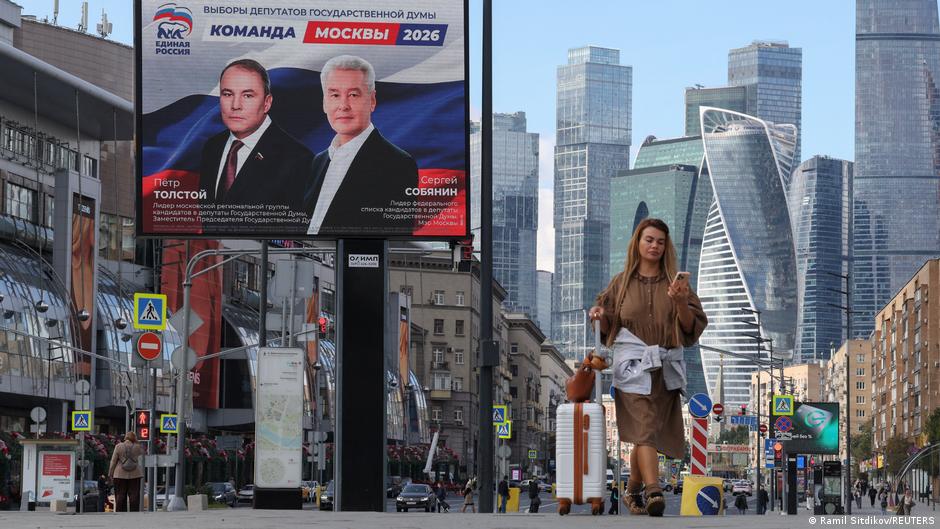
Russia’s ruling United Russia party was on course for a decisive victory in elections to the State Duma, according to preliminary figures released by the Central Election Commission after 82.19 percent of protocols had been processed. The result, if confirmed, would reinforce the Kremlin-aligned party’s control of the lower house of parliament and strengthen its ability to manage legislation without relying on opposition factions.
The commission said late on Monday, September 21, that United Russia had 57.76 percent of the vote in elections to the ninth convocation of the State Duma. The Communist Party of the Russian Federation was in second place with 13.89 percent, followed by the Liberal Democratic Party of Russia with 8.77 percent. The New People party had 7.97 percent, while A Just Russia stood at 4.99 percent.
That last figure placed A Just Russia at risk of failing to clear the five percent threshold required for party-list representation, according to the commission’s data. For United Russia, the preliminary result marked a significant increase from the 49.82 percent it received in the 2021 State Duma elections.
Strategic Control of the Legislature
For Russia’s political leadership, the figures point to more than a routine electoral win. United Russia candidates were also leading in 208 of the 225 single-mandate districts, the commission reported. Taken together with the party-list result, that would put the ruling party above 301 seats, the level needed for a constitutional majority in the Duma.
A constitutional majority carries substantial institutional weight. It allows a party to pass constitutional amendments and control the legislative calendar with limited need for negotiation. In corporate terms, the outcome resembles a controlling shareholder not merely retaining influence but expanding voting power enough to remove most procedural constraints. For executives, investors and foreign governments watching Russia’s policy direction, that means fewer internal parliamentary checks on decisions coming from the executive branch.
The Duma has long been dominated by forces aligned with the Kremlin, but the scale of United Russia’s projected seat count matters for how policy is processed. A larger majority can reduce bargaining among nominally competing factions, accelerate budget and security legislation, and give the ruling bloc greater flexibility in managing sensitive domestic measures. It also signals that the Kremlin’s preferred political vehicle remains the central platform for distributing authority across regions and federal institutions.
After 82.19 percent of protocols were processed, the Central Election Commission reported United Russia at 57.76 percent of the vote.
Opposition Constraints and International Criticism
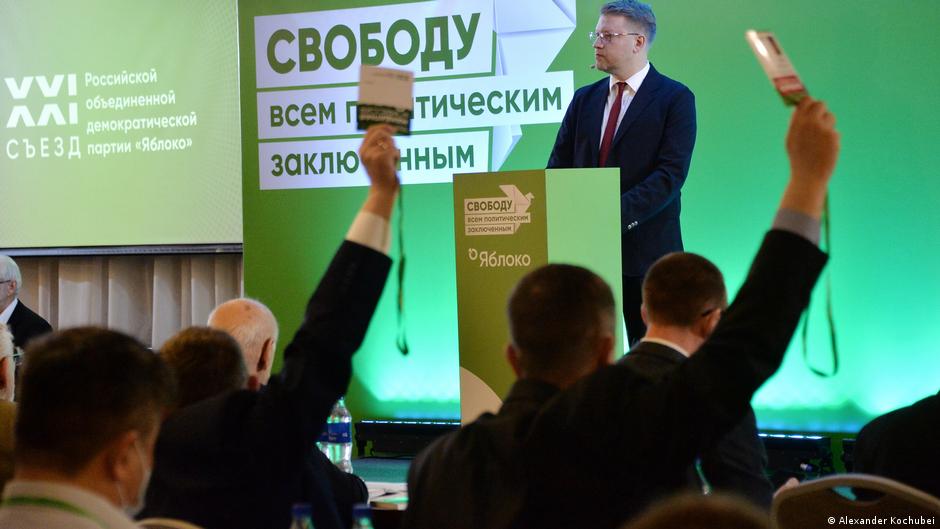
The election took place against a restrictive political backdrop. The only major party that had opposed the war, Yabloko, was removed from the ballot. That exclusion narrowed the formal electoral field and left voters without a major anti-war party competing in the parliamentary contest.
This year’s three-day parliamentary election was also conducted in Ukrainian territories occupied by Russia. That element added to criticism from abroad and deepened the dispute over the legitimacy of the vote. Germany and the European Union criticized the parliamentary elections in Russia, pointing to what they described as their staged character and to repression against the opposition.
Those criticisms are likely to shape the international interpretation of the result. While the Central Election Commission’s reported figures show United Russia moving toward a commanding victory, Western governments have framed the election environment as heavily managed. For multinational companies, financial institutions and policy analysts, the distinction is important: the election result may clarify Russia’s internal power structure, even as it does little to ease external concerns over political freedoms, war policy or sanctions risk.
The participation of occupied Ukrainian territories in the vote is especially consequential for any business or diplomatic assessment. It ties the parliamentary process directly to the broader conflict and to the territorial claims that have already triggered sanctions and diplomatic isolation. A stronger Duma majority for United Russia would therefore not be read simply as a domestic political event, but as a signal about the durability of the current policy course.
Boardroom Implications
For companies and boards with exposure to Russia, the preliminary results point to continuity, centralization and limited institutional uncertainty inside the Russian political system. A constitutional majority would give the ruling party the capacity to support major legal and regulatory changes without serious parliamentary resistance. That could matter for sectors including energy, finance, defense, technology, media and foreign trade, where state direction has become increasingly central.
The result may also affect how executives assess political risk. A legislature more firmly controlled by United Russia can make policy implementation faster and more predictable from the standpoint of state priorities. But predictability for the state does not necessarily translate into predictability for businesses, particularly foreign firms or domestic companies exposed to sanctions, capital controls, procurement rules or wartime economic measures.
In that sense, the election strengthens the machinery through which strategic decisions can be converted into law. The reported numbers suggest that Russia’s ruling party is positioned not only to retain its parliamentary dominance but to enlarge it at a time when the country faces continuing confrontation with the European Union, Germany and other Western actors over the war and the treatment of opposition forces.
Final results had not been stated in the source figures, which were based on 82.19 percent of protocols processed. Still, the early count indicated a clear direction: United Russia was leading by a wide margin, its candidates were ahead in most single-mandate districts, and the party appeared set to surpass the threshold needed for a constitutional majority in the State Duma.