Macron and Trump Push Infrastructure Shield for Ukraine as UN Week Opens
The French and U.S. presidents aligned on a moratorium covering strikes on Ukraine’s energy and civilian infrastructure and stronger air defenses for Kyiv.
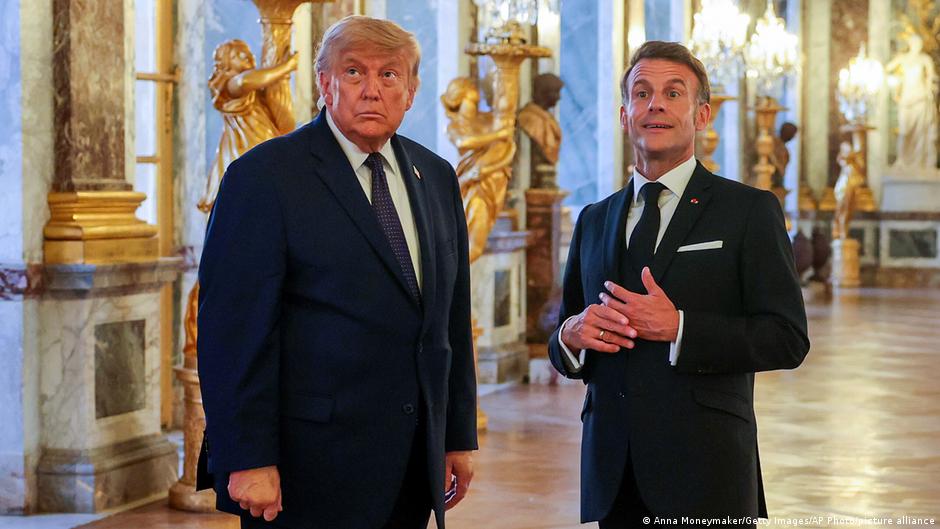
French President Emmanuel Macron said he and U.S. President Donald Trump discussed joint efforts to secure a moratorium on attacks against Ukraine’s energy and civilian infrastructure, placing the protection of critical assets at the center of a high-stakes diplomatic week in New York.
Macron, writing Monday, September 21, on X, said the two leaders would coordinate their efforts to stop strikes on energy facilities and civilian infrastructure as Russia’s war against Ukraine continues. The statement came after Macron met Trump in New York, where the 81st session of the United Nations General Assembly is bringing together nearly 130 world leaders from September 22 to 26.
“We will also combine our efforts to achieve a moratorium on strikes against Ukraine’s energy infrastructure and civilian infrastructure,” Macron said.
For governments and defense contractors watching the talks, the emphasis on energy assets and air defense points to a practical shift in Western support: beyond broad political backing, the immediate question is how to harden Ukraine’s infrastructure against repeated aerial attacks and how quickly allies can supply interceptors and related systems.
Macron said civilians must be protected and that serious negotiations on the terms of peace between Russia and Ukraine should begin as soon as possible. His remarks framed infrastructure protection not only as a humanitarian necessity, but also as a condition for any credible diplomatic track. In business terms, the issue is equally consequential: attacks on energy grids and civilian systems can disrupt industrial production, government services, transportation and the broader investment environment in Ukraine.
Air Defense Moves to the Center of Allied Strategy
Speaking to journalists after his meeting with Trump, Macron said the two leaders agreed on the need to help Ukraine strengthen its defensive capabilities. He said this included, in particular, additional interceptor missiles for Kyiv to protect against Russian air attacks.
The focus on interceptors underscores a persistent bottleneck in Ukraine’s defense posture. Western leaders may agree on strategic objectives, but the execution depends on procurement pipelines, production capacity, stockpile management and political approval in allied capitals. Each additional interceptor represents a near-term defensive asset for Ukraine and a longer-term signal to defense manufacturers about demand for air defense systems, missile components and replenishment programs.
For the Trump administration, any alignment with Macron on Ukraine’s air defense needs carries boardroom implications across the transatlantic security sector. Companies involved in missile defense, radar, command systems and munitions supply will be watching for whether diplomatic statements translate into procurement decisions. European governments, meanwhile, face the familiar challenge of matching political commitments with budgetary and industrial capacity.
Macron’s comments also place France alongside the United States in an effort to define a narrower, enforceable objective: a moratorium on strikes against energy and civilian infrastructure. Such a proposal would not resolve the war, but it could establish a specific test of Russian intentions and a measurable benchmark for future talks. If pursued seriously, it may require diplomatic pressure, monitoring arrangements and continued military support for Ukraine’s defensive shield.
Diplomacy Around Zelensky
Later on September 21 in New York, Macron also began a bilateral meeting with Ukrainian President Volodymyr Zelensky. The timing put France, the United States and Ukraine into a compressed sequence of discussions just as the UN General Assembly was set to convene.
Before meeting Macron, Zelensky met with American lawmakers and thanked them for adopting the late Senator Lindsey Graham’s law on “hellish sanctions” against Russia. The Ukrainian leader said he wanted the sanctions to start working, a remark that placed economic pressure back into the same policy frame as military support and infrastructure protection.
Sanctions are a central instrument for Washington and its allies, but their effectiveness depends on enforcement, coordination and the willingness of companies and financial institutions to comply across jurisdictions. Zelensky’s statement was a reminder that Kyiv views sanctions not as symbolic punishment, but as an operating tool intended to constrain Russia’s capacity to continue the war.
The reported sequence of meetings also reflects how Ukraine is trying to manage multiple levers at once: defense supplies, sanctions, diplomatic engagement and international visibility. For American business readers, the underlying issue is whether Western governments are moving toward a more integrated Ukraine policy in which military aid, economic restrictions and diplomatic benchmarks reinforce one another.
Zelensky was also expected to meet Trump on September 22. That anticipated meeting adds another layer to the week’s diplomacy, particularly because Trump’s position will shape how U.S. agencies, lawmakers and allied governments interpret the next phase of support for Ukraine.
For boards and executives with exposure to Europe, energy markets, defense supply chains or sanctions compliance, the Macron-Trump discussion is not a remote diplomatic event. A moratorium proposal, if advanced, could affect risk assessments around Ukraine’s energy infrastructure. Additional interceptor supplies could influence defense procurement priorities. Stronger sanctions implementation could reshape compliance obligations for firms with cross-border operations.
The immediate facts remain limited: Macron said he discussed the moratorium effort with Trump, said civilians must be protected, and said serious talks on peace terms should begin as soon as possible. He also said the two leaders agreed Ukraine needs stronger defenses, including additional interceptor missiles. Zelensky, meanwhile, thanked U.S. lawmakers for the sanctions law and urged that the measures begin to work.
What gives those statements weight is the setting. The UN General Assembly offers a global stage, but the decisive work is likely to occur in bilateral meetings, legislative follow-through and procurement channels. As world leaders gather in New York, Ukraine’s infrastructure has become both a military target and a strategic test of whether Western governments can convert diplomatic alignment into operational protection.