Kremlev Says Trump Jr. Repaid Wedding Event Costs Amid Ethics Scrutiny
The Russian businessman’s account adds a corporate-governance dimension to questions over private benefits linked to a president’s family.
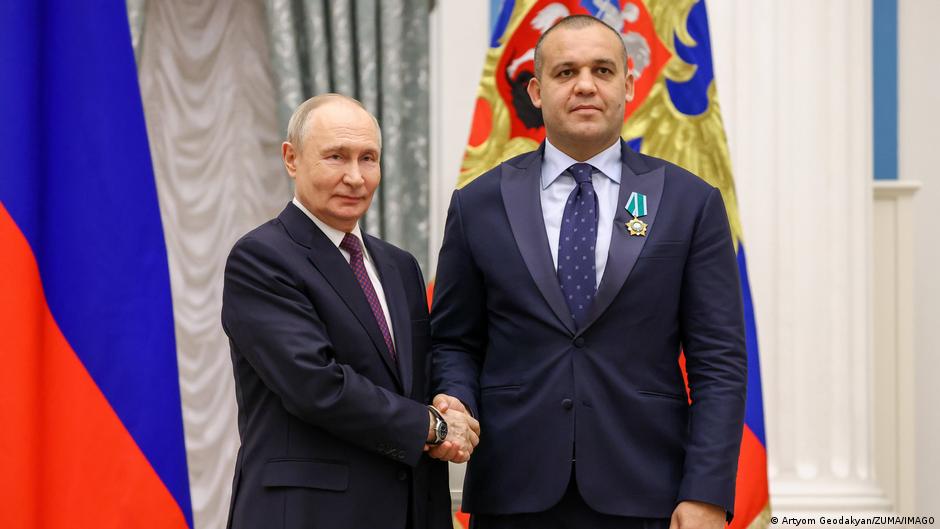
Russian entrepreneur Umar Kremlev said Donald Trump Jr. reimbursed him for money spent on organizing part of Trump Jr.’s wedding celebrations, a statement that adds a fresh layer to scrutiny over private financial ties around the family of the U.S. president.
Kremlev, who is close to Vladimir Putin and heads the International Boxing Association, made the remarks on Tuesday, October 6, at a press conference in Istanbul. His comments followed earlier confirmation from President Donald Trump that his son had returned money to the Russian businessman.
The issue has moved beyond the social details of a wedding celebration and into a more sensitive business and governance arena: how wealthy political families manage relationships with foreign-connected executives, how payments are documented, and how quickly private hospitality can become a reputational and oversight problem.
“As for whether he reimbursed the expenses or not, yes, he did,” Kremlev said, according to the Russian state news agency TASS.
Kremlev framed the episode as a misunderstanding rather than a special benefit. He said he and Trump Jr. had attended a shared event and that he had not been at the wedding itself. He also questioned why reimbursement was necessary, saying the event was not an exceptional gift and comparing it to inviting guests to a country house without later issuing them a bill.
According to Kremlev, he has a friendly relationship with Donald Trump Jr., but he said he had “never asked him or anyone else” to help him. That formulation is significant because the matter is being watched not only as a personal relationship but also as a question of influence, access and perceived reciprocity involving a foreign businessman with political proximity in Russia.
From Personal Hospitality to Boardroom Risk
For executives, investors and compliance advisers, the case illustrates how private hospitality involving politically exposed families can create business risk even when the individuals involved describe the activity as routine. A wedding-related party may appear informal, but when the host or payer is a prominent businessman tied to international sports governance and close to Russian political power, the optics become difficult to separate from corporate and political strategy.
Kremlev’s role as head of the IBA also matters. International sports organizations operate in a world where reputation, sponsorship, recognition, sanctions exposure and government relationships can affect institutional standing. Any perception that an official is cultivating proximity to the family of a sitting U.S. president could become a governance issue for boards, partners and regulators, even absent a formal allegation of wrongdoing.
President Trump addressed the reimbursement on September 18 while speaking with reporters. “As I understand it, he paid him back,” Trump said. He described the arrangement as “quite normal practice” when “someone’s friend pays for a wedding celebration.” The president also said he considered it acceptable for a businessman close to Russian authorities to help finance festivities connected to his son.
That presidential defense may settle little for critics. In corporate terms, repayment can reduce one set of concerns while raising another: when was the payment made, what was its value, what was the original purpose, who approved it, and whether any contemporaneous documentation existed. Those are the kinds of questions that can transform a hospitality dispute into an oversight matter.
ProPublica Report Triggered Wider Scrutiny
The controversy began publicly after ProPublica published an investigation on September 14 stating that Kremlev paid part of the costs for wedding celebrations for Donald Trump Jr. in the Bahamas. Trump Sr. later told Axios that he had “no idea who Umar is,” had never heard of him, and said Kremlev did not pay for the wedding of Don and Bettina, which he said took place at a completely different location and on a different day from the party in question.
Trump characterized the event as an “after-party” held in their honor, adding that he did not attend. That distinction between the wedding and a separate celebration has become central to how the Trump family and its defenders describe the matter. It is also likely to be central to any future inquiry into whether the payment should be treated as a gift, hospitality, reimbursement, or something else.
Axios also reported that a senior Democratic member of the U.S. House Oversight Committee may investigate reports that Kremlev paid for Trump Jr.’s celebrations. Representative Robert Garcia of California sent a letter to White House chief of staff Susie Wiles saying Democrats on the committee were investigating “numerous ways” in which the Trump family had sought to enrich itself by using proximity to the president.
The potential inquiry carries strategic significance in Washington. Axios wrote that if Democrats win control of the House of Representatives in the upcoming November 3 midterm elections, Garcia would likely become Congress’s chief investigator. The outlet said the investigation offered a fairly clear indication of the direction he would take in that role.
For the Trump family, the episode is another test of how private business, personal relationships and public office intersect. For Kremlev, the public acknowledgment of reimbursement may limit the appearance that he provided an unrepaid benefit, but it also confirms that money did move in connection with an event honoring the president’s son. In a boardroom context, that is precisely the kind of fact pattern that prompts risk officers to ask whether the reputational cost of access is being properly measured.
The matter now sits at the intersection of politics, compliance and executive judgment. Kremlev says the expense was ordinary social hospitality and that Trump Jr. paid him back. Trump says the practice was normal and acceptable. Democrats are signaling that they may treat the episode as part of a broader inquiry into whether the president’s family has benefited from its proximity to power.