Yemen Offensive Puts Red Sea Risk Back on Corporate Strategy Agenda
Government forces and Houthi fighters are both claiming battlefield gains as Yemen’s renewed campaign raises risks for trade, energy and regional security.
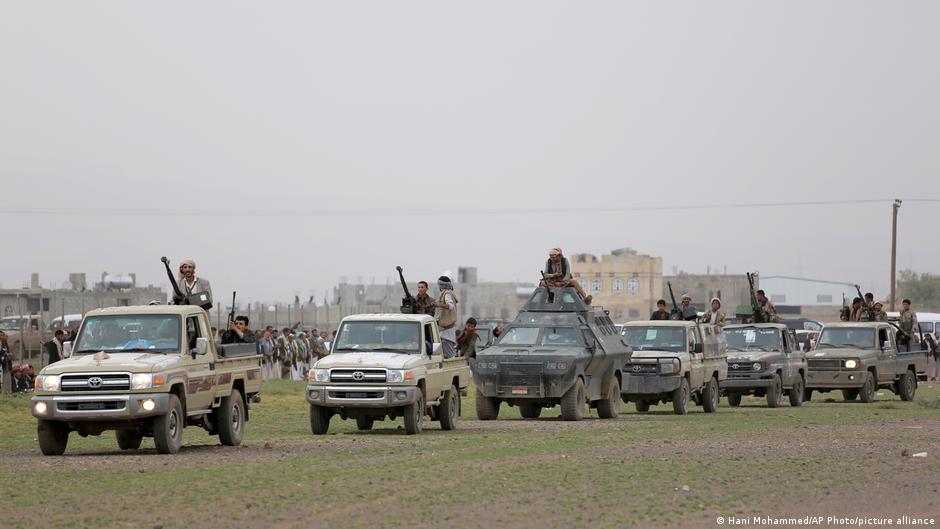
Yemen’s internationally recognized authorities have launched a new military push against the Houthi movement, an escalation with consequences that extend well beyond the country’s fragmented battlefield. The campaign, announced by Rashad al-Alimi, chairman of Yemen’s Presidential Leadership Council, is aimed at restoring government control over the full territory of Yemen, including areas held by the radical Islamist group Ansar Allah, commonly known as the Houthis.
Government-aligned forces have advanced toward the outskirts of Mocha, a port city on the Red Sea coast that the Houthis seized a month earlier. According to statements cited by Reuters on Monday, October 5, Yemeni authorities said their forces were moving deeper into Houthi positions around the city. The reports were among the first accounts of government strikes against Houthi positions after al-Alimi announced the start of a large-scale military operation on October 4.
For companies with exposure to Gulf energy flows, Red Sea shipping lanes or regional insurance markets, the renewed fighting is not simply another episode in Yemen’s long war. It comes after Houthi forces expanded attacks in Yemen and across the broader region, including operations that threatened global trade routes and contributed to higher energy prices. The struggle for Yemen’s Red Sea coast now sits squarely inside the risk calculations of shipping operators, commodity traders, insurers and multinationals dependent on predictable maritime transit.
A War Aim With High Operational Costs
Al-Alimi has framed the operation in maximal terms: the return of all Yemeni territory to internationally recognized government control. That objective implies a difficult and resource-intensive campaign. The Houthis continue to hold significant parts of the country, including some of the most densely populated areas and the capital, Sanaa.
In late September, Yemeni authorities announced the start of a general mobilization to fight the Houthis. They also promised amnesty to members of Ansar Allah who switch sides and join government forces. The move signaled that the government sees the fight not as a limited operation around one port, but as a wider effort to change the balance of power inside Yemen.
From a boardroom perspective, the scale of the stated objective matters. A campaign designed to retake all Houthi-held territory is likely to be measured not in days but in sustained military, financial and diplomatic commitments. It also raises the probability of retaliatory attacks and of wider regional involvement, both of which can affect freight pricing, energy supply expectations and corporate contingency planning.
Yemen’s internationally recognized authorities say the goal is to restore control over the entire country, while the Houthis are also claiming battlefield gains.
Those competing claims are central to the uncertainty. Yemen’s government says its forces are advancing near Mocha. Ansar Allah, meanwhile, has declared its own successes. The Yemen Press Agency, citing a representative of the group, reported that the Houthis had captured a district in Taiz province as well as the former residence of Rashad al-Alimi in the region.
The Houthi-controlled television channel Al Masirah also showed footage it said depicted the capture of al-Alimi’s multi-story house. In the video, Houthi fighters raised the group’s flag over the building. The imagery served a political purpose as much as a military one, presenting the group as still capable of offensive action despite the government’s newly announced campaign.
Regional Escalation and Energy Exposure
The conflict’s corporate relevance has intensified because the Houthis have described operations beyond Yemen’s borders. Houthi military spokesman Yahya Saree said the group had carried out a series of operations inside Saudi Arabia. According to Saree, Houthi forces attacked King Khalid International Airport in Riyadh, an Aramco refinery in Rabigh and a number of military facilities in the country.
Saudi Arabia did not confirm those claims. At the same time, Reuters reported that Riyadh, Ankara and Islamabad agreed on the rapid deployment of troops in the region under the Mecca Defense Pact, concluded in August. The pact provides for a collective response by Turkey, Saudi Arabia and Pakistan to an attack on any one of the three countries. Reuters also reported that Riyadh is prepared to take part in the Yemeni government forces’ offensive against the Houthis by providing air support.
For corporate decision-makers, the possible activation of regional defense commitments changes the risk profile. A local offensive around Mocha could become connected to Saudi military planning, Turkish and Pakistani commitments, and the security of critical infrastructure. That has direct implications for energy companies, airlines, logistics providers and firms with staff or assets in the Gulf.
The latest escalation follows earlier Houthi action in September. At the beginning of that month, the Houthis announced an expansion of military operations in the Middle East and struck four cities in southern Saudi Arabia. More than 70 people were injured in the heavy shelling, and fires broke out at oil facilities. Saudi Arabia responded with more than 60 airstrikes on several Houthi-controlled provinces.
Inside Yemen, the Houthis have also intensified attacks aimed at taking control of the country’s entire Red Sea coast. Their military gains, including the capture of Mocha on the Bab el-Mandeb Strait, have strengthened the position of Iran and its allies over key regional waterways. The rebels’ attacks have threatened global trade routes and contributed to rising energy prices. Houthi leaders separately declared that the Bab el-Mandeb Strait was closed to Saudi ships.
The Bab el-Mandeb is a narrow but strategically vital passage linking the Red Sea with the Gulf of Aden. Any perception that it is becoming less secure can ripple through commercial planning. Shipping schedules, war-risk insurance, fuel hedging and supplier contracts all become more expensive to manage when a chokepoint is subject to military pressure.
On September 19, the Saudi-led Coalition to Restore Legitimacy in Yemen said Yemeni rebels had tried for the first time the previous night to strike the Saudi capital, Riyadh, with a ballistic missile. Brigadier General Turki al-Maliki, the coalition’s official spokesman, said on X at the time that the missile had been intercepted and destroyed.
The immediate battlefield picture remains contested, with both sides presenting themselves as advancing. But for executives watching the region, the strategic signal is clearer: Yemen’s war has again moved into the zone where military developments can affect shipping, energy infrastructure and regional defense commitments. That makes the fighting near Mocha a matter not only for diplomats and generals, but also for corporate boards weighing exposure to one of the world’s most sensitive trade corridors.