Lavrov Rules Out Ukraine Talks Pause as Rubio Signals U.S. Mediation Role
Russia’s foreign minister said Moscow would not halt military pressure for negotiations, even as Washington positioned itself as a potential broker.
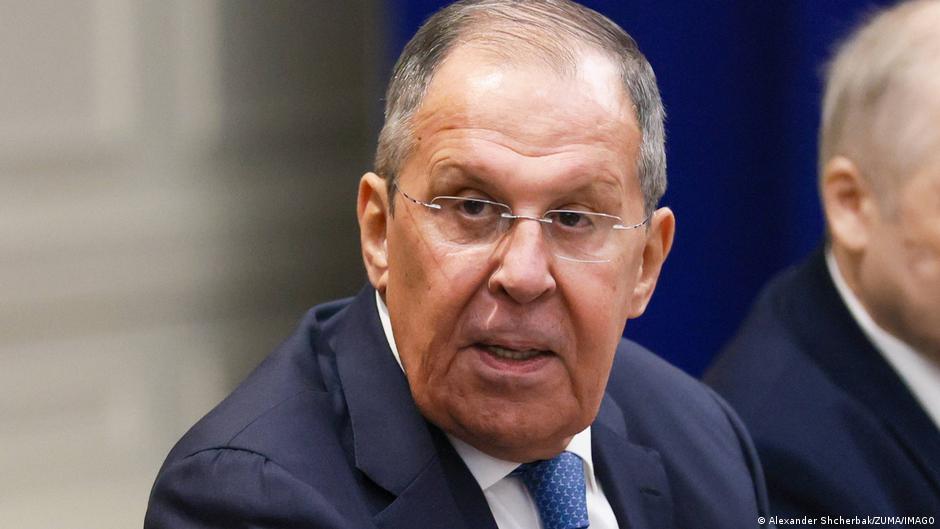
Russian Foreign Minister Sergey Lavrov used a United Nations Security Council appearance in New York to make clear that Moscow does not intend to create a battlefield pause for negotiations with Ukraine, a position that sharpens the diplomatic risk calculus for Washington and other governments trying to shape a ceasefire framework.
Lavrov’s remarks came on Wednesday, September 23, during the week of the UN General Assembly, where he also met U.S. Secretary of State Marco Rubio. According to Interfax, the meeting lasted about an hour. It was the fifth encounter between the two countries’ top foreign-policy officials since 2025, underscoring that the channel remains active even as Russia continues strikes on Kyiv.
For U.S. policymakers, the message from Moscow is significant because it narrows the room for any near-term negotiation strategy built around a temporary suspension of hostilities. Lavrov said Russia would not make a “pause” for talks with Ukraine in any format, arguing that Europe sought such an interruption for its own military purposes.
“Although Europe wants exactly this, all with the same simple goal of getting a respite and replenishing the depleted military arsenals of the Kyiv regime,” Lavrov was quoted as saying by Russia’s Foreign Ministry.
Lavrov nevertheless maintained that Russia was ready for negotiations aimed at achieving what he called a “sustainable just peace.” The formulation allows Moscow to present itself as diplomatically open while rejecting the sequencing many outside actors often view as essential: de-escalation first, talks second.
Washington Keeps the Channel Open
Rubio, speaking at the UN General Assembly in New York, again said Washington was prepared to play a constructive role in securing a ceasefire. That statement placed the United States in the familiar position of trying to preserve negotiating leverage while Russia publicly signals that military operations will continue alongside diplomacy.
From a business and strategic-planning perspective, the distinction matters. A ceasefire process without a pause in strikes offers fewer stabilizing signals for companies, investors, energy-market participants and defense contractors tracking the war’s effect on sanctions, supply chains, procurement cycles and geopolitical risk. Corporate boards with exposure to Europe, commodities, logistics or defense spending will read the latest diplomatic exchange less as a breakthrough than as evidence of a conflict environment that remains highly fluid.
The Rubio-Lavrov meeting also highlights a broader executive-level question for the Trump administration: how to sustain direct contact with Moscow without appearing to reward escalation or concede negotiating terrain. Rubio’s public posture suggests that Washington wants to remain available as a mediator, while Lavrov’s remarks indicate that Moscow is not prepared to trade operational tempo for process.
That mismatch leaves U.S. officials with limited but consequential choices. They can continue high-level engagement in search of a ceasefire formula, press allies to maintain unity, or prepare for a longer period in which diplomacy and military action proceed at the same time. Each path carries implications for budget planning, defense production, alliance management and political messaging.
The G20 Invitation Adds a Boardroom-Level Variable
The diplomatic backdrop has been complicated further by Rubio’s earlier statement that the United States invited Russian President Vladimir Putin to attend the G20 summit scheduled for December in Miami. Rubio said that solving problems requires meeting with people with whom there are disagreements or friction, which is why Putin had been invited.
Rubio also said that, for the Russian leader, the Miami summit would offer a potential opportunity to meet U.S. President Donald Trump and other world leaders. “We hope he accepts this invitation,” Rubio added.
For corporate leaders, the G20 invitation introduces an additional scenario to monitor. A Putin appearance in Miami would create a highly visible diplomatic moment on U.S. soil, potentially affecting expectations around sanctions policy, reconstruction planning, defense procurement and European security commitments. A refusal or nonattendance, by contrast, would reinforce the perception that the war’s diplomatic architecture remains fragmented.
The source material does not indicate whether Putin has accepted the invitation. It also does not describe any concrete outcome from the Rubio-Lavrov meeting beyond the fact that it took place for about an hour. That absence of deliverables is itself meaningful: direct talks continue, but neither side has publicly presented a negotiated path that reconciles Russia’s refusal to pause with Washington’s stated aim of helping secure a ceasefire.
For now, Lavrov’s position preserves Moscow’s ability to negotiate while maintaining pressure on Ukraine. Rubio’s position preserves Washington’s role as a potential broker while avoiding a retreat from ceasefire diplomacy. The result is a diplomatic process that remains active but unresolved, with consequences that extend beyond foreign ministries into corporate risk committees, capital allocation meetings and long-term strategic planning for companies exposed to the economic fallout of the war.