Russian Regions Restore Gasoline Limits as Refinery Strikes Strain Supply
Kaluga and Zabaykalsky officials are reviving rationing measures as refinery disruptions expose pressure points in Russia’s fuel logistics.
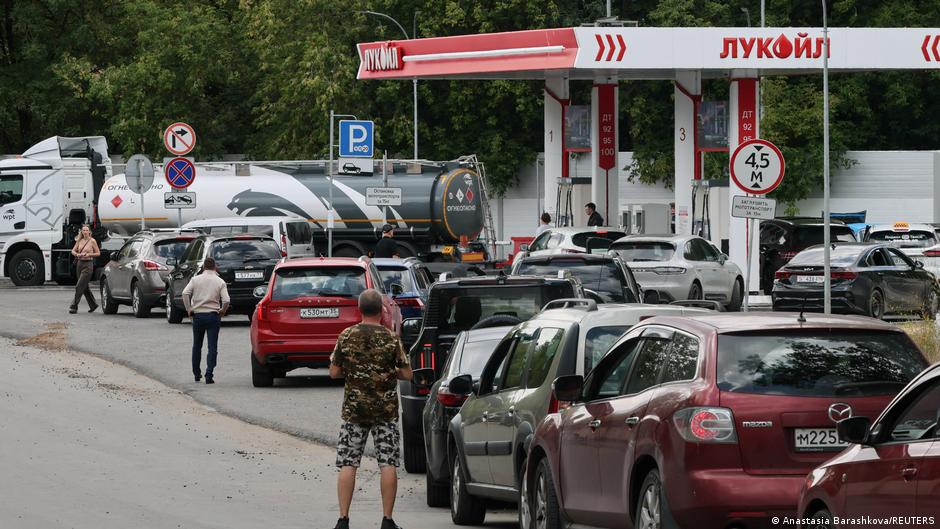
Authorities in Russia’s Kaluga region and Zabaykalsky Krai are again imposing restrictions on gasoline sales, a move that underscores how intensified Ukrainian strikes on oil refineries are moving from the battlefield into the operational calculations of regional governments, fuel retailers and the broader Russian energy system.
In Kaluga, a region bordering Moscow and the Moscow region, restrictions return on September 23. Regional Governor Vladislav Shapsha said on Tuesday, September 22, that drivers will be allowed to refuel on even or odd days depending on the first digit of a vehicle’s registration number. Gasoline may be dispensed only directly into a vehicle’s tank, a measure aimed at limiting stockpiling and smoothing access at filling stations.
The renewed controls come after what officials described as worsening disruption to fuel supplies at individual gas stations. For companies operating in the downstream fuel market, the measures signal a tightening environment in which logistics, inventory discipline and public-facing retail operations are becoming more difficult to manage. For regional authorities, the return of rationing is also a governance test: the issue is highly visible to consumers, politically sensitive, and tied to infrastructure vulnerabilities that local administrations cannot fully control.
“We are now recording local logistical disruptions in fuel supplies to some filling stations. Queues have returned. This is causing justified dissatisfaction,” Shapsha wrote on his Telegram channel.
Kaluga had already introduced even-odd gasoline restrictions on August 15. Those limits were lifted on September 1, suggesting that officials previously viewed the shortage as manageable or temporary. Their reinstatement less than a month later points to renewed stress in the supply chain and raises questions for energy distributors about the durability of Russia’s fuel-market stabilization efforts.
Regional rationing returns as inventories tighten
Zabaykalsky Krai, in Russia’s Far East, is also restoring limits from September 23. The region’s operational headquarters said the BRK and Kors filling-station networks will cap sales of AI-92 and AI-95 gasoline at 15 liters per vehicle. Buyanto Batomunkuyev, the region’s first deputy prime minister, said the measure was necessary because total fuel reserves at filling stations and oil depots stood at 17,000 tons. At the current rate of sales, he said, that volume would last only 20 days.
The inventory disclosure is important from a business perspective because it reveals the degree to which local fuel-market resilience depends not merely on refinery output, but on distribution timing, regional storage and retailer-level rationing. A 20-day supply buffer may be adequate in a normal market with predictable replenishment. In a system facing refinery outages, long-distance logistics constraints and elevated consumer anxiety, it becomes a boardroom concern for fuel networks and suppliers: how to allocate scarce volumes without triggering deeper shortages or reputational damage.
Zabaykalsky Krai introduced similar restrictions in June and lifted them on July 23. Like Kaluga, the region is now returning to administrative or operator-led controls after a period of apparent normalization. The recurrence suggests that executives and officials are confronting a rolling rather than one-off disruption, with local rationing becoming a tool for demand management as supply conditions fluctuate.
Fuel-sale restrictions, introduced either by regional authorities or by gas-station chains themselves, appeared across almost all Russian regions this summer, as well as in annexed Crimea. The breadth of the measures points to a national supply problem rather than a series of isolated retail shortages. In a country where energy exports and domestic fuel availability are central to both state revenue and public expectations, local gasoline lines can quickly become a signal of wider system fragility.
The fuel-supply problems were significant enough that Russian President Vladimir Putin on June 28 ordered systemic measures to stabilize the market. That directive placed the issue squarely in the realm of federal economic management, but the latest restrictions indicate that market stabilization remains uneven. For corporate leaders in fuel distribution, refining, transportation and agriculture, the return of rationing creates planning challenges around mobility, delivery costs and regional operating continuity.
Refinery strikes reshape the operating landscape
The gasoline deficit followed drone attacks on Russian oil refineries by Ukraine, which has been defending itself for more than four years against Russia’s military invasion. Strikes and fires at refineries forced facilities to reduce production or stop it entirely. Restrictions were later lifted, but Ukrainian attacks on refineries intensified again from early August, and Russia was hit by a second wave of the fuel crisis.
For the Russian refining sector, the operational implications are clear. Refinery outages can cascade through wholesale supply, depot inventories and retail availability. Even when damage is localized, the effects can spread if replacement fuel must be moved over long distances or if consumers react by filling tanks more frequently than usual. Regional caps such as the 15-liter limit in Zabaykalsky Krai are therefore not only consumer restrictions; they are emergency allocation mechanisms in a stressed supply chain.
By mid-September, Russia’s gasoline shortage had worsened, with fuel unavailable at almost every second filling station, Novaya Gazeta Europe reported, citing data from the gdebenzin service. That claim, if reflected across consumer-facing markets, highlights a material deterioration in availability and a challenge for any company dependent on road transport or distributed field operations.
The latest decisions in Kaluga and Zabaykalsky Krai show how refinery vulnerability is translating into executive and administrative trade-offs. Regional officials must decide when to impose rationing, gas-station networks must manage customer demand under scarcity, and fuel-market participants must reassess the reliability of supply assumptions that underpin pricing, logistics and inventory strategy. The measures may be framed as temporary, but their repetition across regions gives them broader significance: fuel access has become a recurring business risk in Russia’s domestic market.