Trump Says U.S.-Iran Talks at U.N. Were Productive After Threats
The three-hour mediated meeting in New York put executive brinkmanship, sanctions leverage and Gulf shipping risk back at the center of U.S.-Iran diplomacy.
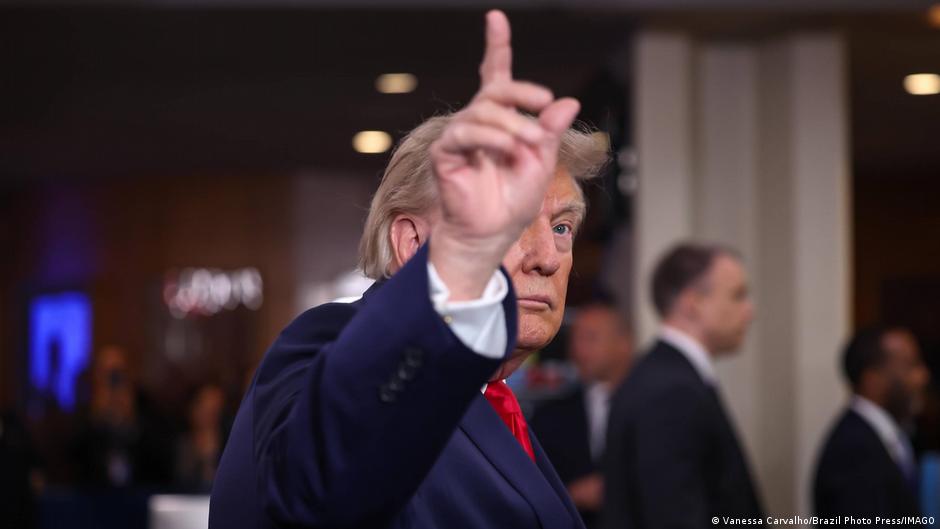
U.S. and Iranian officials met in New York on Tuesday, September 22, on the sidelines of the 81st session of the United Nations General Assembly, in the first such encounter in several months, according to U.S. President Donald Trump. Trump said the meeting, which lasted about three hours and was conducted through intermediaries, was "very productive."
The talks brought together senior figures with direct access to the top decision-makers on both sides. The U.S. side was represented by Trump special envoys Steve Witkoff and Jared Kushner, while Iran was represented by Foreign Minister Abbas Araghchi. The meeting was mediated by Qatar and Pakistan, The New York Times reported.
For corporate leaders, investors and boards with exposure to energy, shipping, defense, insurance and sanctions-sensitive markets, the encounter underscored how quickly U.S.-Iran diplomacy can swing between negotiation and coercion. Earlier the same day, Trump had threatened Iran with destruction during remarks to heads of state and government at the U.N., sharpening the contrast between public pressure and behind-the-scenes dealmaking.
"A round of discussions was successfully completed, which we hope will prove constructive and forward-looking. The mediators will continue their work," Witkoff said in a post on X.
Executive Brinkmanship Meets Strategic Negotiation
Witkoff described the U.N.-sideline exchanges as lengthy talks with the Iranian delegation, carried out through representatives who moved between the parties throughout the day. His statement presented the session as a step in an ongoing mediated process rather than a final settlement.
Trump, speaking during a meeting with Gulf leaders on the sidelines of the General Assembly, said there was "great momentum" toward reaching an agreement with Iran, AFP reported. The phrase signaled an effort to frame the talks as moving toward a potential outcome even as the White House maintained maximum rhetorical pressure.
That dual-track posture is familiar to executives managing geopolitical exposure: public escalation can be part of the negotiating environment, but it also raises operational uncertainty. Companies moving goods through Gulf routes, underwriting maritime risk or assessing energy price exposure must treat diplomatic signals and military threats as part of the same risk dashboard.
According to Iranian state media, Tehran used the talks to inform Washington of its conditions for resuming shipping through the Strait of Hormuz. Those conditions included an immediate end to the U.S. maritime blockade, the unfreezing of all Iranian assets frozen because of sanctions, and the cessation of any military actions.
The Strait of Hormuz is a strategic choke point for global commerce, and the conditions reported by Iranian state media place commercial flows, sanctions enforcement and military posture in a single negotiating package. For boardrooms, the message is that maritime access is not being discussed as a narrow operational issue. It is tied directly to financial restrictions and security commitments.
Sanctions, Assets and Maritime Risk
The Iranian conditions, as reported, highlight three pressure points with direct business implications. First, any change in the maritime situation would affect shipping and logistics planning. Second, the demand to unlock sanctioned Iranian assets points to the financial architecture behind U.S. leverage. Third, the call to end military actions indicates that Tehran is linking commercial normalization to broader security guarantees.
None of those issues can be resolved by corporate actors. But companies must make capital allocation and supply-chain decisions around them. A productive meeting may reduce immediate tail risk, while the absence of a formal agreement leaves firms exposed to sudden reversals in policy, enforcement or regional security conditions.
Trump's own remarks at the U.N. illustrated the volatility. Before the talks, he said he faced a major choice: whether an agreement would be reached with Iran that would allow it to recover and become a much more powerful state, or whether he would destroy the Islamic Republic quickly so it would no longer have a chance to kill people and destroy countries.
AFP reported that the Iranian delegation left the hall during Trump's speech. That walkout sharpened the optics of confrontation even as the diplomatic channel remained active elsewhere at the General Assembly.
From a corporate strategy perspective, the meeting does not yet represent a de-escalation that companies can safely price as durable. It is more accurately a signal that both sides are still using intermediaries, that Gulf states remain central to the process, and that Washington is keeping diplomatic and coercive tools in play at the same time.
The role of Qatar and Pakistan as mediators also matters. Their involvement suggests that neither Washington nor Tehran is relying solely on direct communication, and that regional and neighboring actors may shape the pace and framing of any future discussions. For global businesses, that means monitoring not just U.S. and Iranian statements but also the mediator channel and Gulf government responses.
The boardroom implications are straightforward. Energy-intensive companies, maritime carriers, insurers and financial institutions with exposure to Middle East risk will need to weigh the possibility of renewed talks against the continuing threat environment. Sanctions compliance teams, meanwhile, cannot assume any relaxation unless formal policy changes are announced.
Trump's characterization of the talks as "very productive" may be meaningful, especially after months without such contact. But the same day also included a threat to send Iran "to hell" and destroy it, according to his U.N. remarks. The combination leaves executives facing a familiar but difficult planning problem: diplomacy may be moving, yet the operating environment remains highly unstable.