NATO Confirms Russian-Origin Drone Incident in Romania, Raising Security and Diplomatic Concerns
NATO concurs that the drone crashing into a Romanian residential building was of Russian origin, prompting calls for enhanced air defenses and diplomatic repercussions.
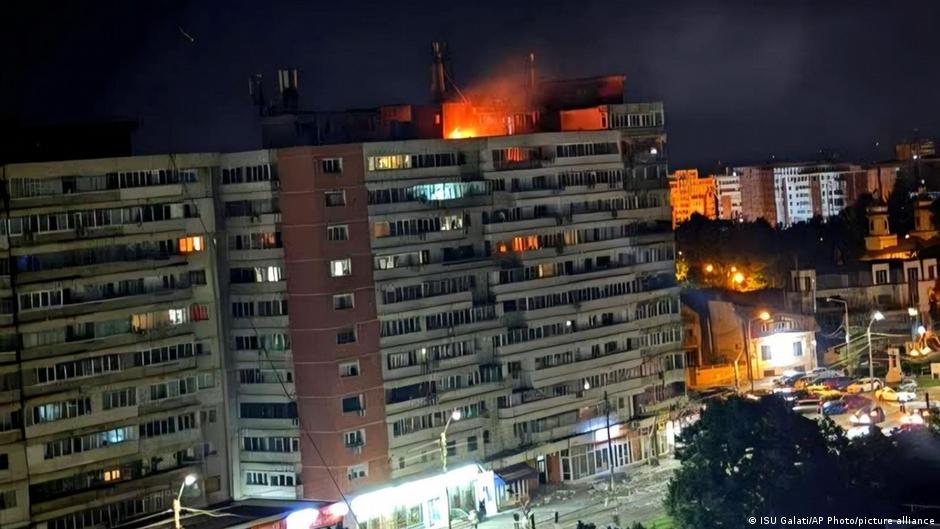
NATO has officially confirmed the conclusions made by Moldovan authorities that a drone which crashed into a residential building in the Romanian city of Galați was of Russian origin. This incident, which occurred on the night of May 29th, has heightened security concerns along NATO’s eastern flank and triggered diplomatic tensions between Romania and Russia.
A spokesperson for the Supreme Headquarters Allied Powers Europe (SHAPE), Martin O’Donnell, stated that the unmanned aerial vehicle (UAV) involved was confirmed to be Russian-made based on serial numbers recovered from the wreckage. This aligns with earlier Romanian Ministry of Defense assertions identifying the drone as Russian.
Impact and Immediate Response
The drone struck a residential apartment on the 10th floor, causing a fire that injured two residents. The city of Galați is strategically located near the Ukrainian border, amplifying the implications of the incident amid ongoing regional tensions. Romania's Defense Minister, Radu-Dinel Miruță, noted the unequivocal evidence pointing to Russian manufacture, emphasizing the seriousness of the cross-border security breach.
“The serial numbers found on the debris clearly indicate the drone was produced in Russia,” said Defense Minister Miruță.
Following the incident, the Romanian government formally requested NATO to bolster air defense systems in its territory, characterizing the drone’s incursion and attack as a violation of international law. Romanian President Nicușor Dan elaborated that the drone had initially been intercepted and downed by Ukrainian air defenses but deviated from its course, ultimately crashing into Romanian territory.
“When flying over Ukrainian airspace, several drones were shot down. One of these was likely hit near the city of Reni but changed trajectory and headed towards Galați,” Dan explained during a press conference. He made clear that responsibility for the attack unequivocally lies with Russia.
Diplomatic Fallout and Broader Implications
The incident has resulted in immediate diplomatic consequences. Romania declared the Russian Consul General in Constanța persona non grata and announced the closure of the Russian consulate, signaling a significant escalation in bilateral relations. This move underscores the gravity with which Bucharest views the breach of its airspace and the resultant damage.
Russian President Vladimir Putin publicly expressed skepticism regarding the drone’s Russian origin. During a joint press conference in Astana, he stated, “No one can conclusively say the origin of a particular aerial vehicle until an expert examination is conducted.” This rebuttal is consistent with Russia’s broader narrative disputing involvement in cross-border incidents amidst the ongoing conflict in Ukraine.
The event spotlights the complexities NATO faces in securing its eastern borders amid the conflict in Ukraine. It raises critical questions about the adequacy of current air defense postures and the potential for inadvertent escalation arising from drone overflights and misidentifications.
Experts suggest that NATO and its member states will likely need to reassess their airspace surveillance and rapid response capabilities to mitigate risks posed by increasingly sophisticated UAV incursions. Moreover, the incident could catalyze intensified dialogue at the NATO Defense Ministers meeting and reinforce calls for enhanced military aid to Ukraine.
In summarizing the situation, a NATO official remarked, “This is a clear violation of international norms and heightens the urgency of coordinated defense efforts on NATO’s eastern borders.”