New EU Biometric Border System Triggers Severe Airport Delays, Sparking Industry Outcry
The rollout of the EU's Entry/Exit System has caused hours-long queues across major European airports, raising concerns over operational readiness and prompting calls for a temporary suspension.
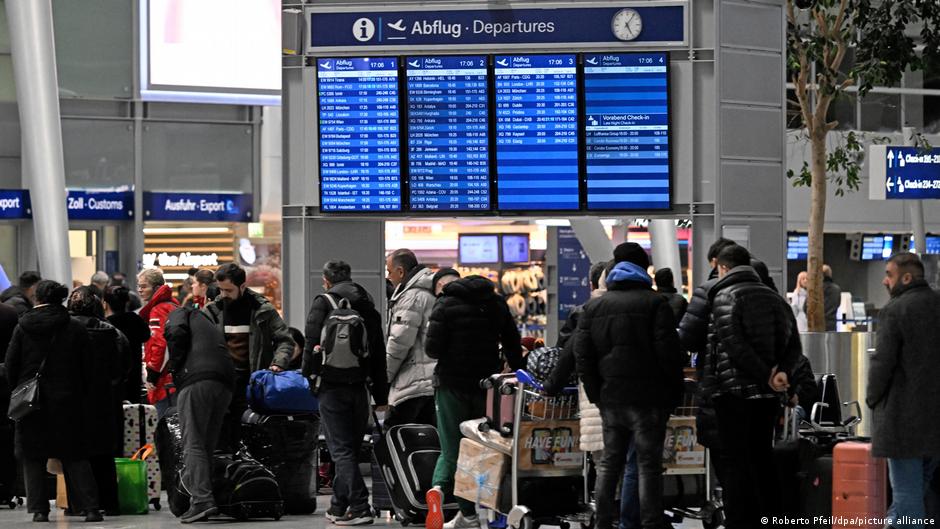
Since April 10, the European Union's new biometric border control system, the Entry/Exit System (EES), has led to significant passenger delays in airports across six EU countries, igniting sharp criticism from airlines and industry organizations. The system's introduction, aimed at enhancing security by digitally registering third-country nationals entering the Schengen Area, has instead triggered operational bottlenecks, with queues stretching for hours during peak travel times.
Operational Challenges and Industry Response
The Airports Council International Europe (ACI Europe) issued a warning following the system's full deployment, highlighting severe congestion at airports in France, Germany, Belgium, Italy, Spain, and Greece. Oliver Jankovec, ACI Europe’s executive director, disclosed that passengers are currently enduring wait times of up to three hours during peak periods. This congestion threatens to escalate into a full-scale operational collapse ahead of the critical summer travel season.
"Passengers are already facing extensive delays of up to three hours, and without intervention, the situation risks a collapse during peak travel season," stated Oliver Jankovec, head of ACI Europe.
Ryanair CEO Michael O’Leary was particularly scathing, describing the system as a "complete disgrace and a shambles," drawing a parallel to punitive measures associated with Brexit. He urged a postponement of the EES’s full implementation until October, citing instances of queues lasting four hours or more.
The industry has formally requested that the European Commission grant border authorities the authority to suspend the system temporarily in the event of excessive delays, a measure they argue is essential to maintain airport operational efficiency.
Case Study: Milan Linate Airport Disruption
The practical implications of these delays are vividly illustrated by an incident at Milan’s Linate Airport. On a recent EasyJet flight to Manchester, only 34 of 156 passengers managed to complete border control in time to board. The remaining 122 were left stranded as the flight departed without them. EasyJet offered complimentary ticket rebooking but declined to accept responsibility for the disruption, highlighting the complex liabilities emerging from the system’s rollout.
European Commission’s Position and System Rollout
Contrasting with the industry’s concerns, the European Commission maintains that the EES is functioning normally. Commission data estimates the average processing time per traveler at approximately 70 seconds, a figure disputed by ACI Europe, which estimates the real processing duration to be five times longer.
The Entry/Exit System has been gradually introduced since October 2025, initially deployed in the Czech Republic, Estonia, and Luxembourg. It replaces the traditional manual stamping of passports with biometric registration, collecting facial images and fingerprints from third-country nationals entering the Schengen Area. By April 10, 2026, all 29 Schengen countries had implemented the system. EU citizens, residents, and diplomats remain exempt from this biometric registration.
Implications for Airport Operations and Corporate Strategy
The challenges faced during EES implementation underscore the complexities that arise when introducing large-scale biometric systems in critical infrastructure environments. For airline executives and airport operators, the current situation necessitates urgent strategic reassessment concerning passenger flow management, contingency planning, and stakeholder communication.
Moreover, the dispute between the European Commission and industry groups about processing times and operational impact reflects broader governance and accountability issues in deploying cross-border digital identity solutions. The evolving scenario may influence future decisions on technology adoption, regulatory oversight, and risk management in the aviation sector.
As the summer travel season approaches, the balance between security imperatives and operational efficiency will remain a focal point for boardroom discussions across the European aviation ecosystem.