Polish Opposition Leader Urges Blocking Ukraine’s EU Accession Amid Bilateral Tensions
Jarosław Kaczyński calls on Warsaw to halt Ukraine's EU negotiations, highlighting conflicts over historical memory and economic concerns.
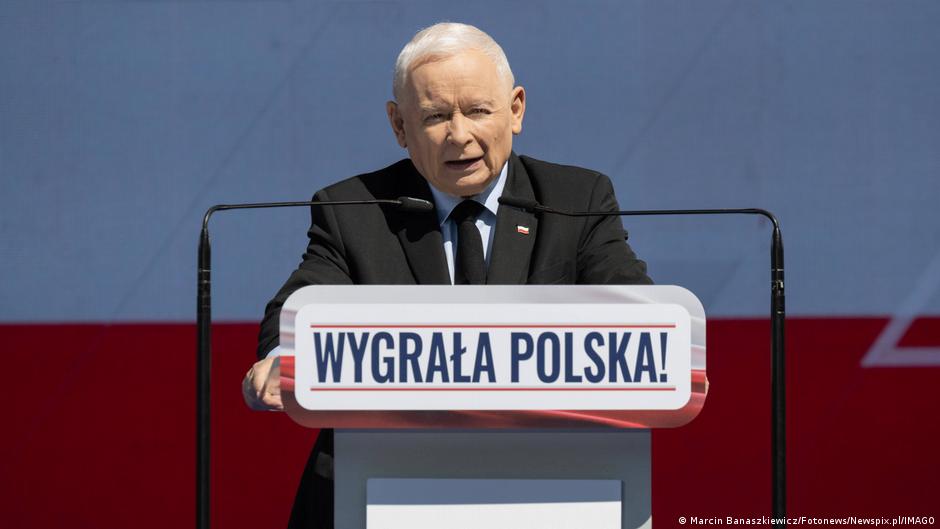
Jarosław Kaczyński, leader of Poland’s opposition national-conservative party Law and Justice (PiS), has urged the Polish government to block ongoing negotiations for Ukraine’s accession to the European Union. This move reflects rising tensions between Warsaw and Kyiv amid disputes over historical narratives and economic pressures.
Political and Strategic Context Behind Kaczyński’s Call
On June 27, Kaczyński publicly demanded that Poland halt talks aimed at Ukraine’s EU membership, accusing Kyiv of exacerbating bilateral conflicts. This announcement follows his earlier declaration that he would return a medal awarded by Ukraine, citing his disapproval of the Ukrainian elite rather than its people. Kaczyński further accused Ukraine of aggressively intensifying a "war of honors" with Poland, a reference to recent diplomatic spats over symbolic recognitions and historical figures.
This rhetoric sharply contrasts with the stance taken by Polish Prime Minister Donald Tusk, who on June 25 inaugurated the Ukraine Recovery Conference (URC 2026) in Gdańsk. The conference, focused on post-conflict reconstruction, culminated in the signing of 160 agreements valued at over €10 billion, underscoring Poland’s strategic commitment to supporting Ukraine’s recovery and integration efforts.
"Kaczyński’s position appears to be a calculated political strategy targeting domestic constituencies ahead of the 2027 parliamentary elections," analysts note.
Observers interpret Kaczyński’s hardline position as part of Law and Justice’s preparations for the October 2027 parliamentary elections in Poland. He aims to appeal to Polish farmers concerned about competition from Ukrainian agricultural imports as well as other voters wary of the financial burden associated with hosting Ukrainian refugees.
Historical Disputes Fueling Diplomatic Strife
The recent escalation follows Ukrainian President Volodymyr Zelensky’s decision to name a Ukrainian military unit after the "Heroes of the Ukrainian Insurgent Army (UPA)." The UPA is regarded in Ukraine as a symbol of resistance and struggle for independence, but in Poland it remains a highly controversial entity, primarily associated with the Volhynia massacre of 1943-1944.
These symbolic actions led Polish President Karol Nawrocki to revoke Ukraine’s highest Polish honor, the Order of the White Eagle, previously awarded to Zelensky. In protest, several senior Ukrainian officials, including Presidential Office Head Kyrylo Budanov and Foreign Minister Andrii Sybiha, returned their Polish decorations. Zelensky himself also boycotted the Gdańsk conference, where he was initially expected to lead Ukraine’s delegation.
The diplomatic fallout highlights how historical memory remains a potent force shaping EU enlargement debates and foreign policy decisions in Central and Eastern Europe. Poland’s internal political dynamics and electoral calculations are now intertwining with broader European strategic considerations regarding Ukraine’s future.
Implications for EU Enlargement and Regional Stability
Kaczyński’s call to block Ukraine’s EU accession could complicate the EU’s approach to Kyiv’s integration amid ongoing conflict and reconstruction challenges. Poland has previously played a pivotal role as a frontline state supporting Ukraine’s European aspirations and security. Divergent positions within Polish politics underscore the fragility of consensus on EU enlargement policy concerning Ukraine.
As Poland gears up for elections, the interplay between domestic political interests and international commitments will shape Warsaw’s posture toward Ukraine. The potential stalling of accession talks could have significant repercussions for Ukraine’s strategic trajectory, EU cohesion, and regional stability in Eastern Europe.