Putin Endorses Gerhard Schröder as EU Negotiator in Ukraine Conflict Talks
Russian President Vladimir Putin names former German chancellor Schröder as preferred EU interlocutor amid ongoing war and stalled peace negotiations.
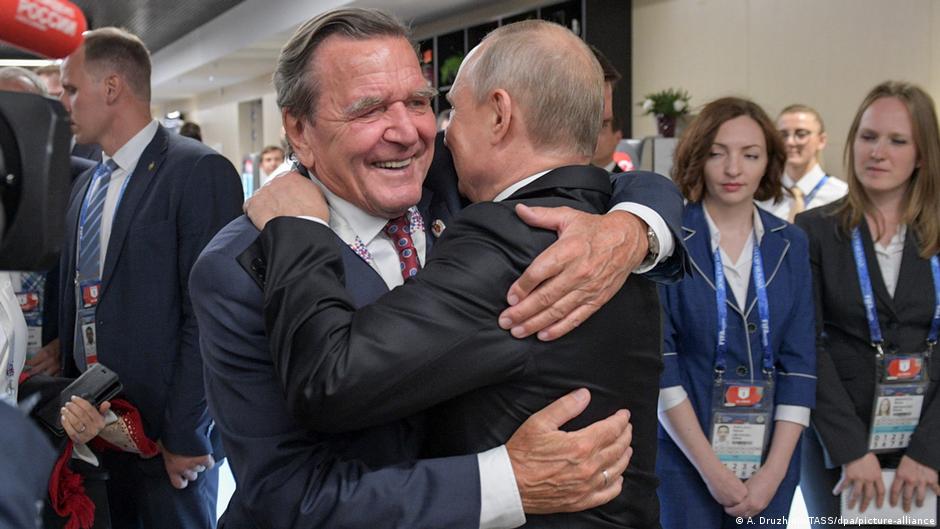
As the Russia-Ukraine war appears to approach a turning point, Russian President Vladimir Putin has expressed readiness for negotiations, setting forth key conditions and identifying preferred Western interlocutors. At a press conference on May 9, Putin named former German Chancellor Gerhard Schröder as his favored candidate to represent the European Union in potential peace talks.
Schröder’s Unique Role in Russia-West Dialogue
When questioned about the possibility of engaging with Western European politicians, Putin specifically singled out Schröder, stating, "For me personally, former Federal Chancellor Mr. Schröder is preferable." Schröder, who served as Germany’s chancellor from 1998 to 2005, has maintained close ties with Putin and Russia since leaving office, notably chairing the boards of Nord Stream operator and Russian oil giant Rosneft.
Despite the Kremlin’s recent history of harsh rhetoric toward European leaders, Putin emphasized that Russia remains open to dialogue but expects Europe to appoint negotiators who have not insulted Russia. "Europe must choose a negotiator who has not spoken unpleasantly about us," Putin said, adding that Russia has "always spoken respectfully with the EU." However, the president’s own description of some European countries as "subpigs" and his critical remarks about Finland’s NATO accession suggest a complex and often hostile diplomatic environment.
"For me personally, former Federal Chancellor Mr. Schröder is preferable," Putin said regarding possible EU negotiators.
Putin also reiterated Russia’s willingness to meet with Ukrainian President Volodymyr Zelensky in a neutral third country, provided that "final agreements" oriented towards a "long-term historical perspective" are reached. Yet, official Russia-Ukraine negotiations remain stalled, with Russian Foreign Minister Sergey Lavrov confirming in April that no formal talks are underway.
According to Putin, Slovak Prime Minister Robert Fico conveyed Zelensky’s readiness for a summit-level meeting. Putin declared, "We have never refused this; whoever wants to meet, let them come to Moscow." Nevertheless, Kyiv has dismissed invitations to meet on Russian or Belarusian soil as insincere and politically motivated.
Business and Political Implications for Western Stakeholders
Schröder’s selection as a preferred intermediary highlights the intersection of business interests and political strategy in the ongoing conflict. His longstanding involvement with Russian energy projects and his vocal support for maintaining economic ties with Russia during the war have drawn scrutiny and criticism across Europe.
German media often describe Schröder as a close Putin ally and a lobbyist for Russian interests within Germany. His advocacy for reversing the demonization of Russia and resuming cheap Russian energy imports signals a potential shift in some European business circles favoring pragmatic engagement over sanctions and isolation.
Meanwhile, reports from late 2025 indicate that Putin has also sought to influence U.S. negotiation channels, having personally lobbied for Steve Witkoff, a businessman rather than a conventional political figure, to act as a peace negotiator on behalf of the Trump administration. According to The Wall Street Journal, Witkoff’s appeal to the Kremlin stemmed from his business background and less rigid adherence to intelligence protocols, allowing for more direct, unsupervised meetings.
These developments underscore the Kremlin’s strategic effort to shape negotiation dynamics by leveraging non-traditional interlocutors with dual business and political roles. For Western executives and policymakers, the evolving nature of these engagements poses challenges in balancing commercial interests, geopolitical realities, and ethical considerations.
As the conflict persists, the appointment of figures like Schröder as preferred interlocutors signals a potential attempt by Moscow to recalibrate dialogue channels through trusted, business-savvy contacts, influencing both corporate strategies and diplomatic approaches in Europe and beyond.