Rosneft Advisor Predicts Russia’s Prolonged War and Calls for Strategic Economic Shift
Advisor to Rosneft CEO Igor Sechin warns Russia may face two decades of conflict, urging a dual focus on economic development and national defense.
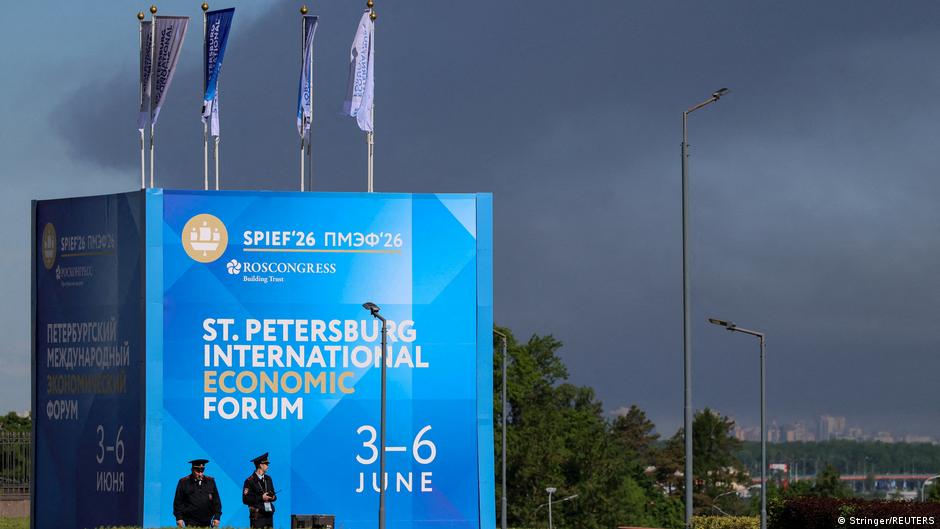
At the Saint Petersburg International Economic Forum (SPIEF) on June 3, Andrey Bezrukov, political analyst and advisor to Rosneft CEO Igor Sechin, presented a stark outlook on Russia’s geopolitical future. He forecasted that the country could remain in a state of war for possibly two decades, fundamentally reshaping the nation’s social and economic landscape.
Long-Term Conflict and Its Corporate Implications
Bezrukov’s assessment emphasized that Russia might endure an extended period of warfare, with two generations effectively engaged in combat. He described the current conflict as potentially transitioning from a "hot war" to a "creeping war," possibly spreading to other regions. This continuous state of conflict necessitates a strategic reorientation of Russia’s state and economic systems.
"We need to build a state system and economy that not only supports development but also fulfills defense objectives," Bezrukov stated during his SPIEF address.
For corporate leaders and boards, this forecast signals a pressing need to adapt business strategies to a dual mandate: sustaining economic growth while ensuring resilience and contribution to national defense priorities. Energy companies like Rosneft, deeply entwined with state interests, may face increased governmental expectations to balance profitability with strategic national objectives.
Bezrukov’s comments also introduced the threat of "biowarfare," referencing alleged technologies capable of creating viruses that could threaten entire populations. While these assertions align with Russian state propaganda narratives about bio-laboratories abroad, independent experts have challenged the feasibility of such claims. Nonetheless, the invocation of bio-threats may influence corporate risk assessments and security investments in Russia’s energy and defense sectors.
Context and Background: Bezrukov’s Profile and Recent Regional Tensions
Andrey Bezrukov’s background as a former Soviet and Russian intelligence officer adds weight to his analysis. Having served as a colonel in the Foreign Intelligence Service (SVR), he operated undercover abroad under the name Donald Heathfield before his arrest and subsequent prisoner exchange in 2010. His unique perspective blends intelligence insight with corporate advisory roles at Russia’s energy giant.
His warnings arrive amid recent escalating tensions in the Saint Petersburg region. On the night of June 3, dozens of drones attacked the city and the surrounding Leningrad oblast, causing explosions, fires, and infrastructure damage. Notably, a major oil terminal was damaged, and disruption extended to residential complexes and the Pulkovo airport, where flight delays affected operations. These incidents underscore the vulnerability of critical infrastructure and the potential operational risks for companies operating in Russia.
Governor Alexander Beglov confirmed casualties from the attacks and reported significant impacts on mobile internet services, complicating communication and emergency response. Such instability may force corporate executives to factor heightened security risks into operational planning and risk management frameworks.
Strategic Considerations for Boards and Executives
The projections outlined by Bezrukov highlight the intersection of geopolitical conflict and corporate strategy in Russia. Boards must consider how prolonged conflict conditions can affect capital allocation, supply chain resilience, workforce stability, and compliance with evolving governmental demands.
Energy firms, particularly Rosneft, are positioned uniquely at this nexus, balancing shareholder interests with national priorities as articulated by advisors close to top management. The emphasis on integrating defense readiness into economic development plans may prompt companies to reassess investment in technologies and infrastructure that can support dual-use purposes.
In conclusion, Bezrukov’s forecast offers a sobering perspective on Russia’s strategic horizon, emphasizing an extended period of geopolitical tension that will require adaptive corporate governance and strategic foresight. Executives and board members in firms exposed to Russian markets should evaluate scenario planning and contingency strategies to navigate the complex interplay of ongoing conflict and economic objectives.