Russian Missile Strike Damages Kyiv’s Chernobyl Museum, Destroying 40% of Exhibits
Kyiv’s National Museum 'Chernobyl' halts operations after Russian attack destroys significant cultural artifacts and infrastructure.
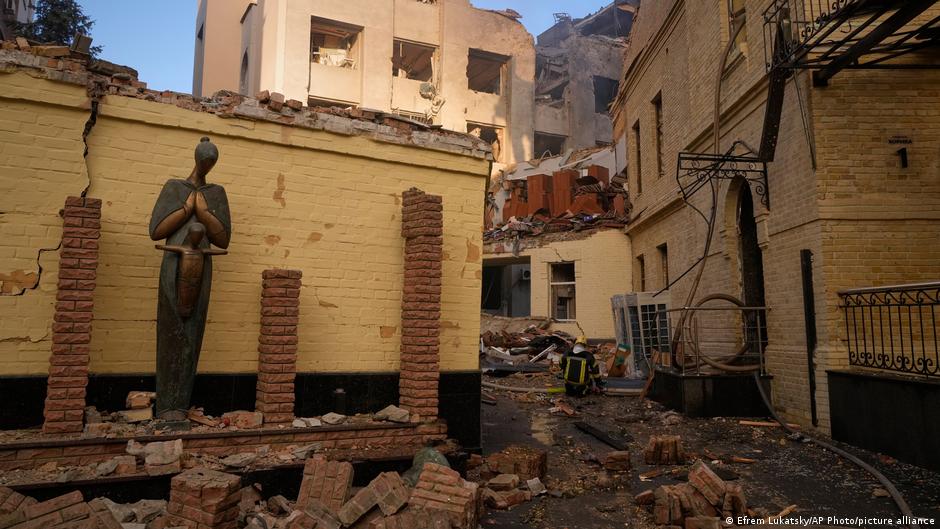
The National Museum "Chernobyl" in Kyiv has suspended its operations following a Russian missile strike that damaged the building and destroyed nearly 40% of its exhibits. The attack, part of a broader nighttime offensive on May 24, inflicted substantial losses on one of Ukraine's key cultural institutions dedicated to preserving the memory of the 1986 nuclear disaster.
Strategic Impact on Kyiv’s Cultural Infrastructure
The missile strike came during one of the largest Russian attacks on Kyiv since the start of the war, targeting various cultural and civilian sites across the city. Besides the Chernobyl Museum, the National Art Museum, National Philharmonic, National Music Academy, Yaroslav Mudryi Library, and Kyiv Opera sustained damage.
Images released by local media show severe exterior damage to the museum, an internal fire, and a partially collapsed suspended ceiling, underscoring the scale of destruction. The Ministry of Internal Affairs of Ukraine reported that approximately 40% of the museum's collection was irretrievably lost.
"Rescue teams and museum personnel immediately initiated evacuation efforts following the strike, managing to save items from secured storage, including a painting by Maria Prymachenko and the Ukrainian flag raised at Chernobyl following de-occupation in 2022," the ministry noted.
The National Museum "Chernobyl" had just reopened in late April following an extensive restoration, further compounding the loss.
Broader Military and Civilian Toll
The assault involved the launch of approximately 90 missiles and 600 drones by Russian forces, primarily targeting Kyiv and Bila Tserkva in Kyiv Oblast. Among the weapons used was the "Oreshnik" medium-range ballistic missile, marking its third deployment since the war began.
The Ministry of Defense of Russia claimed that the strikes hit military command centers, airbases, and defense industry facilities. However, Kyiv authorities reported civilian infrastructure damage in Bila Tserkva, including a garage cooperative and an industrial building.
Damage extended beyond museums and theaters, impacting cultural spaces such as Hinaus, the Ukrainian House, Kyiv Small Opera, the Zhytniy Market, and the Church of the Nativity on Podil. Architectural heritage sites including the Contract House and the Post Station were also affected. Additionally, offices of German media outlets Deutsche Welle and ARD were damaged.
The attack resulted in at least four fatalities and more than 80 injuries in Kyiv and its surrounding region.
Executive Commentary and Strategic Implications
President Volodymyr Zelensky denounced the attacks, highlighting the continuing targeting of civilian infrastructure. "Putin still wins with missiles aimed at residential buildings," Zelensky stated, referencing the destruction of water supply facilities, markets, schools, and residential areas. He specifically condemned the use of the "Oreshnik" missile against Bila Tserkva as a demonstration of Russian aggression and recklessness.
From a corporate and strategic perspective, the damage to cultural institutions poses challenges for Ukraine’s post-war reconstruction and cultural preservation efforts. The destruction of irreplaceable artifacts and infrastructure disrupts educational and cultural engagement, with long-term implications for national identity and tourism.
For executive decision-makers within Ukraine's cultural administration and international partners, the attack underscores the necessity of enhanced protective measures for cultural assets amid ongoing conflict. It also highlights the importance of contingency planning, insurance strategies, and international cooperation to safeguard heritage sites and support restoration initiatives.
As Kyiv grapples with the immediate aftermath, the broader business community must also consider the indirect economic impacts of such attacks, including on related sectors such as tourism, media, and cultural industries.