Serbia Faces Renewed Unrest Amid Anti-Government Protests Impacting National Stability
Violent clashes erupted in Belgrade as student-led protests challenge government authority and raise concerns over political stability.
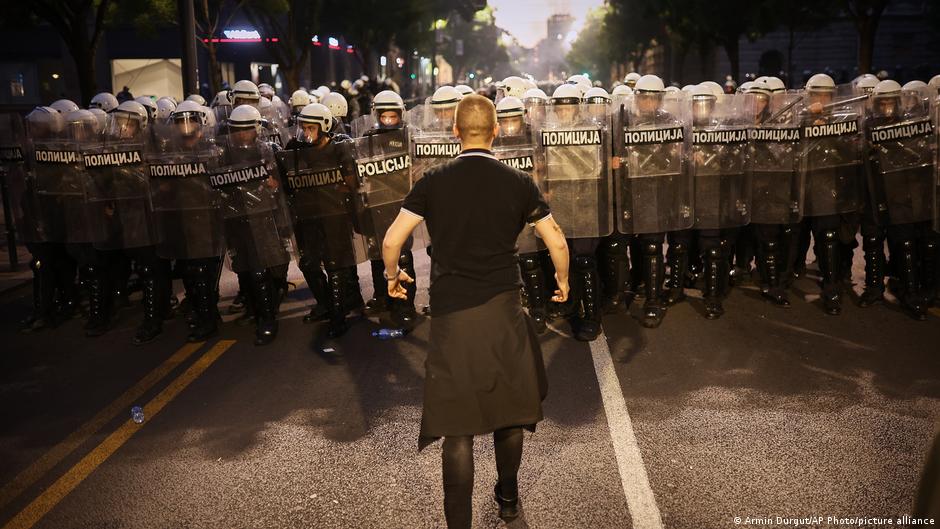
Serbia has witnessed a resurgence of violent unrest following massive anti-government protests centered in Belgrade, signaling intensified public dissent with significant implications for the country’s political and economic stability. The disturbances occurred near Pionirski Park, where students held a rally that escalated into confrontations with police forces.
Escalation of Student Protests and Government Response
On May 23, tens of thousands of demonstrators, largely composed of university students, gathered at the central Slavija Square in Belgrade to protest against the administration of President Aleksandar Vučić. Despite government efforts to curtail the demonstrations, which included canceling all train services to and from the capital to limit influx from other regions, the protest swelled significantly, underscoring widespread public dissatisfaction.
According to official reports, clashes intensified as protesters allegedly attacked police officers with flares, stones, and makeshift explosive devices. In response, law enforcement deployed tear gas and stun grenades near the Faculty of Law and the parliament building. Serbian Interior Minister Ivica Dačić confirmed the detention of 23 individuals in connection with the unrest.
“All those who attacked police officers ensuring security after the public assembly will be identified and held accountable under the law,” stated the Belgrade prosecutor's office, condemning the assaults as criminal offenses.
These confrontations highlight the challenges facing Serbian authorities in maintaining order while addressing the underlying political grievances fueling the protests.
Background: Political Turmoil Rooted in Corruption Allegations
The current wave of protests began in November 2024, triggered by a tragic accident in Novi Sad where a concrete canopy collapse at a renovated railway station claimed 16 lives. Protesters attribute the catastrophe to systemic corruption, negligence in construction oversight, and nepotism among high-ranking officials. These allegations have galvanized public demand for President Vučić’s resignation and the calling of early parliamentary elections.
Political repercussions ensued with the resignation of Prime Minister Miloš Vučević, a former mayor of Novi Sad, in January 2025, officially approved by parliament in March. Vučić subsequently nominated Dr. Đuro Mačut, a medical professor, as the new prime minister. However, Vučić emphasized that democratic processes should not be derailed by protests, indicating his reluctance to alter election schedules.
This political instability has complicated Serbia’s governance and presents challenges for domestic and foreign investors who monitor the country's rule of law and business environment closely.
Implications for Corporate Strategy and Executive Decision-Making
For multinational corporations and local enterprises operating in Serbia or considering market entry, the ongoing civil unrest and political uncertainty necessitate reassessment of risk management and strategic planning. Executives must evaluate potential disruptions, regulatory unpredictability, and reputational risks amid a volatile socio-political landscape.
Furthermore, companies with infrastructure investments, especially in transportation and construction sectors, may face increased scrutiny and operational hurdles given the protests’ origin linked to construction failures and corruption claims.
Strategic engagement with government stakeholders and community relations will be critical to navigating this period. Boards should prioritize scenario planning to anticipate further escalations or potential political transitions, ensuring business continuity and compliance with evolving legal frameworks.