US Senate Confirms Jay Clayton as Director of National Intelligence Amid Partisan Divide
Jay Clayton, former NYC federal prosecutor, approved to lead US intelligence community despite lack of prior national security experience.
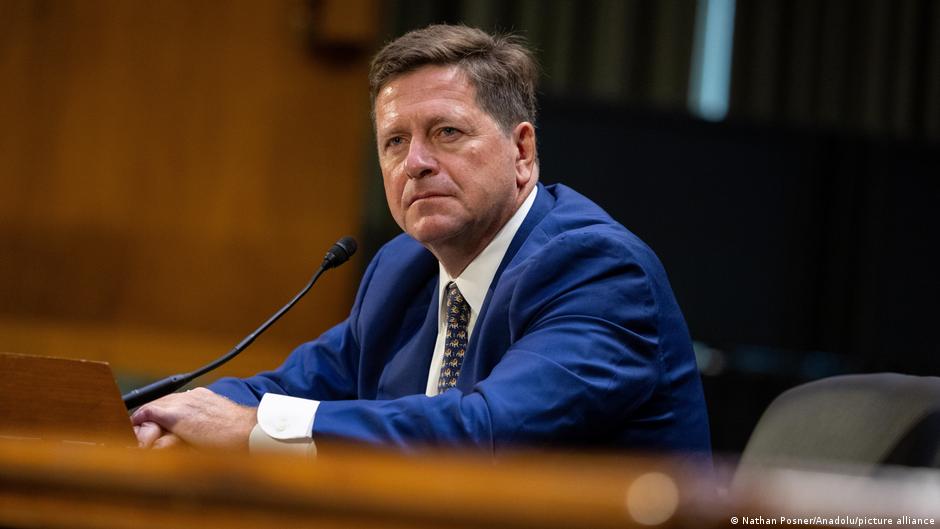
The United States Senate has confirmed Jay Clayton as the new Director of National Intelligence (DNI), with a narrow vote of 51 in favor and 47 against. Notably, all opposition came from Democratic senators, underscoring a deeply partisan divide surrounding his appointment.
Background and Confirmation Dynamics
Jay Clayton, who previously served as the U.S. Attorney for the Southern District of New York starting in 2025, was nominated by President Donald Trump in June. Trump highlighted Clayton's prior leadership of the Securities and Exchange Commission (SEC) and his legal background at the prominent law firm Sullivan & Cromwell as credentials that qualify him for the intelligence post.
Clayton's nomination initially received cautious welcome from Democrats, who viewed him as a preferable alternative to acting DNI William Pulte, the head of the Federal Housing Finance Agency. However, their support eroded following contentious confirmation hearings. Democratic senators repeatedly pressed Clayton on the legitimacy of President Joe Biden's 2020 election victory, to which Clayton responded ambiguously that Biden was "recognized" as the winner. This evasiveness, amid ongoing claims by Trump of election fraud unsupported by evidence, contributed to Democratic opposition.
Despite lacking prior experience in intelligence or national security, Clayton will now oversee the U.S. intelligence community, encompassing 18 agencies including the Central Intelligence Agency (CIA), National Security Agency (NSA), and Defense Intelligence Agency (DIA).
Boardroom Implications and Strategic Challenges
"Clayton inherits an intelligence community in flux, with recent leadership upheavals and significant staff reductions posing immediate strategic challenges."
Clayton assumes leadership after the resignation of former DNI Tulsi Gabbard in May, who cited her husband's serious illness as reason for stepping down. Her departure led to William Pulte's interim appointment, a move that raised bipartisan concerns due to Pulte's limited intelligence background.
During his brief tenure, Pulte initiated controversial efforts, including transferring intelligence materials to potentially prosecute political adversaries of President Trump and implementing sweeping personnel cuts within the DNI office. In the hours before Clayton's confirmation vote, Pulte announced that staff reductions would reach approximately 30% following a fifth wave of layoffs.
These developments signal a period of significant organizational restructuring and heightened political sensitivity within the intelligence community. Clayton's corporate and legal expertise, particularly in regulatory environments and securities law, may influence his approach to managing the intelligence apparatus, focusing on compliance, oversight, and internal controls.
However, his lack of direct national security experience places pressure on Clayton to rapidly adapt and gain credibility with career intelligence professionals and bipartisan stakeholders. His stewardship will be closely watched for its impact on intelligence operations, interagency coordination, and the broader strategic posture of U.S. national security.