Drone Incursions Test Moldova’s Risk Planning and Strategic Resilience
Five airspace violations in one day are raising operational and governance concerns for organizations exposed to Moldova and the region.

Drones violated Moldova’s airspace five times on October 16, and one aircraft crashed and exploded inside the country, according to Moldova’s Defense Ministry. The incidents deepen the security challenge facing a small economy near the war in Ukraine and add a new layer of uncertainty for executives, boards and investors assessing regional exposure.
Moldova’s Foreign Ministry said it “strongly condemned” the repeated violations, arguing that such incidents endanger the safety of citizens. It called on Russia to immediately end its attacks on Ukraine and comply with international law, including Moldova’s sovereignty and territorial integrity.
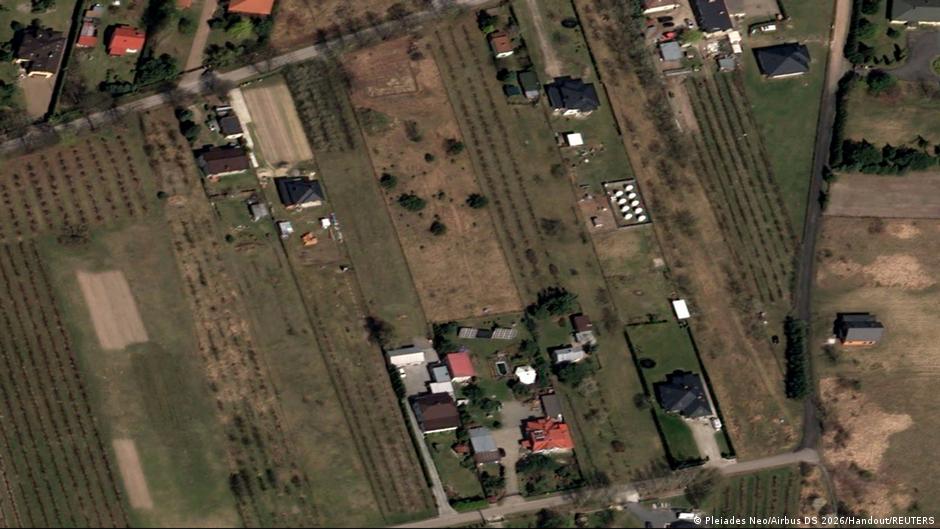
The immediate event occurred near the village of Novye Kodryany, about 50 kilometers from the Ukrainian border. The Defense Ministry said the unmanned aerial vehicle entered Moldovan airspace illegally at 4:22 p.m. local time. At 5:06 p.m., authorities announced that it had fallen and exploded. Moldovan police subsequently published a photograph of the wreckage on Facebook.
A widening operational risk
For companies operating in Moldova, the succession of incursions turns an external war into a more direct business-continuity issue. The reported crash did not come in isolation: hours before it occurred, the Defense Ministry said Moldova’s airspace had been violated seven times since October 10 against the backdrop of Russian attacks on Ukraine.
Six of those seven earlier incidents involved drone overflights. Two took place on October 15, while four occurred during the night of October 16. The remaining incident was the October 10 crash of a drone carrying explosives in Geamana, a locality also situated roughly 50 kilometers from the Ukrainian border.
The frequency of the events matters for corporate decision-makers because repeated disruption can demand a different response from a single emergency. Boards overseeing Moldovan operations may need to examine whether crisis protocols, employee communications and physical-site contingency plans reflect the possibility of recurring airspace violations. Transport-dependent businesses also face the broader planning challenge created whenever national security authorities must respond to airborne threats, even when no direct commercial disruption is reported.
Repeated airspace violations transform a geopolitical risk monitored from a distance into a recurring operational scenario for organizations on the ground.
That distinction is particularly relevant for multinational companies whose regional governance structures may place Moldova within a wider Central and Eastern European portfolio. A risk framework built around the assumption that hostilities remain confined to Ukraine may no longer capture the pattern described by Moldovan authorities. The issue for executives is not to predict each incident, but to determine which decisions can be made in advance if threats approach facilities, employees or critical routes.
Escalating numbers sharpen boardroom scrutiny
Moldova’s Defense Ministry said it had recorded 64 airspace violations since the beginning of the year. Sixteen of them, including the October 16 incidents, occurred during the current month. Since 2022, when Russia began its full-scale war against Ukraine, the total number of violations has reached 101.
Those figures provide boards with a measurable trend rather than a purely hypothetical geopolitical concern. They can inform discussions about emergency authority, insurance coverage, supplier concentration and the location of essential personnel or data. They may also affect how companies describe regional risks to shareholders, lenders and business partners, particularly when an organization has material operations close to Moldova’s border with Ukraine.
The October incidents also show that the objects entering Moldovan airspace have not been limited to drones. On the morning of October 3, three missiles and two unmanned aircraft violated the country’s airspace. All five fell on Moldovan territory, and no deaths or injuries were reported. Moldova’s Defense Ministry said that episode resulted from Russia’s large-scale strikes on Ukraine.
While the authorities’ statements establish the security context, they do not specify financial losses or disruption to individual companies. Any corporate response therefore has to distinguish between verified events and projected exposure. Even so, the combination of explosive payloads, crashes and a rising monthly count gives management teams a clear basis for reviewing preparedness before an incident affects a workplace or supply route.
Strategy under prolonged uncertainty
The broader strategic question is how organizations should operate when a neighboring conflict repeatedly crosses national boundaries without becoming a conventional war inside Moldova. Abrupt withdrawal or investment freezes are not the only options. Companies can instead reassess decision thresholds: when employees should work remotely, who can suspend travel, how alternate suppliers are activated and what information reaches directors during an emergency.
The government’s public condemnation also places the incidents within a diplomatic and legal framework. For businesses, that means security planning will unfold alongside Moldova’s effort to defend its sovereignty and maintain confidence in domestic stability. Executives will need to monitor both the physical threat and the policy response, including any measures that could affect aviation, border movements or infrastructure access.
The October 16 crash underscores how quickly the risk can develop: Moldovan authorities reported little more than 40 minutes between the drone’s illegal entry and the announcement that it had fallen and exploded. For corporate leaders, that compressed timeline favors established responsibilities and rehearsed communications over improvised decision-making. As the recorded number of violations rises, resilience planning is becoming a governance issue rather than a narrow security function.