Russia Labels StopTime Musicians Naoko and Alexander Orlov ‘Foreign Agents’
The designation underscores how Russia’s regulatory machinery can escalate legal and reputational pressure on independent cultural operators.
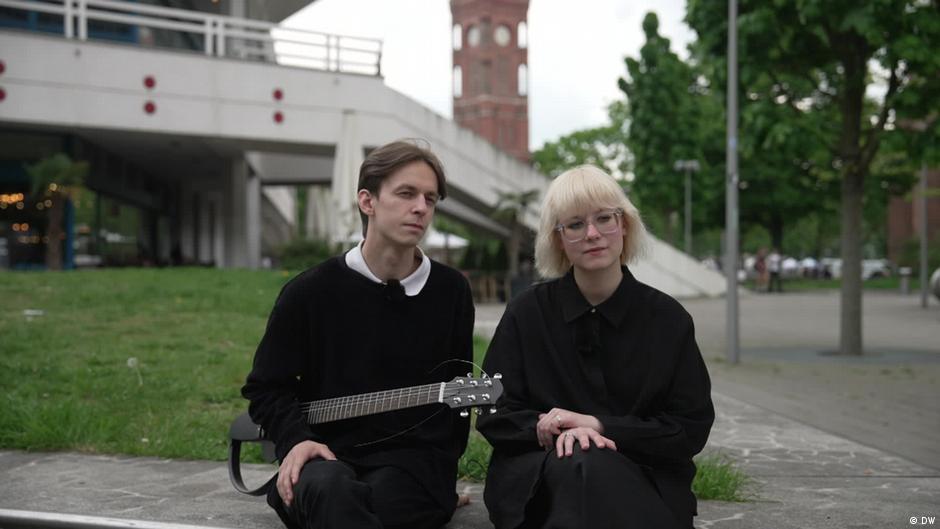
Russia’s Ministry of Justice has added two members of the street-music group StopTime to its register of “foreign agents,” extending a regulatory campaign that has already pushed the performers out of the country and broken up the band’s original lineup.
The ministry listed 19-year-old vocalist Diana Loginova, who performs under the name Naoko, and her husband, 23-year-old guitarist Alexander Orlov, on Friday, Oct. 16. The decision came exactly one year after the musicians received their first administrative detention orders.
For executives and organizations operating in Russia’s cultural and media markets, the case illustrates how administrative enforcement, content restrictions and reputational designations can work in sequence. Conduct that initially resulted in short-term detention ultimately produced repeated custody, an international relocation and the loss of a band member, before culminating in the formal “foreign agent” designation.
Justice Ministry Cites War Opposition and ‘Anti-Russian’ Material
In its explanation, the Justice Ministry said Loginova had opposed the war in Ukraine, disseminated what it described as “inaccurate information” about the decisions and policies of the Russian authorities, and interacted with people or organizations already classified as “foreign agents.”
The ministry alleged that Orlov, among other activities, had “actively participated in the dissemination of materials of an anti-Russian nature.” The descriptions reflect the government’s characterization of their conduct and do not identify a foreign corporate structure or commercial sponsor in the source account.
Loginova and Orlov were added to the register exactly one year after the first administrative detention imposed on them and fellow musician Vladislav Leontyev.
The ministry also added the movement Malinovy Klin — Independent Kuban to the register on Oct. 16. Authorities alleged, among other things, that the movement had called for a violation of Russia’s territorial integrity.
The additions expand a registry that carries significant practical implications for people and organizations working in public-facing industries. In business terms, designation can affect relationships with venues, platforms, promoters and other counterparties that must assess legal exposure when dealing with a listed person. In the StopTime case, the decision follows a prolonged enforcement process rather than a single disputed performance.
Street Performances Became a Regulatory Flashpoint
StopTime began performing on the streets of St. Petersburg in spring 2025. Alongside Loginova and Orlov, the group included drummer Vladislav Leontyev until January 2026. Its concerts were promoted through social media, allowing the musicians to gather audiences without relying on the conventional infrastructure of established venues, ticketing businesses or major promoters.
The group performed songs by Noize MC, Monetochka, Zemfira and the band Pornofilmy. Russia’s Justice Ministry has designated all of those artists or acts as “foreign agents.” During one performance in October 2025, StopTime also played Noize MC’s song “Kooperativ ‘Lebedinoye Ozero.’” A St. Petersburg court had classified the song as “information prohibited in the Russian Federation” in May of that year.
The repertoire placed the group at the intersection of cultural expression and an increasingly restrictive compliance environment. For music companies and digital platforms, the episode highlights the operational risk attached not only to an artist’s own statements but also to the distribution or public performance of material associated with other designated figures.
Repeated Detentions Reshaped the Band
The first administrative case arose from a concert near St. Petersburg’s Ploshchad Vosstaniya metro station. Police said 70 people attended. Loginova, Orlov and Leontyev were found guilty of organizing a mass event that led to a disruption of public order and were placed under administrative arrest.
Immediately after the first detention periods expired, authorities drew up new administrative reports against the musicians. The consecutive cases, sometimes described as “carousel” protocols, kept them in custody almost until the middle of November 2025.
After their third consecutive detention, Loginova and Orlov left Russia. Leontyev remained in the country and consequently departed the group. By January 2026, he was no longer part of StopTime, leaving the project without its original three-person configuration.
That sequence shows how enforcement decisions can determine the structure and geographic future of a small creative enterprise even when it has no conventional boardroom. Repeated detention disrupted the group’s ability to perform, divided its members across borders and forced an effective restructuring. The subsequent designation adds another layer of regulatory pressure to Loginova and Orlov’s public careers, while signaling broader risks for businesses that distribute, host or promote politically sensitive cultural material in Russia.