Starlink Station Fire Raises Corporate Security Questions in Poland
The suspected use of criminal intermediaries highlights growing operational risks for companies managing strategic infrastructure in Europe.
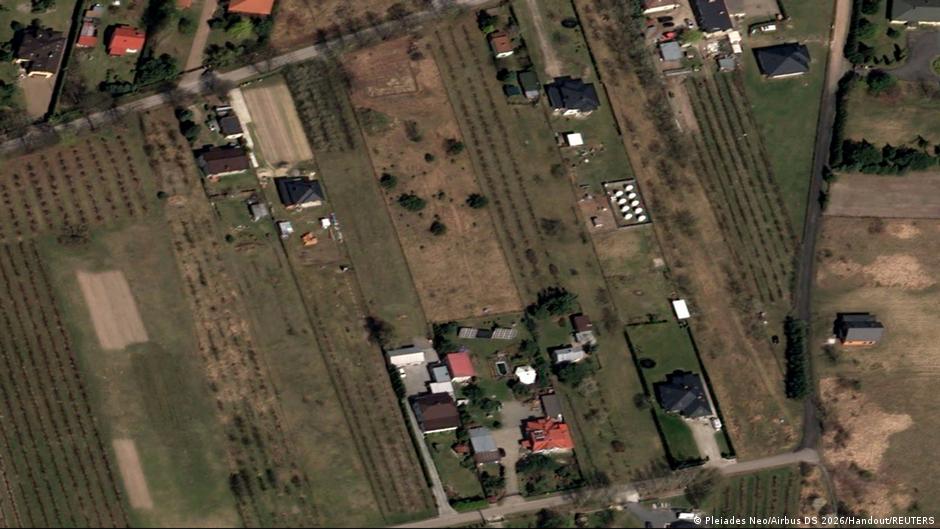
A suspected arson attack on a Starlink ground station near Warsaw is raising broader questions about how companies operating strategically important communications infrastructure should assess physical security, geopolitical exposure and business continuity risks.
Germany’s Der Spiegel reported, citing sources in several countries, that the Turkish organized crime group Daltons may have been involved in the fire and may have acted on instructions from Russian intelligence services. The group has for years been associated with extortion, arms trafficking and contract killings, including in Germany.
The allegations have not been proven, and Polish authorities have not presented direct evidence linking Russia to the incident. Still, the investigation illustrates a challenge increasingly confronting corporate executives and boards: strategic assets may face threats delivered through criminal networks rather than conventional state institutions, complicating attribution, prevention and accountability.
Investigators Trace Suspects Across Borders
Two Turkish citizens detained on October 12 in Nürtingen, Germany, as part of the arson investigation were identified by Der Spiegel as 38-year-old Ümit E. and 34-year-old Müslüm T. Representatives of several law enforcement agencies told the magazine that the men either belong to the Daltons or carried out assignments for members of the organization.
The Higher Regional Court in Stuttgart is expected to decide soon whether the two men should be extradited to Poland. Their detention underscores the cross-border scope of the investigation, which involves alleged criminal activity in Poland, arrests in Germany and suspicions of possible direction from Russia.
Two other people, including a woman, were detained on October 13 in connection with the investigation. Polish radio station RMF FM reported that German authorities conducted a counterterrorism operation in Berlin to apprehend the woman. Under a preliminary theory, she may have provided logistical support to the Turkish citizens and acted as their driver.
Alleged Russia Connection Remains Unproven
Der Spiegel reported that the Daltons may have operated at the request of Russian intelligence. The magazine pointed to the case of the group’s alleged leader, Beratcan Gökdemir, who was detained in Russia in 2024. Turkey sought his extradition, but Russian authorities did not hand him over to Ankara.
According to Der Spiegel, German intelligence agencies believe Moscow may have offered Gökdemir protection in anticipation of receiving services in return. His current whereabouts are unknown. That assessment remains an intelligence judgment rather than publicly established proof that Russia ordered the Starlink station fire.
Polish officials characterized the incident as a suspected act of sabotage immediately after the blaze. On September 23, Polish Deputy Prime Minister Krzysztof Gawkowski said that while there was no direct evidence of Russian involvement, the circumstances appeared consistent with what he described as a new Russian doctrine for conducting attacks.
There is currently no direct evidence connecting Russia to the arson, but Polish authorities say the incident bears characteristics associated with a developing pattern of attacks.
Resilience Becomes a Boardroom Issue
The Starlink facility is located in the village of Wola Krobowska, about 50 kilometers from Warsaw. It was damaged in an arson attack on September 23, when fire engulfed an electrical substation and a generator. German tabloid Bild reported that the station briefly stopped operating before returning to service. No one was injured.
The limited interruption may indicate that backup systems or recovery procedures functioned as intended, although the available reports do not provide technical details about the station’s resilience measures. For corporate leaders, the incident nevertheless highlights the value of redundancy at sites supporting critical services, particularly when power infrastructure and generators can become direct targets.
Starlink, operated by Elon Musk’s SpaceX, provides satellite communications through a network that depends not only on spacecraft but also on terrestrial facilities. Damage to a ground station therefore presents a different risk from disruption in orbit: physical sites can be surveilled, approached and attacked using comparatively conventional means.
For management teams responsible for communications, logistics, energy or defense-adjacent assets, the case points to a need to treat geopolitical risk as an operational concern rather than solely a government-relations issue. Security planning may require closer coordination with national authorities, more scrutiny of contractors and access routes, and contingency plans for attacks carried out by intermediaries whose connection to a state sponsor may be difficult to establish quickly.
The boardroom implications extend beyond Starlink. Directors overseeing European operations may need clearer reporting on the security of facilities whose commercial function also carries strategic significance. They may also need to test whether crisis plans account for simultaneous legal, reputational and operational pressures across several jurisdictions.
The extradition proceedings in Stuttgart and the continuing Polish investigation could clarify the suspects’ alleged roles and whether the fire was an isolated criminal act or part of a broader campaign. Until then, the central allegation remains unresolved. The station has resumed operations, but the episode demonstrates how even a brief disruption can expose vulnerabilities with consequences for corporate strategy, government relationships and investment in infrastructure protection.