EU Summons Russian Envoy Following Missile Strikes on Ukrainian Military and Diplomatic Sites
EU signals stronger sanctions and diplomatic pressure after Russian missile attacks hit Kyiv region and Latvian consulate in Sloviansk.
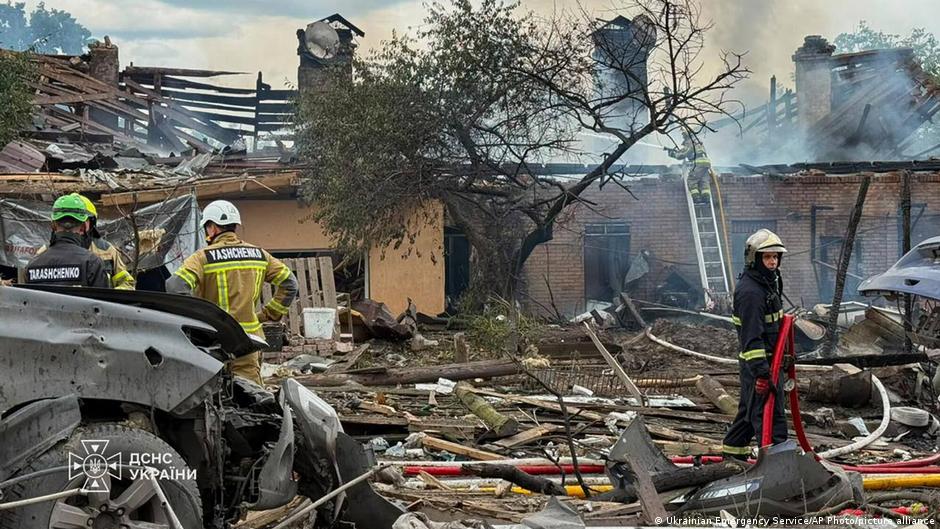
The European Union has summoned the Russian permanent representative to the EU in response to recent missile strikes carried out by Russia on Ukrainian territory, including a weapons exhibition site and the Latvian honorary consulate in Sloviansk. These attacks, condemned by EU foreign policy chief Kaja Kallas, have resulted in civilian casualties and damage to diplomatic facilities.
Strategic and Diplomatic Implications of the Attacks
Kaja Kallas, the EU High Representative for Foreign Affairs and Security Policy, emphasized that the strikes across Kyiv and other regions are not random but part of a deliberate Russian policy. Notably, the missile strike on the Latvian honorary consulate underscores Moscow's blatant disregard for international law and diplomatic norms.
"In response, we will summon the Russian envoy to the EU and consider expanding sanctions to include additional enterprises and entities within Russia's military-industrial complex," Kallas stated.
On the morning of July 24, Russian forces launched ballistic missile attacks using "Zircon" missiles targeting Kyiv Oblast. Ukrainian monitoring sources reported that one of the main targets was a private weapons testing range in Bucha district, hosting an exhibition showcasing unmanned aerial vehicles (UAVs). Ukrainian Prosecutor General Ruslan Kravchenko confirmed that the attack resulted in ten fatalities and approximately one hundred injuries, with an ongoing investigation into the event's organization.
The Russian Ministry of Defense acknowledged the strike, claiming that at the time of the attack, the site housed key developers and manufacturers of UAVs, alongside commanders of Ukrainian drone forces and intelligence personnel allegedly involved in operations against Russian territory.
Ukraine's Drone Strategy and Industrial Ambitions
In a recent interview, Ukrainian President Volodymyr Zelensky revealed plans to significantly enhance Ukraine's drone capabilities by 2027, aiming for drones with a range of up to 10,000 kilometers. Currently, Ukraine possesses UAVs capable of striking targets up to 3,000 kilometers away, comparable to Russian capabilities.
Zelensky highlighted ongoing negotiations with the United States to establish domestic production lines for UAVs, including constructing a manufacturing facility within Ukraine. He stressed the dynamic nature of drone warfare: "Drones cannot just sit in warehouses; they differ from artillery or missiles, as they are updated every six months or even every three months on the battlefield." This reflects a strategic shift toward continuous innovation and rapid deployment in drone technology.
Earlier directives from President Zelensky mandated the creation of a specialized command within the Ukrainian armed forces focused on long-range influence operations against Russia. This unit is expected to coordinate drone attacks deep inside Russian territory, which Kyiv considers highly effective in undermining Moscow's resolve to continue the war.
These developments highlight the intersection of evolving military technology, international diplomatic responses, and strategic corporate partnerships in defense production. The EU's decision to escalate diplomatic pressure and consider further sanctions on Russia's defense sector signals heightened attention to the business and operational dimensions of the conflict's military-industrial complex.