Germany Accelerates Development of Long-Range Weapons Amid Russian Iskander Threat
Following U.S. refusal to deploy Tomahawk missiles, Germany prioritizes own long-range strike capabilities to maintain deterrence in Europe.
Germany is expediting the development of its own long-range missile systems in response to the threat posed by Russian Iskander missile deployments in the Kaliningrad region. This strategic pivot follows the United States’ decision not to station Tomahawk cruise missiles in Germany, a move that German officials say necessitates swift action to avoid gaps in Europe’s deterrence architecture.
Strategic Shift in European Defense Posture
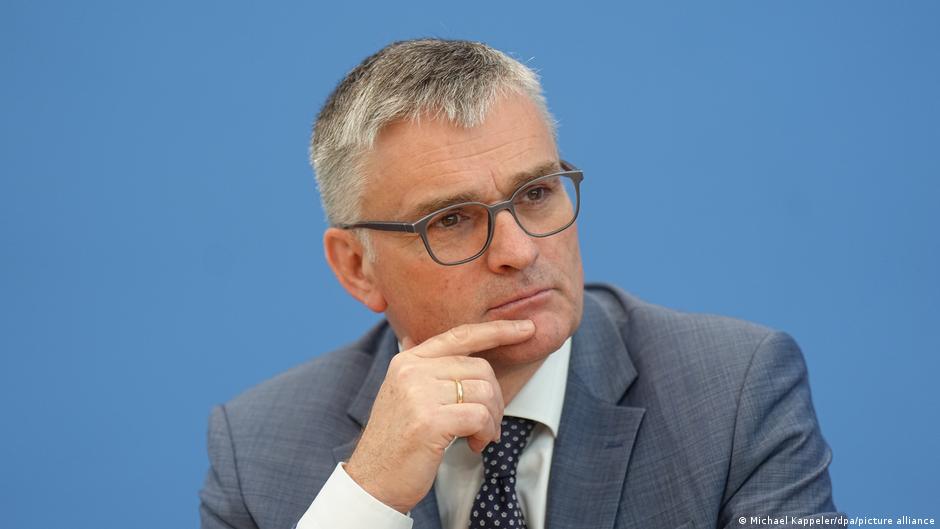
Stefan Kornelius, spokesperson for the German government, emphasized on May 4th during a press briefing in Berlin that Germany must now focus on advancing indigenous missile capabilities. Originally, hosting U.S. Tomahawk missiles was considered a temporary measure, but with Washington prioritizing its own forces’ needs, Berlin is turning to collaborative European initiatives.
"This program is a response to Russia’s rearmament with new long-range weapon systems," Kornelius stated, referring to the deployment of Iskander missiles not only in Kaliningrad but across other strategic locations. "We are working on a comprehensive deterrence package at both national and European levels, alongside NATO allies."
The German government is actively involved in the European Long-Range Strike Approach (ELSA), a joint project to develop high-precision, long-range weapons including drones. This initiative aims to counterbalance Russia’s growing military capabilities, with concerns mounting that by 2029, Moscow may possess sufficient power to threaten NATO members directly.
"The threat posed by Russian Iskander systems is something Europe must decisively neutralize through this defensive strategy," Kornelius noted.
U.S. Tomahawk Deployment Declined, Germany Looks Inward
Chancellor Friedrich Merz confirmed on May 3rd that the U.S. will not be deploying Tomahawk missiles with a range of up to 2,500 kilometers on German soil. Merz explained that the U.S. military requires these systems for its own operational needs, referencing an agreement made in 2024 between then-President Joe Biden and then-Chancellor Olaf Scholz. The initial plan to host Tomahawks was intended as a deterrent signal to Russia amid its aggressive war against Ukraine.
Germany’s Ministry of Defense reported on May 4th that efforts are underway to bolster both German and European deterrence capabilities. This includes modernizing the TAURUS cruise missile system and advancing the ELSA program’s development of sophisticated long-range armaments.
Political Debates on Defense Collaboration and Strategy
Within Germany’s ruling Christian Democratic Union (CDU), voices have called for enhanced defense cooperation with Ukraine and a joint development of medium-range missile systems. Bundestag member Roderich Kiesewetter, an expert on foreign policy, criticized the Trump administration’s decision to discontinue Tomahawk deployments in Germany as a "huge mistake."
Kiesewetter warned that the shortage of American medium-range missiles capable of countering Russia’s nuclear threats directly undermines European security. He proposed that Europe urgently pursue an alternative missile program, potentially in collaboration with Ukraine, to have these systems operational by 2030.
"The solution lies in jointly developing similar capabilities with Ukraine to ensure such systems are available by 2030," Kiesewetter stated on the ARD network.
As tensions persist in Eastern Europe, Germany’s accelerated push for self-reliant long-range strike capabilities signals a significant shift in European defense strategy and the evolving dynamics of transatlantic military cooperation.