Germany’s AfD Leads CDU/CSU in Popularity Amid Controversy Over Ban Proposal
Support for banning the far-right AfD party divides German public as party claims political leadership role.
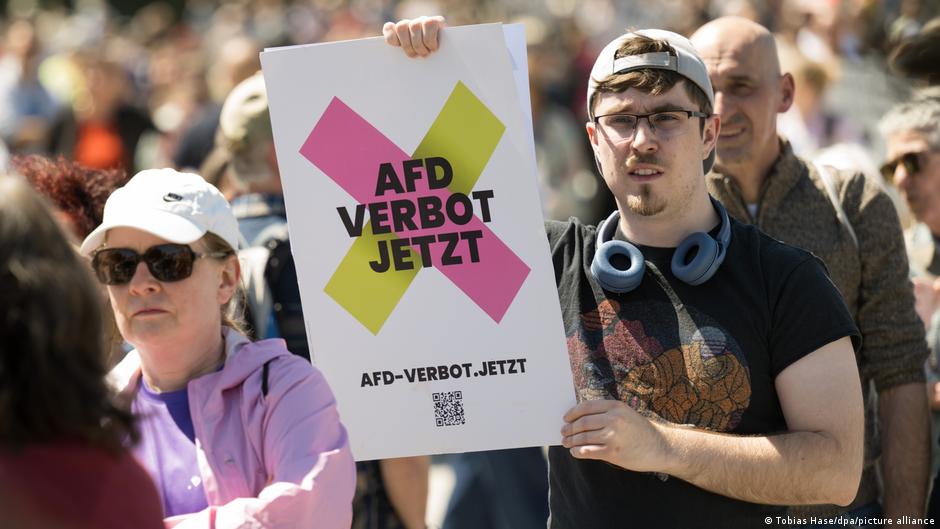
Recent polling data from the German sociological institute Insa reveals a significant division within the German public regarding the potential banning of the far-right party Alternative for Germany (AfD). According to the survey, conducted on behalf of Bild am Sonntag, 45% of Germans oppose banning the AfD, while 40% support such a measure, and 15% remain undecided. These results highlight a complex public sentiment toward a party that is increasingly influential in German politics.
AfD’s Rising Influence and Public Sentiment
The AfD currently enjoys a lead over the conservative CDU/CSU bloc by eight percentage points, boasting a 29% support rating compared to 21% for CDU/CSU—down one point from the previous week. This data reflects a growing challenge to traditional political forces, particularly as the AfD escalates its claims to political leadership. At a recent party congress in Erfurt, AfD co-chair Alice Weidel described the party as “the new people’s party in Germany,” asserting its ambition to reshape the country’s political landscape.
“We are the new people’s party in Germany,” Alice Weidel declared during the AfD congress, signaling a strategic bid for dominance.
Despite its rising popularity, the AfD remains under scrutiny by Germany’s Federal Office for the Protection of the Constitution (BfV), which has been investigating the party for suspected right-wing extremist ties since February 2021. This has fueled discussions about whether the party should be banned altogether, a prospect that splits public opinion.
In addition to the ban debate, 42% of respondents support the so-called "Brandmauer" strategy, a political firewall that rejects any cooperation with the AfD at all levels. However, 39% oppose this tactic, and 19% are undecided, indicating no clear consensus on how other parties should engage with the AfD moving forward.
Wider Political Context and Implications
Other major German parties show more modest levels of support. The Social Democratic Party (SPD) and the Greens each hold approximately 13% support, with the SPD gaining one percentage point recently. The Left Party maintains around 10% backing. These figures collectively underscore shifting political dynamics and the fragmentation of the traditional voter base.
Public confidence in the federal government also appears fragile. An ARD Deutschlandtrend poll from early July reports that only 13% of Germans approve of the government’s performance. Chancellor Friedrich Merz’s personal approval rating has dropped to a new low of 13%, decreasing three points from the prior survey. Meanwhile, AfD’s Alice Weidel commands approximately 25% approval among Germans, reflecting her party’s growing resonance with a significant voter segment.
For business leaders and corporate strategists, these developments signal a shifting political terrain that could influence regulatory, economic, and social policies in Germany. The AfD’s claim to be a "new people’s party" suggests a disruptive force capable of altering the country’s political equilibrium. Boardrooms and executives with interests in Germany must closely monitor how this evolving political landscape may impact governance, market stability, and legislative priorities.