Italy and Germany Express Concern Over Israel’s Interception of Gaza Aid Flotilla
European powers urge strict adherence to international law amid Israel’s halt of humanitarian aid convoy to Gaza.
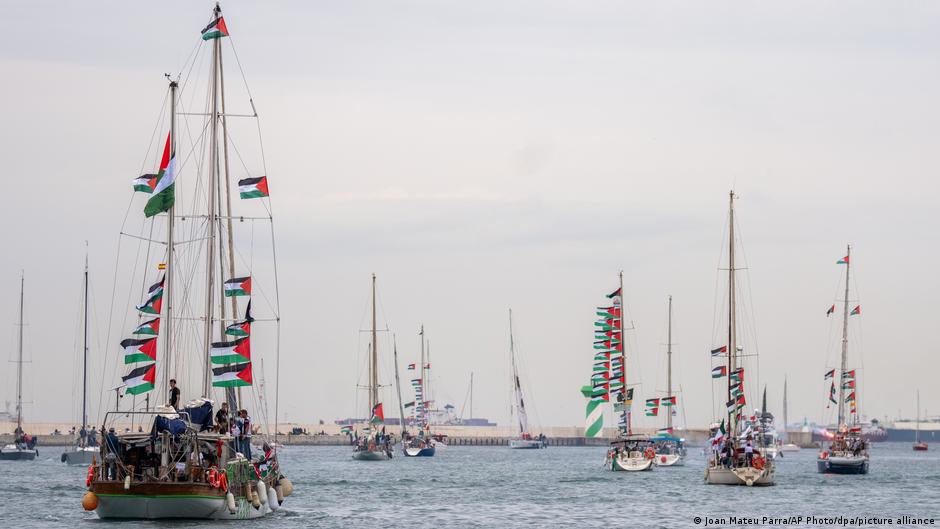
Italy and Germany have jointly called for the "unconditional adherence to existing international law" and urged restraint following Israel's interception of a humanitarian aid flotilla bound for the Gaza Strip. The incident, which took place in international waters near Greece, has raised diplomatic concerns about the delivery of aid and the broader geopolitical tensions in the region.
Strategic and Legal Implications of the Interception
On the night of April 30, Israeli naval forces stopped more than 20 vessels belonging to the Global Sumud Flotilla west of the Greek island of Crete. Dozens of activists aboard these ships were detained, although some vessels were later allowed to continue their journey within Greek territorial waters as confirmed by maritime tracking data.
Italy and Germany expressed deep concern over the unfolding events in a joint statement issued by the German Foreign Ministry. They emphasized the importance of upholding all applicable international laws governing maritime conduct and humanitarian operations. Both countries highlighted their commitment to supporting global efforts to provide humanitarian aid to Gaza in a lawful and responsible manner.
"We call for unconditional compliance with current international law and a cessation of irresponsible actions," the statement said.
The operation to halt the flotilla carries significant implications for international maritime law enforcement and the delivery of humanitarian aid in conflict zones. It also underscores the delicate balance governments must maintain between security concerns and humanitarian obligations.
Background of the Global Sumud Flotilla and Regional Context
The flotilla set sail on April 26 from a port in Sicily and was reportedly the largest convoy ever assembled to attempt to breach the Israeli naval blockade imposed on the Gaza Strip since 2007. This blockade is supported by Egypt and aims to restrict the flow of goods into Gaza, citing security concerns related to Hamas control in the region.
Organizers of the Global Sumud Flotilla seek to challenge this blockade and deliver humanitarian aid directly to Gaza’s population. They have also called for the establishment of a permanent humanitarian corridor to ensure continuous aid access.
Notably, in August 2025, Swedish environmental activist Greta Thunberg confirmed her participation in a similar aid flotilla organized by Global Sumud Flotilla, emphasizing the mission to open sustained humanitarian pathways to Gaza.
These initiatives come amid broader geopolitical developments, including a peace ceasefire agreement reached in October 2025 between Israel and Hamas under a U.S.-brokered plan led by then-President Donald Trump. The agreement involved guarantees from the U.S., Turkey, Qatar, and Egypt, with exchanges of prisoners and hostages marking significant confidence-building measures.
More recently, in January, the White House announced the commencement of the second phase of the peace plan aimed at stabilizing Gaza through a National Committee’s governance until the Palestinian National Authority is able to assume direct control.
Executive Perspectives and Corporate Strategy Considerations
For U.S. and European business leaders and policymakers, the interception of the aid flotilla highlights the complex intersection of geopolitics, international law, and humanitarian operations that can impact regional stability and market confidence. Strategic decisions by governments regarding enforcement of blockades and humanitarian access carry ripple effects on diplomatic relations and, by extension, international trade and investment environments.
Multinational corporations operating in sectors such as logistics, shipping, and humanitarian aid face increased uncertainty amid these tensions. Executive leadership must carefully navigate compliance risks while advocating for security and ethical supply chain practices.
Moreover, boardrooms are likely to scrutinize the evolving political landscape's impact on regional operations and global partnerships, particularly as international actors push for diplomatic resolutions that balance security needs with humanitarian imperatives.