Latvian President Urges NATO to Prepare for Escalation with Russia Amid Defense Concerns
Edgars Rinkēvičs highlights NATO’s need for enhanced military capabilities and warns of potential direct confrontation with Russia.
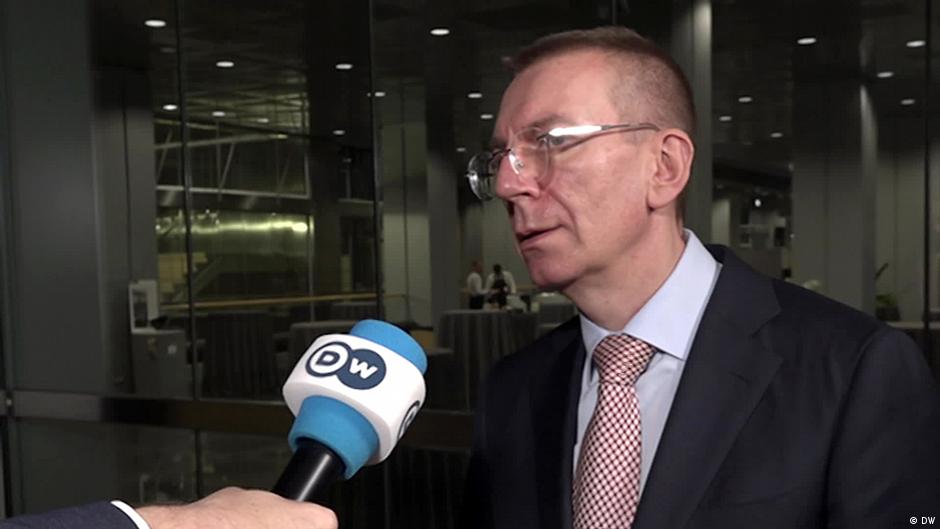
In a recent interview, Latvian President Edgars Rinkēvičs emphasized the critical need for NATO to brace for a possible escalation in conflict with Russia, signaling the potential for direct confrontation between the alliance and Moscow. His remarks come amidst ongoing tensions in Eastern Europe and concerns over current European defense spending levels.
NATO’s Strategic Readiness and Military Capacity
Speaking to Deutsche Welle on July 3, Rinkēvičs underscored that NATO must be prepared for scenarios where Russia escalates its military actions, potentially culminating in open conflict with the alliance. He stressed that member states need to deliver a clear message to the Kremlin: any aggression directed at NATO will be met with a proportional response.
"If Russia challenges NATO, the alliance’s response will be proportional," said the Latvian president, emphasizing deterrence through credible military preparedness.
Rinkēvičs expressed concern that despite a recent agreement among NATO countries to increase defense spending to 5% of GDP, these efforts have yet to translate into corresponding enhancements in military capacity. He pointed out that the fundamental challenge lies not merely in funding but in ensuring that resources effectively bolster the alliance's arsenal, including weaponry, missiles, and equipment.
"Money is important, but it is essential to have the weapons, missiles, and technology that can be acquired with these budgets," Rinkēvičs explained, highlighting the gap between financial commitments and tangible military readiness.
Transatlantic Defense Partnership and European Security
Addressing the broader context of European security, the Latvian president reaffirmed the indispensable role of the United States in Europe's defense architecture. Despite various political statements from European politicians, he described the U.S. as an irreplaceable partner in maintaining regional stability.
Rinkēvičs also emphasized that a peaceful resolution to the conflict in Ukraine is unattainable without active European involvement, linking Latvia’s integration into the European Union directly with strategic security interests.
His comments preceded a high-profile meeting in Berlin on July 3, where Rinkēvičs, along with Estonian Prime Minister Kaja Kallas and Lithuanian President Gitanas Nausėda, met with German Chancellor Friedrich Merz. The discussions focused heavily on joint security concerns ahead of the upcoming NATO summit in Ankara.
Chancellor Merz affirmed the collective security stance by stating, "The security of the Baltic states is also the security of Germany," reinforcing the interconnectedness of European defense obligations.
Implications for NATO’s Corporate and Policy Strategies
From a business and strategic viewpoint, these developments signal a critical juncture for NATO member states and their defense contractors. Increased defense budgets alone may not suffice unless paired with efficient procurement strategies that prioritize capability over expenditure. Defense firms could anticipate heightened demand for advanced military technology and equipment, prompting shifts in production priorities and innovation pipelines.
Moreover, the emphasis on transatlantic cooperation suggests sustained U.S. influence in European defense markets and policy decisions, which may impact multinational defense partnerships and investment flows.
As NATO prepares for the Ankara summit, corporate executives and board members within the defense sector should closely monitor geopolitical signals and budgetary commitments. Proactive engagement with government defense agencies and alignment with strategic priorities will be pivotal to capitalize on emerging opportunities in a security environment characterized by heightened risks and urgent modernization needs.