Russian Ballistic Missile Strikes on Kyiv Intensify Amid Rising Civilian Casualties and Ukrainian Strategic Response
At least six injured in overnight missile attacks on Kyiv as Ukraine escalates drone strikes on Russian oil infrastructure.
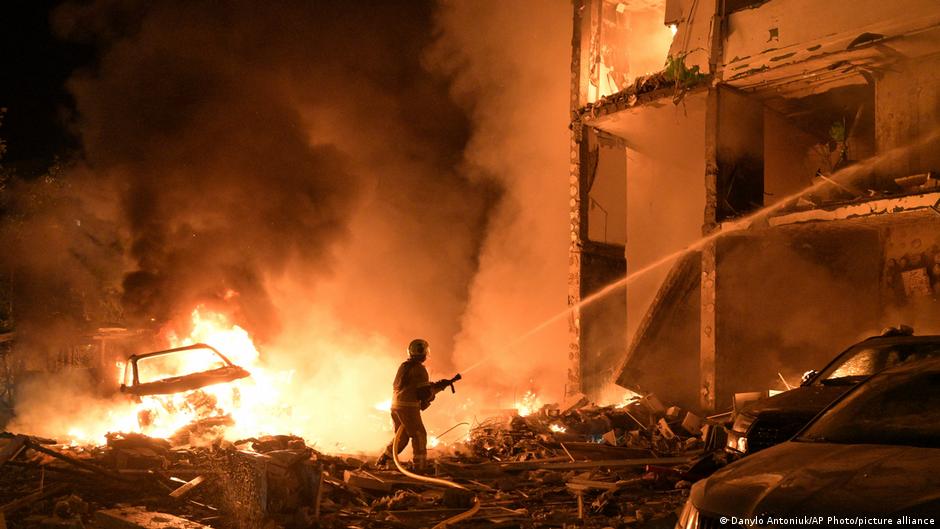
In the early hours of July 10, Kyiv suffered a significant ballistic missile assault attributed to Russian forces, resulting in six reported injuries and widespread damage across multiple districts of the Ukrainian capital. The attack, occurring around 03:38 local time, notably lacked a timely air raid alert, raising concerns about civil defense preparedness and response.
Impact and Aftermath of the Missile Attack
According to local authorities and Kyiv Mayor Vitali Klitschko, the missile strikes targeted various non-residential buildings and critical infrastructure. Fires broke out at a transformer substation in the Darnytskyi district and an office building in the Solomianskyi district. Additional damage was reported in the Sviatoshynskyi and Dniprovskyi districts, where missiles struck non-residential structures, sparking further fires.
Emergency responders provided immediate assistance to three of the injured at the scene, while the remaining three were hospitalized for more intensive care. The delay in activating air raid warnings — initiated two minutes after the first explosions in Kyiv and even later in the Kyiv region — has drawn scrutiny regarding the effectiveness of current warning systems.
“The missile strikes have caused significant disruption and injuries, underscoring the persistent threat to civilian populations in Kyiv,” remarked a local official.
Broader Security and Strategic Implications
The missile strikes come amid record-high civilian casualties in Ukraine, with May and June 2026 reported as the deadliest months since the onset of Russia’s full-scale invasion. United Nations monitoring revealed 274 civilian deaths in May and at least 265 in June, alongside over 1,800 injuries. Preliminary figures for the first week of July indicate at least 93 additional civilian fatalities due to Russian attacks.
The escalation corresponds with Ukraine’s intensification of drone strikes targeting Russian oil refineries, a campaign President Volodymyr Zelensky describes as “long-range sanctions” intended to exert economic pressure on Moscow and prompt peace negotiations. Zelensky emphasized in a July 10 video address that these strikes have exacerbated Russia’s gasoline crisis, affecting even circles close to President Vladimir Putin.
“We have presented proposals to bring peace, enjoying support not only among global partners but also within Putin’s inner circle,” Zelensky stated. He announced the establishment of a specialized command within the Ukrainian Armed Forces dedicated to continuing these drone-based sanctions.
Despite these pressures, reports from political sources within Russia suggest that President Putin remains committed to further escalation, particularly aiming for full control over the Donbas region. The Kremlin’s position is described as uncompromising, signaling ongoing conflict and resistance to diplomatic resolutions.
Executive and Boardroom Considerations
For global business leaders and investors, the continuing conflict and Ukraine’s strategic targeting of Russian energy infrastructure introduce significant market volatility and supply chain risks, especially in energy and commodities sectors. Companies with exposure to Eastern European markets should closely monitor developments, reassess risk mitigation strategies, and consider the implications of prolonged conflict on regional stability and global energy prices.
The delayed civil defense alerts in Kyiv highlight potential vulnerabilities in critical infrastructure protection, which may prompt corporate reassessments in crisis management, cybersecurity, and operational continuity planning. Additionally, the intensification of drone warfare signals evolving military tactics that could influence geopolitical risk assessments and international corporate governance discussions.