Russian Drone Strikes Hit Ukraine’s Odesa and Zaporizhzhia Regions
The overnight attacks killed at least three civilians in Zaporizhzhia and targeted port and civilian infrastructure in Odesa.
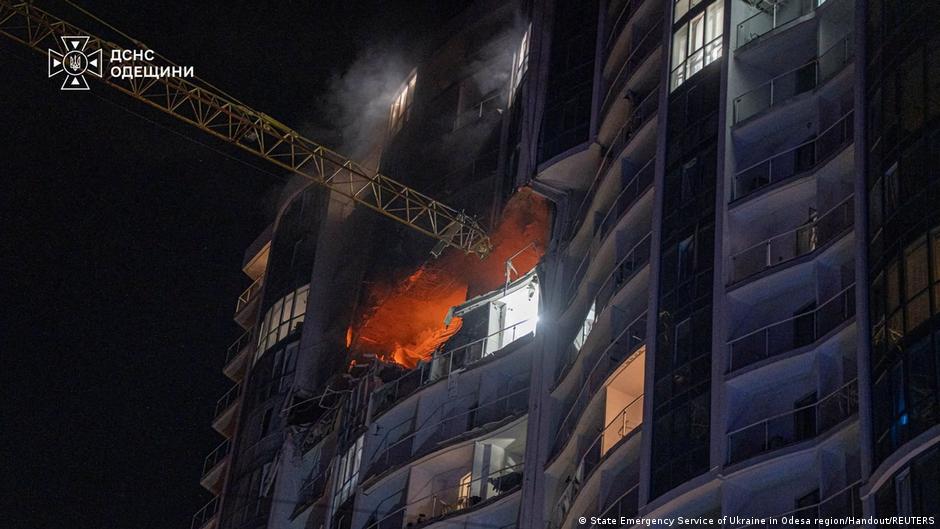
Russian attack drones struck Ukraine’s Odesa and Zaporizhzhia regions overnight on Sunday, September 27, killing at least three civilians and wounding four others in Zaporizhzhia, according to preliminary information provided by regional authorities.
The attacks underscored the continuing operational and economic pressure Russia is placing on Ukrainian regions that combine civilian communities, transport routes and critical infrastructure. While the reported casualties were concentrated in Zaporizhzhia, officials in Odesa said port and civilian infrastructure in the city of Kiliya had also been hit, though no injuries were reported there according to initial information.
Acting head of the Zaporizhzhia military administration Mykhailo Semykin said Russian forces carried out strikes on the settlement of Kamyshevakha and the village of Novotavriyske. As a result, according to preliminary data, three civilians were killed and four more were injured.
According to the regional administration, Russian forces struck Kamyshevakha and Novotavriyske overnight, leaving civilian casualties and property damage.
In Novotavriyske, Russian forces attacked a car that was traveling through the village, Semykin said. After the strike, the vehicle caught fire. A man and a woman died at the scene, according to the official account. In Kamyshevakha, one house was destroyed and several neighboring homes were damaged, authorities added.
Infrastructure Pressure Extends Beyond the Front Line
The strike on Odesa region added a separate commercial and logistical dimension to the overnight attacks. The Izmail district administration reported that Russia struck port and civilian infrastructure in Kiliya, a city in Odesa region. According to preliminary information, no one was injured in that attack, and the fire that broke out at the strike site was extinguished by emergency services.
For American business readers, the geography of the Odesa strike is significant because the region’s ports have remained central to Ukraine’s ability to move goods, maintain export channels and support public finances under wartime conditions. The source report did not specify the scale of damage in Kiliya or identify particular facilities affected, but the reference to port and civilian infrastructure places the attack within a broader pattern of pressure on assets that sit at the intersection of national security, commerce and public services.
The Zaporizhzhia strikes, by contrast, illustrated the human and local economic cost of attacks on smaller communities. Damage to homes and vehicles may appear limited compared with damage to industrial sites or major transport hubs, but such strikes can still disrupt local labor mobility, emergency response capacity and the basic conditions for small businesses and households to function. The reported attack on a moving vehicle in Novotavriyske also points to the vulnerability of routine civilian movement in areas exposed to drones.
Boardroom Implications for Companies Exposed to Ukraine Risk
For corporations, insurers, logistics providers and investors monitoring Ukraine exposure, the overnight attacks are another reminder that wartime risk is not confined to front-line military assets. Port infrastructure, civilian facilities, residential areas and local roads can all become part of the operating environment. That reality affects decisions about supply chains, insurance coverage, workforce safety, contracting, and contingency planning.
Companies with direct or indirect links to Ukrainian agriculture, shipping, infrastructure, energy, construction or humanitarian logistics have to weigh not only whether facilities remain technically operational, but also whether surrounding civilian systems are resilient enough to support continued activity. A port can matter to exporters, but roads, housing, emergency services and local administrative capacity matter as well. Drone attacks that damage homes, strike vehicles or ignite fires at infrastructure sites create cascading burdens even when immediate casualties are limited or absent.
The preliminary nature of the casualty figures also matters for decision-makers. Authorities in Zaporizhzhia reported at least three dead and four wounded, while officials in Odesa said no one was injured based on early information. In conflict zones, initial reports often guide emergency response and public communications before fuller assessments are available. For corporate risk teams, that means real-time decision-making frequently occurs under incomplete information.
The attacks came during the night into Sunday, a timing that can complicate emergency response, damage assessment and communications. In Kiliya, emergency workers extinguished a fire at the site of the strike, according to the Izmail district administration. The report did not provide details on the duration of the fire, the extent of infrastructure damage or any interruption to operations.
Strategic Context for Executives
From a corporate strategy perspective, the continuing use of attack drones against multiple Ukrainian regions reinforces the need for layered risk planning. Boards overseeing companies with regional exposure may need to consider whether existing crisis playbooks account for simultaneous impacts on people, facilities and transport nodes. The same overnight sequence included deaths in rural or settlement areas of Zaporizhzhia and infrastructure targeting in Odesa, suggesting that risk categories cannot be evaluated in isolation.
The human toll remains the central fact. In Zaporizhzhia region, three civilians were reported killed and four wounded after strikes on Kamyshevakha and Novotavriyske. In Novotavriyske, a man and a woman died when a vehicle traveling through the village was struck and caught fire. In Kamyshevakha, one home was destroyed and nearby houses were damaged. In Odesa region, port and civilian infrastructure in Kiliya was hit, with no injuries reported in preliminary accounts and a resulting fire put out by emergency services.
For business leaders, the latest reported attacks offer a concise but stark operating lesson: infrastructure risk in Ukraine remains inseparable from civilian risk. Decisions about investment, procurement, transport, insurance and employee duty of care all sit against that backdrop. The boardroom question is not only whether a particular asset is still standing after a strike, but whether the network around it can continue to support safe and reliable activity.