Ukraine Denies Report Trump Urged Zelensky to Meet Putin in Moscow
The Ukrainian president’s office rejected Bloomberg’s account as Washington presses Kyiv and Moscow to limit energy strikes amid rising diesel prices.
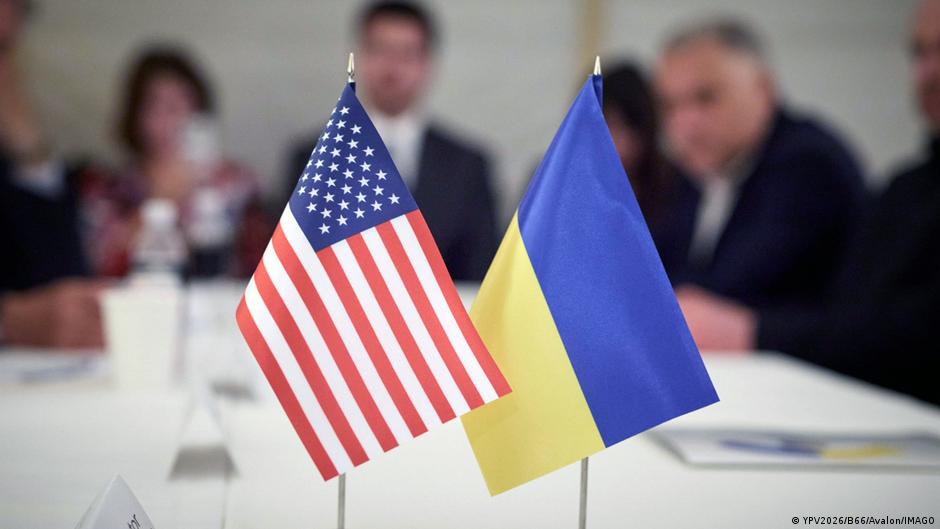
Ukraine’s presidential office has denied a report that U.S. President Donald Trump suggested Volodymyr Zelensky travel to Moscow for talks with Vladimir Putin, a claim that, if accurate, would have carried significant diplomatic and strategic implications for Kyiv’s negotiating posture.
The denial came after Bloomberg reported, citing sources, that Trump made the proposal during a meeting with Zelensky on the sidelines of the United Nations General Assembly in New York. According to that account, Zelensky refused the idea, and people close to the Ukrainian leader told the agency that he was upset by the suggestion.
Dmytro Lytvyn, an adviser to the Ukrainian president on communications, rejected the Bloomberg account in comments to Ukrainska Pravda on Friday, September 25.
“This is false information,” Lytvyn told the Ukrainian outlet.
The episode underscores the widening sensitivity around the mechanics of any future negotiation involving Washington, Kyiv and Moscow. For Ukraine, the venue and format of talks are not simply protocol questions. They go directly to sovereign legitimacy, security risk and the perception of whether Kyiv is being asked to accept Russian terms before substantive negotiations begin.
Negotiating Venue Becomes a Strategic Issue
Russia has repeatedly stressed that a meeting between Putin and Zelensky could take place only in Moscow. On September 23, Kremlin spokesman Dmitry Peskov said the Ukrainian president, “if he wants,” could come to Moscow, where he would be provided with “the necessary security guarantees.”
That position places the venue itself at the center of the diplomatic contest. A trip by Zelensky to the Russian capital would be politically explosive for Ukraine and would likely be interpreted by Moscow as a symbolic concession. From a boardroom-style strategic perspective, the dispute resembles a negotiation in which control of process is being used as leverage before the central bargain is even on the table.
The Bloomberg report, and Kyiv’s swift denial, also point to the delicate role the Trump administration is attempting to play. According to Bloomberg, Zelensky and Russian Foreign Minister Sergei Lavrov held separate meetings in New York this week with representatives of the Trump administration. The agency reported that Washington was pressing Moscow and Kyiv to agree to halt attacks on energy facilities against the backdrop of rising global diesel prices.
That detail highlights the economic stakes for the White House. Energy infrastructure attacks are not only military events; they carry market consequences. Rising diesel prices can affect transport, manufacturing, agriculture and consumer inflation. For an American administration focused on price stability and domestic economic optics, a limited agreement on energy targets could be viewed as a pragmatic interim goal, even if a broader peace settlement remains distant.
Kyiv Signals Alternative Formats
Zelensky said on September 25 that trilateral technical-format talks involving the United States, Ukraine and Russia could take place in the United Arab Emirates. That formulation suggests Kyiv is willing to engage in a structured negotiation process, but not under conditions that would place the Ukrainian president in Moscow or concede control of the venue to the Kremlin.
The Ukrainian proposal comes after the Kremlin rejected Kyiv’s recent suggestion to hold talks on ending the war during the G20 summit in Miami, where Washington had invited Putin. That rejection further narrows the space for high-level diplomacy and reinforces how strongly Moscow is insisting on its preferred terms for any direct Putin-Zelensky meeting.
For U.S. policymakers and business leaders watching geopolitical risk, the procedural impasse matters. The location, level and format of talks can shape market expectations as much as formal statements. A credible technical dialogue in a neutral venue could reduce uncertainty around energy infrastructure risk. A public dispute over whether Zelensky was urged to go to Moscow, by contrast, may signal friction among partners over how far pressure on Kyiv should go.
The history of back-channel messages also remains relevant. In June, Putin said Zelensky had asked him for a personal meeting through a Russian businessman. Zelensky later said he had passed a message to the Kremlin leader through Roman Abramovich.
Those accounts point to a diplomatic environment in which direct leadership contact has been discussed through intermediaries, public proposals and competing narratives. The latest denial from Kyiv is therefore not merely a correction of one media report. It is part of a broader effort to define the acceptable architecture of negotiations before any talks can produce a result.
For Trump, the reported episode, denied by Ukraine, illustrates the risks inherent in executive-driven diplomacy. A proposal that appears efficient from a dealmaking standpoint can create immediate political exposure for an ally if it is seen as validating the adversary’s preferred stage. For Zelensky, rejecting the premise of a Moscow meeting preserves domestic and international positioning. For Putin, insisting on Moscow keeps pressure on Kyiv to engage on Russian terms.
As Washington pushes for restraint on energy attacks amid pressure from fuel markets, the boardroom implication is straightforward: process is now strategy. The parties are not only debating whether talks should happen, but who gets to set the room, the table and the terms under which a potential settlement process begins.