Yemen’s Leader Calls for Mobilization as Houthi Gains Raise Business Risks
Rashad al-Alimi’s appeal pairs a battlefield recruitment drive with an amnesty offer as Red Sea control becomes a strategic economic concern.
Yemen’s internationally backed leadership is moving to widen its domestic support base as Houthi forces press forward in a conflict that is increasingly tied to regional trade, energy pricing and the security calculations of Gulf governments.
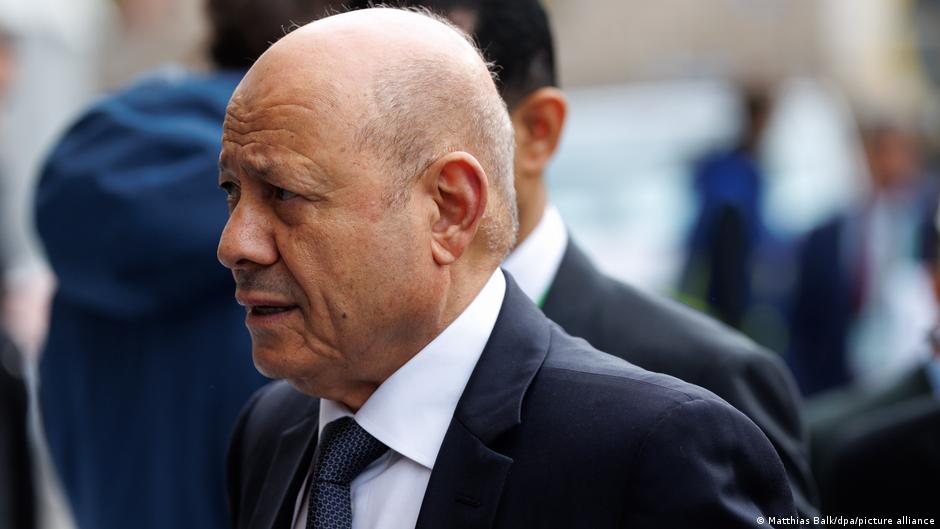
Rashad al-Alimi, chairman of Yemen’s Presidential Leadership Council, called on citizens to mobilize amid an escalation in the conflict with the Iran-aligned Houthi movement. In an address to Yemenis on Friday, September 25, he urged people to contribute to the defense of the country and to join the ranks of government forces. He also said rebels who leave the Houthi side and switch allegiance to the government would be pardoned under an upcoming amnesty.
Al-Alimi urged Yemenis to help defend the country and said those who abandon the Houthi ranks for the government side would be covered by a forthcoming amnesty.
The appeal reflects a leadership decision shaped by deteriorating battlefield conditions and by the broader economic consequences of the conflict. Several weeks ago, Houthi forces struck government troops. Despite support from Saudi military aviation, Yemen’s army has continued to retreat, according to the source account.
A Security Crisis With Corporate Consequences
For American business readers, the significance of al-Alimi’s move extends beyond Yemen’s internal politics. The fighting is unfolding around waterways and energy infrastructure that matter directly to global supply chains, shipping costs and oil market expectations. In recent months, the Houthis have managed to seize the entire Red Sea coast and territories adjacent to the Bab el-Mandeb Strait, the source reported.
The strait has gained strategic importance since the start of the U.S. and Israeli war against Iran, the source said, and is being used as an alternative trade route that partly offsets disruptions in oil supplies caused by the blockade of the Strait of Hormuz. That framing places Yemen’s conflict in the middle of boardroom risk assessments: routing, insurance, fuel pricing, and the reliability of Gulf energy exports are all exposed when control of maritime corridors shifts.
The Houthi advances have allowed Iran and its allies to consolidate control over key regional waterways, affecting oil exports from Saudi Arabia and other Persian Gulf countries to world markets, according to the article. Rebel attacks threaten global trade routes and contribute to higher electricity prices. For companies dependent on energy-intensive production, long-distance shipping or Middle East exposure, the conflict is no longer a distant security story. It is part of the operating environment.
Al-Alimi’s Amnesty Offer Signals Strategic Pressure
The amnesty proposal is notable because it combines a military mobilization message with a political incentive aimed at weakening the opposing side. In corporate strategy terms, al-Alimi appears to be trying to change the incentives of individual fighters while simultaneously reassuring supporters that the government is still capable of organizing a national response.
Such moves can be read as a sign of urgency. The source describes a government under pressure, with Saudi air support failing to halt continued retreats by Yemen’s army. Calling for citizens to join government forces may help replenish manpower, but it also signals that the leadership sees the conflict entering a more demanding phase.
Reuters has reported, according to the source, that the Houthi advance is being directed by Iran’s Islamic Revolutionary Guard Corps. Sources in Tehran say Iran is seeking in this way to open a new front in its confrontation with the United States. If accurate, that would further elevate the conflict from a civil war to a regional pressure campaign with consequences for Washington, Riyadh and multinational firms managing geopolitical exposure.
Yemen’s Fragmentation Deepens the Risk
Yemen has been engulfed in civil war since 2014, a conflict that has effectively divided the country among three rival sides. The Iran-aligned Houthis control northern and western provinces, including the capital, Sanaa, where about 70% of the population lives. That territorial reality complicates any effort by the Presidential Leadership Council to project authority nationwide.
The recent escalation has also crossed further into Saudi territory. In early September, the Houthis announced an expansion of military operations in the Middle East and struck four cities in southern Saudi Arabia. More than 70 people were injured in the large-scale shelling, and fires broke out at oil facilities, according to the source article. Saudi Arabia responded with more than 60 airstrikes against several provinces under Houthi control.
On September 19, the Saudi-led Coalition to Restore Legitimacy in Yemen said Yemeni rebels had attempted for the first time to strike the kingdom’s capital, Riyadh, with a ballistic missile. That development, if sustained, would sharpen concerns among energy companies, insurers, shipping firms and investors about the conflict’s capacity to reach critical infrastructure and major urban centers.
For al-Alimi and his council, the immediate objective is military resilience. For regional governments and global businesses, the larger issue is whether Yemen’s war is becoming a more direct lever in the contest over oil flows, maritime chokepoints and U.S.-Iran confrontation. The latest mobilization call suggests Yemen’s government sees the battlefield balance shifting in ways that require faster political and military action.