Russian Nighttime Missile and Drone Strikes Hit Kyiv and Kharkiv Amid Ongoing Conflict
Russian forces launched coordinated missile and drone attacks on multiple Ukrainian regions, causing casualties and infrastructure damage in Kyiv and Kharkiv.
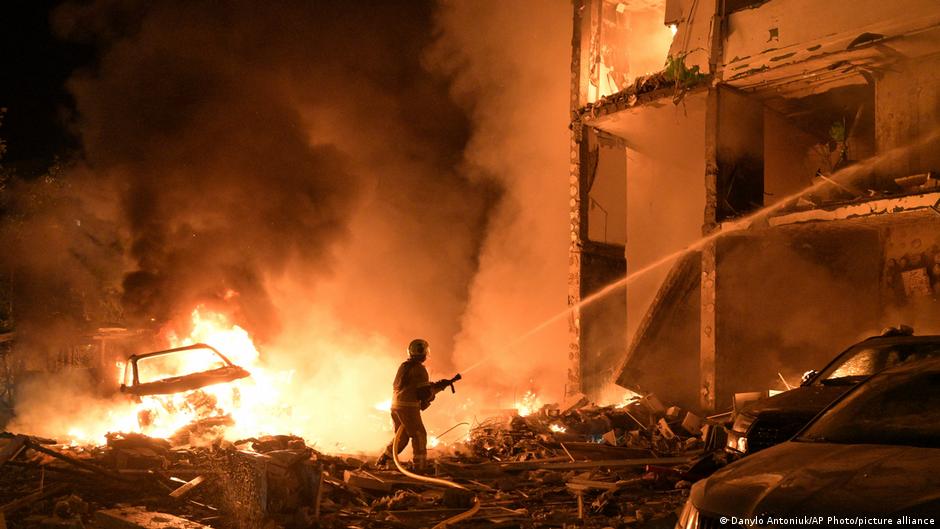
In the early hours of July 8, Russian military forces conducted a coordinated nighttime strike involving ballistic missiles and unmanned aerial vehicles (UAVs) targeting several regions in Ukraine, including the capital Kyiv and the eastern city of Kharkiv. Local authorities reported explosions, fires, and injuries as a result of these attacks.
Impact on Kyiv and Kharkiv
The mayor of Kyiv, Vitali Klitschko, confirmed the presence of two wounded individuals in the capital, with one hospitalized. He detailed that missile strikes caused fires at warehouse facilities in the Desnianskyi district in the northeast and at a non-residential building in the western Sviatoshynskyi district. Additionally, Klitschko warned of ongoing attacks involving Russian ballistic missiles, emphasizing the continued threat to the city’s infrastructure.
Simultaneously, Timur Tkachenko, head of Kyiv’s military administration, reported that hostile strike drones were operating near the capital’s outskirts, underscoring the complex nature of the assault combining different aerial attack vectors.
Kharkiv Mayor Ihor Terekhov also reported significant damage following a missile strike in the Nemishlyanskyi district in the city’s east. According to his updates, over 20 private homes were damaged, alongside shattered windows of a local church, disruptions to street lighting, and damage to five vehicles. Preliminary casualty reports indicate two injured persons in Kharkiv.
Strategic and Corporate Implications
"The sustained use of ballistic missiles and drones in densely populated urban areas reflects a persistent escalation strategy aimed at undermining civilian infrastructure and morale," said a defense analyst.
These attacks have immediate repercussions not only for Ukrainian civil administration but also raise concerns for foreign and domestic businesses operating in these urban centers. Infrastructure damages complicate logistics, disrupt supply chains, and heighten operational risks for enterprises across various sectors.
For international firms with stakes in Ukraine, the recurrence of such attacks necessitates a reassessment of risk management strategies and contingency planning. The combination of missile and drone strikes indicates a sustained capability and intent by Russian forces to target critical nodes within Ukrainian urban environments.
Corporate boards and executive leadership within affected companies must consider enhanced security protocols, insurance coverage adjustments, and potential relocation or operational pause strategies to mitigate exposure to ongoing hostilities.
Moreover, the damage to residential and religious buildings highlights the broader humanitarian impact, which may influence corporate social responsibility initiatives and stakeholder engagement efforts in the region.
Continued Military Developments
The Ukrainian Air Force confirmed multiple launches of ballistic missiles towards Kyiv from the north, corroborating local authority reports. Ukrainian Armed Forces general staff indicated that the Russian nighttime offensive was ongoing across central and eastern regions, including Kharkiv and Kyiv.
Such persistent attacks signal an intensification of the conflict’s tactical complexity, blending ballistic missile fire with UAV strikes to challenge Ukrainian air defenses and create multifaceted threats.
As the situation develops, monitoring the security environment remains critical for all stakeholders operating within or connected to Ukraine’s urban centers.