Spanish Government Faces Migrant Crisis in Ceuta, Raising Security and Policy Challenges
Spain labels the mass migrant influx into Ceuta as a territorial attack amid urgent military and diplomatic responses.
Spain's Prime Minister Pedro Sánchez has characterized the recent influx of tens of thousands of migrants into the Spanish enclave of Ceuta, located on the northern coast of Africa, as an "attack" on the nation's territorial integrity. This unprecedented movement has prompted Spain to deploy military forces and engage in heightened diplomatic efforts to manage the crisis.
Ceuta Migrant Surge: Strategic and Security Implications
Over recent days, approximately 60,000 migrants have crossed into Ceuta, a Spanish autonomous city bordering Morocco, marking one of the largest mass migrant entries in recent history. The movement has triggered significant security concerns; dozens of migrants have tragically drowned attempting the crossing, with the death toll reaching 57 as of July 31.
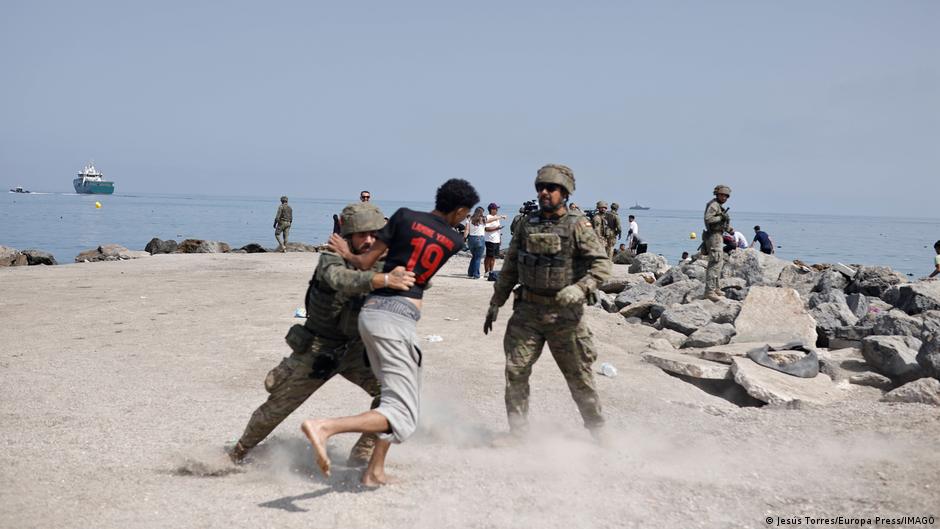
In response, the Spanish government dispatched military personnel to Ceuta to assist local authorities in maintaining order, a measure not seen since 2021. The deployment underscores the gravity of the situation and the Spanish government's prioritization of border security amid the crisis.
Prime Minister Sánchez described the migrant influx as a deliberate "attack" on Spain's sovereignty. This language signals a hardening stance by Madrid, reflecting broader political pressures and concerns about border management and national security.
"The mass entry of illegal migrants into Ceuta is an attack on Spain and a violation of our territorial integrity," Sánchez declared upon arriving in the enclave.
Meanwhile, the Spanish government reported that tens of thousands of migrants have voluntarily returned to Morocco via the land border. Foreign Minister José Manuel Albares conveyed on social media platform X that the crisis was largely under control by the evening of July 31, with most migrants having left Ceuta.
Despite government efforts, the situation has sparked social unrest within Ceuta's local population of approximately 85,000 residents. Protesters have accused the government of losing control, with some businesses shuttered due to fears of looting. One resident told RTVE television that "many people are afraid to leave their homes." These developments highlight the social tensions and potential economic disruptions resulting from the crisis.
From a broader European perspective, the European Commission confirmed that no illegal migrants entering Ceuta have successfully reached mainland Europe. Nevertheless, the crisis has already prompted unilateral actions by neighboring states. On July 31, Italy suspended the Schengen Agreement's free border crossing provisions with Spain to protect its citizens and safeguard European borders. Italy's Foreign Minister Antonio Tajani stated on X that this temporary suspension was a necessary security measure.
Boardroom and Executive Considerations
For corporate leaders and policymakers, the Ceuta migrant crisis underscores the complex interplay between geopolitical events and operational environments. Companies with interests in Spain and the broader European region must monitor developments closely, as border security challenges can impact trade logistics, employee mobility, investment climates, and regional stability.
The Spanish government's decision to involve the military reflects the severity of the situation and hints at possible longer-term shifts in migration policies and border enforcement strategies. Businesses engaged in sectors like logistics, retail, and security services may find new opportunities or face risks depending on how the crisis evolves.
Moreover, the social unrest in Ceuta points to potential reputational risks for companies operating locally, emphasizing the need for corporate social responsibility initiatives and engagement with community stakeholders.
In the diplomatic arena, Spain's firm stance and Italy's border measures indicate a potential recalibration of European cooperation on migration issues, which may influence policy frameworks and regulatory environments affecting multinational corporations.