Trump Says U.S. Will Remove 10% Tariff on Irish Whiskey Imports
The announcement in Ireland gives distillers a potential reprieve while highlighting how trade decisions can turn on executive discretion.
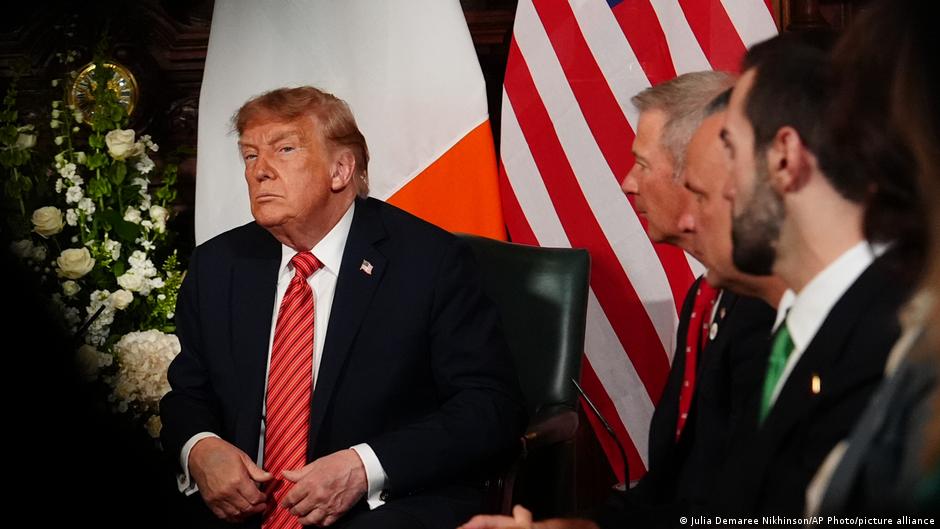
U.S. President Donald Trump said at the close of a visit to Ireland that Washington will remove a 10% tariff on Irish whiskey, signaling a potential shift for one of Ireland’s most prominent export industries and for companies exposed to transatlantic alcohol trade.
Trump made the announcement on Sunday, September 13, in Ireland before a cheering crowd of Irish golf fans during a tournament held at a golf club owned by his family. According to Trump, he agreed to repeated requests to cancel the tariff on imports of Irish whiskey into the United States.
The president said those who had asked him to remove the duty included Irish Prime Minister Micheál Martin and leading Irish golfer Shane Lowry. The decision, if fully implemented, would unwind a tariff that currently applies as part of broader U.S. duties on wine and spirits exports from the European Union.
A Trade Decision With Boardroom Consequences
For Irish whiskey producers, the announcement is more than a symbolic diplomatic gesture. The United States is a critical consumer market for premium spirits, and a 10% duty can affect pricing strategy, margins, distributor negotiations and investment plans. Boards and executives in the sector will now be watching whether the president’s statement turns into formal policy and how quickly importers, retailers and brand owners can respond.
The Irish Whiskey Association welcomed the U.S. president’s statement while also making clear that implementation remains the key test. The association said it hoped the decision would be carried out in full, according to Reuters.
“Nothing characterizes the trade relationship between the U.S. and Ireland better than Irish whiskey,” IWA director Eoin O’Cathain said in a statement.
That reaction underscores the commercial weight behind the announcement. Irish whiskey is not only a heritage product; it is a branded export category with global positioning, long production cycles and heavy dependence on predictable market access. Tariffs can create planning problems well before bottles reach consumers, because decisions about maturation, inventory allocation, promotional spending and U.S. distribution are made far in advance.
For U.S. importers and alcohol distributors, the prospect of removing the duty could ease pressure on landed costs. Depending on how companies structured pricing after the tariff was introduced, the benefit may flow through in different ways: higher margins for producers or importers, promotional flexibility for retailers, or eventually more competitive prices for consumers. The source material does not specify how the tariff’s removal would be administered or when it would take effect.
Executive Discretion And Corporate Strategy
The manner of the announcement also matters for business leaders. Trump delivered the statement not in a formal trade setting, but at a golf event in Ireland, before an enthusiastic crowd, at a club owned by his family. That setting highlights the personalized nature of the decision as described by the president: he said he had yielded to numerous appeals, including from Ireland’s prime minister and from Lowry.
For companies, such episodes illustrate both opportunity and uncertainty. A tariff can be imposed as part of a broad trade package and then, potentially, lifted through high-level political engagement. That creates incentives for industry groups and national governments to maintain direct channels to policymakers. It also complicates forecasting, because executive statements must still translate into enforceable customs rules before companies can bank the gains.
The current levy is collected under duties covering all exports of wine and spirits from the European Union to the United States. That broader context means any carveout for Irish whiskey could raise questions for other European beverage producers, including whether Washington intends to adjust the wider tariff regime or make a narrower exemption for a politically salient product.
From a boardroom perspective, the distinction matters. A narrow removal would benefit Irish whiskey producers specifically while leaving other EU spirits and wine exporters under the existing burden. A broader change would have wider implications for alcohol multinationals with portfolios spanning multiple categories and countries. The source article reports Trump’s announcement regarding Irish whiskey, but does not indicate any wider rollback affecting all EU wine and spirits duties.
Irish officials and producers are likely to treat the announcement as a positive signal, but corporate planning will depend on the mechanics. Importers need clarity from U.S. authorities on tariff codes, effective dates and treatment of goods already in transit or held in bonded warehouses. Producers will need to decide whether to adjust U.S. pricing, increase shipments, expand marketing, or preserve the benefit to repair margins affected by the duty.
The Irish Whiskey Association’s response points to cautious optimism: the sector is welcoming the political commitment while waiting for complete execution. That is a familiar stance for executives operating in tariff-exposed industries, where headline announcements can move expectations but legal implementation determines commercial outcomes.
Trump’s statement nevertheless gives Irish whiskey makers a potentially important opening. If the 10% U.S. duty is fully removed, the sector would regain a cleaner route into one of its most important international markets and a clearer narrative for American distributors and consumers. For Irish producers, the boardroom question now is how quickly a presidential declaration can become operational trade relief.