Trump Commends Zelensky’s Leadership Amid Russia-Ukraine Conflict, Highlights European Strategic Challenges
Former US President Donald Trump praises Ukrainian President Zelensky’s resilience in the ongoing war while expressing frustration with European allies’ policies.
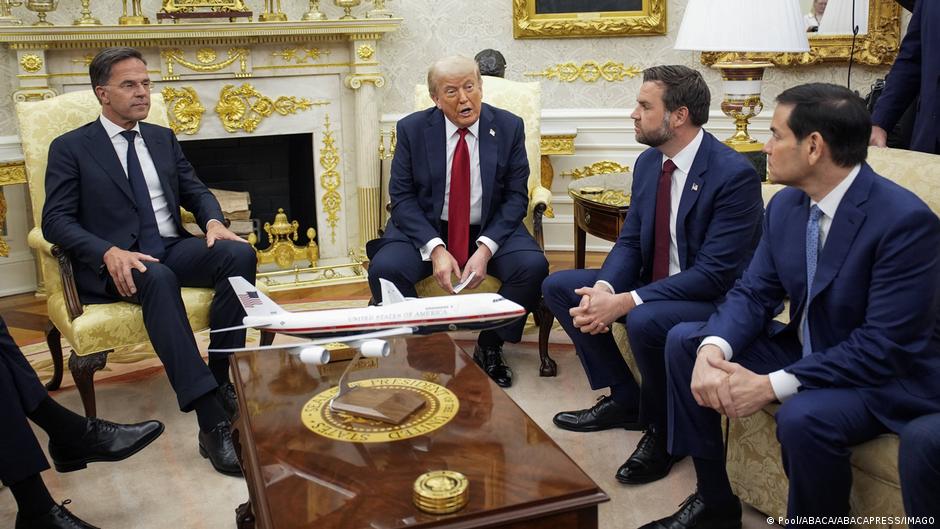
Former US President Donald Trump publicly commended Ukrainian President Volodymyr Zelensky’s handling of the war against Russia, acknowledging the heavy toll on both sides but expressing optimism about Zelensky’s position.
Speaking at a White House press conference on June 24 alongside NATO Secretary General Mark Rutte, Trump remarked on Zelensky's leadership under extreme pressure. "At least he’s holding, there are many casualties on both sides, but I think he’s doing pretty well," Trump said in response to a journalist’s question about whether Zelensky is currently prevailing in the conflict.
Shifting Tone on Zelensky and Broader Geopolitical Context
This stance marks a notable contrast to Trump’s past criticisms of Zelensky, which included accusations of obstructing peace efforts. Such remarks, previously reported, highlighted tensions between the two leaders during Trump’s presidency.
During the same event, Trump also expressed disappointment with Germany and other European nations regarding their policies towards the US and Israel’s shared position against Iran. He lamented that despite the significant US military investment in Germany and Europe, Washington’s diplomatic overtures had been rebuffed. "We asked the German government for at least a small kiss, but they said no," Trump said, without naming German Chancellor Friedrich Merz specifically.
These comments underscore ongoing strategic frustrations in transatlantic relations, particularly concerning burden-sharing and diplomatic alignment on key security issues.
"We asked the German government for at least a small kiss, but they said no," Trump stated, reflecting dissatisfaction over European reluctance to support US initiatives.
Earlier this month, the US, along with G7 partners, announced an escalation of sanctions against Moscow. The G7 summit held from June 15-17 in France provided a platform for Trump to meet with other world leaders, including Zelensky.
After the summit, Trump described his interaction with Zelensky as "very good" and advocated for a negotiated peace settlement between Russia and Ukraine. He pledged to do "everything in his power" to facilitate such an outcome, signaling a cautiously optimistic approach toward ending a conflict now in its fifth year.
This optimism contrasts sharply with the more skeptical perspective during Zelensky’s previous Oval Office visit, where he was reportedly told he lacked leverage in peace negotiations with Russia.
On June 24, in an address to the Ukrainian public, President Zelensky emphasized that with the assistance discussed at the G7, Ukraine could rapidly create conditions compelling Russia to choose peace. However, he stopped short of detailing the specific measures or aid required to realize this objective.
The evolving rhetoric around Zelensky’s leadership and the broader strategic dynamics between the US, Europe, and Russia highlight complex challenges in executive decision-making and international diplomacy amid prolonged conflict.