US Sends First Humanitarian Aid Flight to Cuba Amid Sanctions and Military Planning
Despite sanctions and military contingency planning, the US initiates a $100 million humanitarian aid package to Cuba.
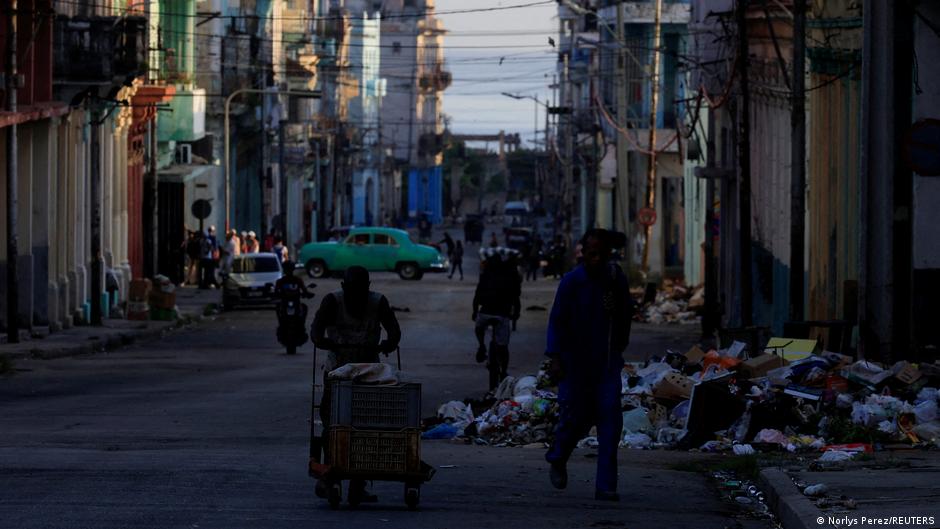
In a complex interplay of diplomacy, military considerations, and economic sanctions, the United States has dispatched the first plane carrying humanitarian aid to Cuba as part of a newly announced $100 million aid package. This move comes despite escalating sanctions against Cuban state-owned enterprises and discussions within the Pentagon about potential military interventions on the island nation.
Humanitarian Aid Amid Sanctions and Strategic Pressure
The U.S. Department of State confirmed the delivery of the initial shipment on July 21, marking the beginning of the distribution of aid meant to support approximately 700 Cuban families. The aid package includes essential food supplies and hygiene kits, which will be distributed directly through Catholic Relief Services, a trusted humanitarian organization with prior experience delivering aid to Cuba.
"The humanitarian aid is intended to alleviate suffering among Cuban civilians amidst heightened economic pressures."
This initiative builds on previous cooperation, where the U.S. worked with Catholic intermediaries to deliver $9 million in aid following the damage caused by Hurricane Melissa. Announced in May by U.S. Secretary of State Marcko Rubio, the aid package seeks to assist the Cuban population while the U.S. government concurrently intensifies its financial sanctions and oil supply restrictions targeting Havana's ruling regime.
Initial skepticism from Cuban authorities accused the U.S. of orchestrating artificial shortages and power outages to destabilize the country. However, after diplomatic engagements involving representatives from the Trump administration, Havana appears to have accepted the humanitarian assistance.
Military Considerations and the Broader Strategic Context
Behind the scenes, the Pentagon has reportedly been evaluating several military scenarios concerning Cuba, including the potential deployment of thousands of paratroopers from the 101st Airborne Division, according to a July 15 report by CBS News. While such discussions have been ongoing for several weeks, a formal decision to initiate military action has not been made.
Defense Secretary Pete Hegseth has previously signaled the possibility of a forceful resolution to issues related to Cuba. He warned in June that Cuba's acquisition of weaponry perceived as threats to the U.S. — including over 300 unmanned aerial vehicles (UAVs) alleged to be capable of striking the Guantanamo Bay base, American naval vessels, and even Florida territory — could provoke confrontation.
Nonetheless, most U.S. officials interviewed by CBS News consider a near-term military operation unlikely, given the considerable allocation of Pentagon resources toward renewed conflicts involving the U.S., Israel, and Iran. The Trump administration is favoring economic and diplomatic pressure over kinetic military engagement.
Sanctions Targeting Cuban Economic Interests and Leadership
On June 23, Marcko Rubio announced targeted sanctions against five Cuban companies, three of which are linked to the Grupo de Administración Empresarial S.A. (GAESA), a business conglomerate operated by Cuba’s Revolutionary Armed Forces. GAESA reportedly controls about 40% of Cuba’s GDP and holds liquid assets estimated at $14.5 billion as of 2024.
Additional sanctions were imposed on the spouse of Alejandro Castro, head of Cuba’s National Security Council and son of former leader Raúl Castro. Cuban Foreign Minister Bruno Rodriguez denounced the new U.S. sanctions as "relentless aggression and collective punishment," and criticized Rubio — a son of Cuban immigrants — labeling him "dishonest and deceitful."
This multidimensional U.S. approach blends humanitarian outreach with stringent economic measures and potential military preparedness, reflecting a complex strategic calculus aimed at influencing Cuba's political landscape and curbing perceived threats to U.S. security.