Germany Announces Record Defense Spending of €124.7 Billion for 2026 Within NATO Framework
Germany plans a historic 25.5% increase in defense spending by 2026, signaling strategic shifts in European military investment amid transatlantic pressures.
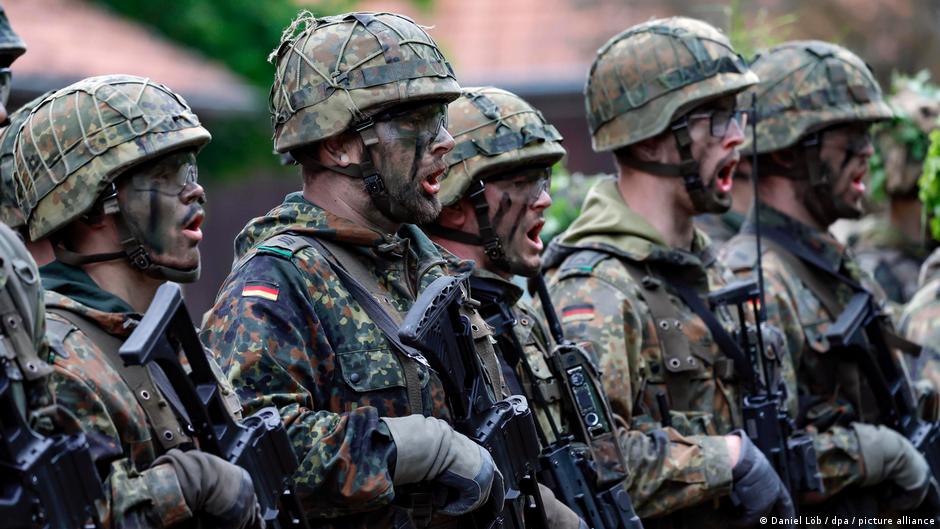
In the lead-up to the NATO summit in Ankara, Germany disclosed a record defense budget of €124.7 billion for the year 2026, marking a significant strategic commitment within the alliance. This budget represents a 25.5% increase over the previous year’s allocation of approximately €99.3 billion, the largest absolute rise ever recorded for Germany's defense expenditure.
Strategic Implications of Germany’s Defense Budget Surge
Germany’s planned increase translates to a defense spending share of 2.69% of its Gross Domestic Product (GDP), up from 2.22% in 2025. This move is especially notable as it positions Germany as the second-largest European defense spender within NATO, behind only the United States, which projects an investment of around $850.2 billion (approximately €745 billion) in 2026.
“Only last year, European allies and Canada increased defense spending by nearly 20%, adding an additional $139 billion,” remarked NATO Secretary General Jens Stoltenberg. “Together, the growth for 2025 and 2026 will total $258 billion.”
This enhanced funding aligns with NATO's broader aim, established at the 2022 summit in The Hague, for member states to allocate a minimum of 3.5% of GDP to defense by 2035, with an additional 1.5% for related defense expenditures. Germany's accelerated investment trajectory is a clear response to both external security challenges and internal pressures within the alliance.
To support this increase, Germany plans to raise more than €800 billion by 2030, predominantly through government bond issuance. Financial forecasts indicate that over €200 billion in bonds will be issued in 2027 alone, a 12.5% rise compared to 2023 levels. These funds will primarily bolster the defense budget, expected to reach €183.6 billion by 2030, representing roughly one-third of the national budget.
Broader NATO Spending Dynamics and U.S. Relations
Despite rising European contributions, the United States remains the dominant military spender within NATO and globally, outspending all other NATO members combined. While several European nations such as Greece, Poland, and the Baltic states are expected to achieve the ambitious 5% GDP defense spending threshold in 2024, others—including Belgium, Spain, and the Czech Republic—will maintain expenditures near 2% of GDP, with Slovenia projected to fall below this threshold.
The acceleration in German defense spending also reflects ongoing tensions with the U.S. administration’s critiques of European military investments. Former President Donald Trump publicly criticized European NATO members for what he characterized as insufficient defense spending. German Chancellor Olaf Scholz and NATO leadership have rebutted these claims, emphasizing significant recent increases in European defense allocations and the strategic necessity of sustained investment.
This surge in defense funding is emblematic of Germany’s shifting strategic posture amid evolving geopolitical challenges, including the conflict in Ukraine and broader transatlantic security dynamics. The planned enhancements suggest a long-term commitment to strengthening both national and collective NATO defense capacities, with substantial implications for executive decision-making, budget prioritization, and alliance cohesion in the coming decade.