Iran Buries Ayatollah Ali Khamenei Amid Ongoing Regional Tensions and Leadership Uncertainty
Ayatollah Ali Khamenei's funeral held in Mashhad under tight security as Iran navigates leadership transition and US-Iran conflict escalation.
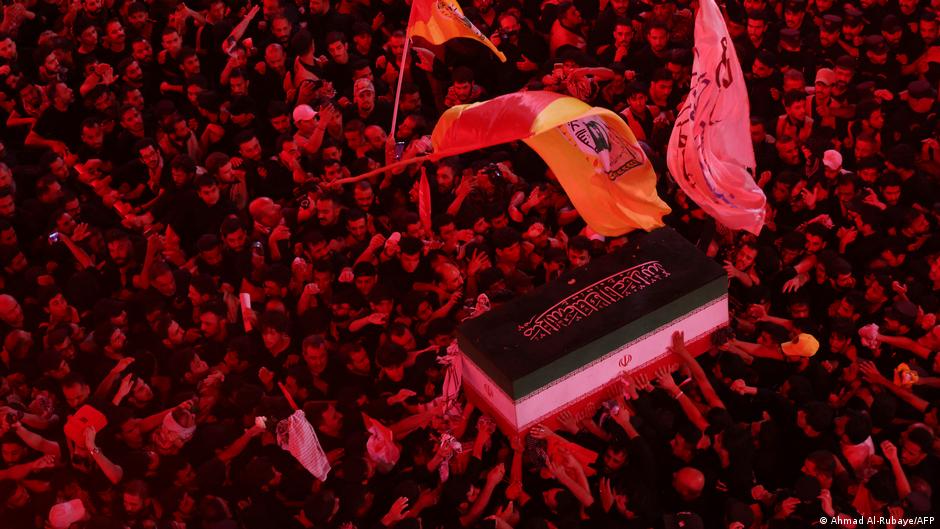
After six days of mourning events, Iran conducted the funeral of former Supreme Leader Ayatollah Ali Khamenei in a closed ceremony in Mashhad. Notably absent from public view was his son Mojtaba Khamenei, who officially succeeded his father as the country’s Supreme Leader but has not been seen since the deadly attack on the elder Khamenei’s residence in late February.
Strategic and Political Implications of the Funeral and Leadership Transition
The funeral took place in the Imam Reza Mausoleum, one of the largest Shiite Muslim shrines globally, visited annually by up to 20 million pilgrims. This choice of burial site reaffirms the regime’s portrayal of Khamenei as a martyr who died in the struggle against a militarily superior enemy, symbolizing continuity of ideological and political legitimacy amid ongoing conflict.
Alongside Ayatollah Khamenei, family members killed in the US and Israeli airstrike on the Supreme Leader’s residence were also interred there. This complex also houses the tomb of former Iranian President Ebrahim Raisi, who died in a 2024 helicopter crash, underscoring the site’s significance for Iran's political elite.
The funeral occurred over four months after Khamenei’s death was confirmed. Tehran only announced the funeral date on June 13, during a fragile ceasefire phase agreed upon by the conflicting parties. Mourning ceremonies began on July 4, with Khamenei’s coffin displayed sequentially in Tehran, the Shiite pilgrimage city of Qom, and the Iraqi cities of Najaf and Karbala, all sacred to Shiite Islam. Iranian authorities reported that up to 20 million people participated in the Tehran mourning alone.
"The prolonged and highly controlled funeral processions highlight the regime’s effort to consolidate public support and sustain the narrative of resistance despite leadership upheaval and military pressure."
Despite the large-scale public mourning, Mojtaba Khamenei’s absence raised questions about the new Supreme Leader’s health and security. Some sources indicate he sustained serious injuries during the February attack but remains capable of leadership. Other analysts suggest his absence is a precautionary measure to protect him from potential Israeli strikes, given the volatile security environment.
Iranian state media announced Mojtaba Khamenei will appear publicly on July 19 in Qom, delivering a eulogy during another mourning event. However, previous reports about his public reemergence have not been consistently confirmed, adding to uncertainty about the leadership transition’s stability.
Meanwhile, the regional security situation remains highly unstable. In early July, days after US President Donald Trump announced a one-week pause in negotiations with Tehran to respect the mourning period, hostilities resumed. Iran attacked tankers in the Strait of Hormuz, citing unauthorized navigation attempts, prompting US counterstrikes against Iranian Revolutionary Guard positions. Iran retaliated with attacks on US bases in Bahrain and Kuwait.
During a NATO summit in Ankara, Trump declared that the ceasefire with Iran was effectively over and that the US would not resume talks, though his administration later indicated negotiations were ongoing despite the military escalations.
The funeral and its surrounding events underscore a critical juncture for Iran’s executive leadership and regional diplomacy. The opaque succession process and Mojtaba Khamenei’s uncertain status have potential ramifications for policymaking and strategic stability. For US and international business observers, the transition complicates risk assessments related to sanctions, energy markets, and geopolitical investments in the Middle East.