Putin Warns Armenia of Increased Tariffs Amid Eurasian Economic Union Exit Threat
Russian President signals economic repercussions including higher transport and energy tariffs if Armenia leaves the Eurasian Economic Union.
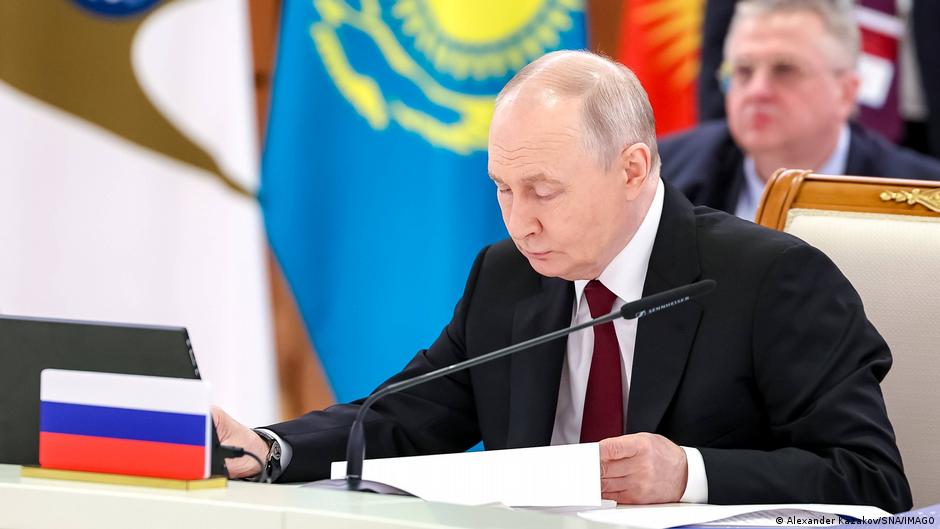
Russian President Vladimir Putin has issued a stern warning to Armenia regarding its potential withdrawal from the Eurasian Economic Union (EAEU), threatening significant increases in tariffs on railway transportation and energy supplies if Armenia chooses to realign with European Union standards.
Economic Leverage and Political Pressure
Speaking at a press conference following the EAEU summit in Astana on May 29, Putin emphasized that the dissolution of Armenia’s relationship with the union would necessitate the cessation of all economic integration between Moscow and Yerevan. "If Armenia starts adopting EU standards, we will have to sever all economic integration with them," he stated. He specifically warned, "Tariffs on railway transportation will have to be raised, and the prices for energy resources will need to increase."
Additionally, Putin declared that Armenian citizens working in Russia would be required to obtain work patents, aligning their status with that of Ukrainian migrants. This comment referenced the onset of Ukraine’s crisis, which he attributed to Kiev’s earlier attempts to join the EU.
“If Armenia starts adopting EU standards, we will have to sever all economic integration with them.”
The Russian president also urged Armenia to hold a referendum on its membership in the EAEU as soon as possible, reinforcing Moscow’s position that Armenia must decisively choose its geopolitical and economic alignment.
Context and Regional Dynamics
Earlier the same day, leaders of the EAEU member states—Russia, Belarus, Kazakhstan, Kyrgyzstan, and Armenia—issued a joint statement demanding Armenia conduct a referendum to choose between deeper integration with the Eurasian bloc or pivoting toward the European Union. This request exemplifies the heightened pressure on Armenia as it navigates a complex geopolitical crossroads.
In a broader context, Russia is intensifying economic pressure on Armenia ahead of its parliamentary elections scheduled for June 7. Recent Russian regulatory measures have included a ban on several Armenian products such as mineral water, vegetables, and brandy. Moreover, the Russian Ministry of Energy has threatened to terminate agreements on duty-free supplies of petroleum products, natural gas, and uncut diamonds to Armenia.
Putin’s remarks also addressed accusations from the EU regarding Russia’s purported plans for aggression against European nations. He dismissed such claims as "nonsense and lies," describing the media outlets promoting these narratives as "means of mass deception." To underscore his point, Putin referenced a phrase often misattributed to Nazi Minister of Propaganda Joseph Goebbels, but actually originating from Adolf Hitler’s Mein Kampf, stating, "The more monstrous the lie, the more readily it will be believed."
Implications for Corporate and Strategic Interests
The escalating tensions highlight the complex interplay of executive decisions and corporate strategy within Eurasian economic integration. For Armenian businesses, particularly those involved in export sectors like wine production, the potential tariff hikes and trade barriers pose serious risks to market access and revenue streams. Russian threats to raise transportation and energy costs could significantly increase operational expenses, compelling Armenian companies to reconsider supply chains and partnerships.
From a governance perspective, the Russian government’s demands for structural alignment and political loyalty underscore the strategic leverage Moscow wields over Armenia’s economic future. The insistence on a referendum signals an expectation for Armenia’s leadership to make a definitive strategic choice, with considerable consequences for political stability and economic planning.
For multinational corporations and investors operating in or with Armenia, the developments necessitate close monitoring of regulatory changes and shifts in trade policies. Strategic contingency planning will be essential to mitigate risks associated with potential disruptions stemming from Armenia’s geopolitical orientation and Russian economic countermeasures.
In sum, this episode exemplifies the critical intersection of executive decision-making, international trade strategy, and geopolitical influence shaping business environments in the Eurasian region.