US Military Strikes Iranian Targets Amid Escalating Tensions in Persian Gulf
US forces launched multiple airstrikes on Iranian military and infrastructure sites, prompting retaliatory attacks on American bases in the region.
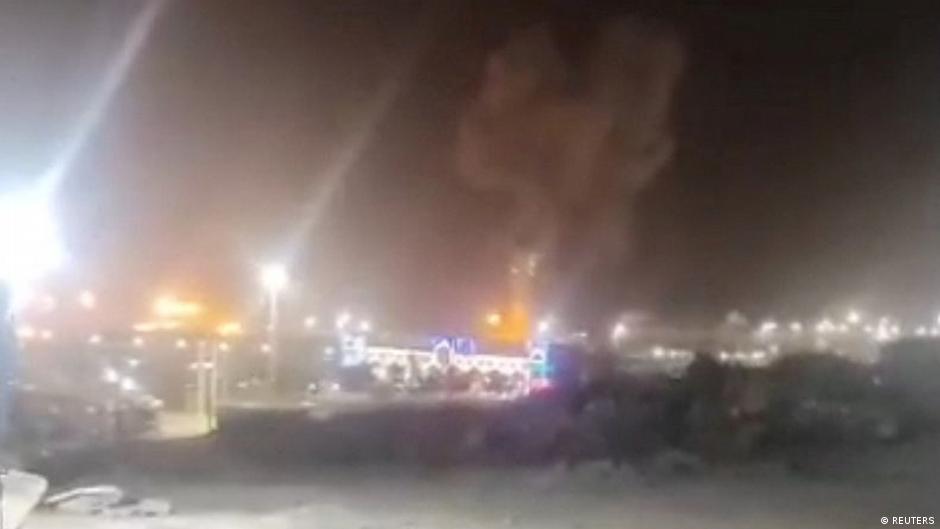
The United States military conducted two waves of airstrikes against strategic Iranian military and infrastructure targets on July 16, escalating tensions in the Persian Gulf amid ongoing geopolitical frictions. The Central Command of the US Armed Forces (CENTCOM) reported that the initial attacks targeted port facilities in Sirik and Bandar Abbas, critical nodes along the Strait of Hormuz, a vital maritime chokepoint.
According to Iranian sources, additional strikes hit facilities in Ahvaz, Khuzestan Province, while explosions were reported in Rasak and Kenarak ports in Sistan and Baluchestan provinces. One impacted installation near Qeshm Island included a fishmeal production plant, partially damaged during the operations.
Strategic Targeting to Limit Iran's Maritime Threats
The second US strike phase focused on Iranian command centers, air defense systems, missile and drone infrastructure, as well as coastal surveillance posts. CENTCOM emphasized the objective of degrading Iran’s capability to threaten commercial maritime navigation and personnel operating in the region.
"These strikes are intended to reduce Iran’s ability to pose a threat to sailors and commercial shipping crews," a CENTCOM statement noted.
Notably, the US forces also disabled an unmanned oil tanker, the M/T Belma, flagged under Curacao. The vessel attempted to breach a US-imposed maritime blockade by heading toward an Iranian port on Hark Island without responding to warnings. A US military aircraft launched Hellfire missiles at the ship’s smoke stack, effectively disabling it.
The blockade, renewed on July 14, has already redirected two commercial vessels and employed force against one ship in its first day of enforcement, underscoring the US focus on restricting Iranian maritime logistics.
In retaliation, Iran launched attacks against American military bases in Bahrain and Kuwait. Iranian media reported at least ten explosions near the US Navy’s Fifth Fleet headquarters in Bahrain, with additional blasts reported at a US base in Kuwait. These escalations prompted partial airspace closures by Saudi Arabia and Jordan for security reasons.
Iranian air defenses, operated by the Islamic Revolutionary Guard Corps (IRGC), claimed to have shot down a US MQ-9 drone operating in the area.
Executive Perspectives on Ongoing Conflict Dynamics
US Vice President J.D. Vance acknowledged the complexity of the evolving situation in the Persian Gulf, describing the process as fraught with challenges but ultimately progressing in the right direction. Speaking on the podcast The Joe Rogan Experience, Vance stated, "I don’t know exactly where all of this will lead, but fundamentally I believe we are moving in the right direction. This process will be very difficult with many pauses and resumptions."
Vance highlighted that the US approach combines economic pressure with diplomatic engagement targeting more pragmatic factions within the Iranian leadership, signaling a multifaceted strategy beyond purely military measures.
These developments highlight the high-stakes interplay of military operations and diplomatic maneuvering shaping the US-Iran relationship and regional security in a geopolitically critical area.